How will Dots change your GPT chat use and teams
TL;DR
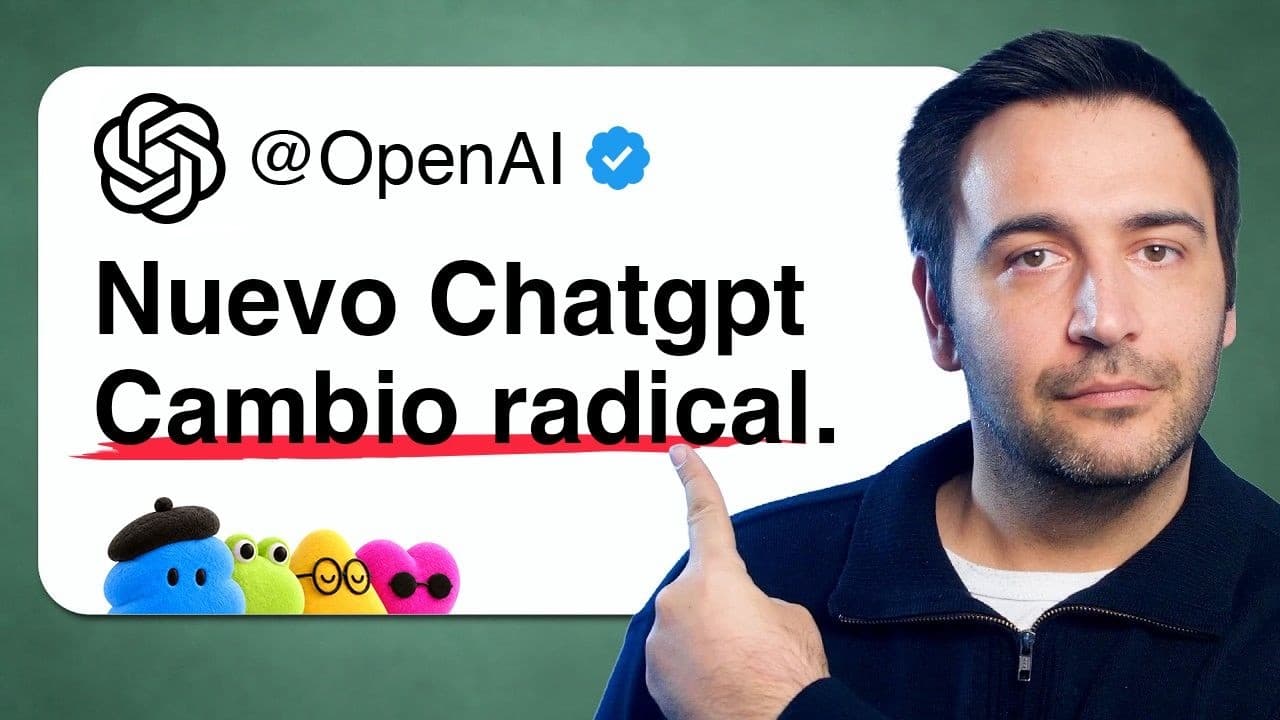
Dots are proactive AI agents inside GPT Chat that can manage tasks, modify workflows, and collaborate with your team without waiting for commands. OpenAI showcased new Spaces, local AI processing on devices, and faster models like Ultrafast, but price and regional restrictions may limit immediate adoption. Expect AI agents to act like coworkers, handling repetitive tasks and coordinating tools, with important safeguards like Autoreview and permissions checks.
Transcript
Hey there, I'm your Dot. I'm new to GPT Chat. I'll be here to handle anything that comes your way. You just >> met your next coworker. His name is Dot , and Open introduced him yesterday. He works 24 hours a day, has his own computer, connects to over 4,000 applications, and if you want to catch up with him, you can call him on the phone. An... Read More
Key Insights
- Dots are always active and can take initiative, acting as a proactive assistant that handles tasks end to end like writing code, testing, and delivering ready-to-approve results.
- ChatGPT Space becomes an office-like hub where teams collaborate within a single interface, with dynamic pages, graphs, tables, and panels that connect to tools and stay within the GPT environment.
- Dots connect to over 4,000 apps and operate on the users behalf, reducing manual tasks and enabling real time application generation and updates while respecting permissions through an autoreview workflow.
- OpenAI positions Dots as an extension of the user, with two specialists sharing a username and access in a company setting, signaling a shift toward agent driven workflows.
- Ultrafast is highlighted as Astra mode accelerated within Chat GPT, capable of generating ~300 tokens per second, but at a cost of higher plan tiers and usage limits.
- The $100 pro plan now provides five times Plus usage, while the $200 pro plan offers even more, reflecting changes that reduce usage quotas per plan despite higher speeds.
- Security concerns are raised noting that OpenAI acknowledged a data exposure incident involving published images of users, underscoring cloud reliance risks.
- The presentation contrasts instrumenting AI to control tools versus building tools for agents, marking a strategic direction toward agents performing tasks autonomously rather than just answering questions.
Install to Summarize YouTube Videos and Get Transcripts
Explore YouTube Video Summarizer or Get YouTube Transcript Extractor
Questions & Answers
Q: What are Dots in Chat GPT Space and how do they function as proactive assistants?
Dots are proactive AI agents integrated into Chat GPT Space that stay active and can take initiative on tasks without waiting for prompt input. They can handle end to end workflows such as writing code, testing, and delivering applications for approval. This changes the role of the user from requester to supervisor of autonomous agents.
Q: How does ChatGPT Space change team collaboration and project management in practice?
ChatGPT Space acts as a shared office with dynamic pages, graphs, tables, and panels that automatically update from connected tools. Teams can collaborate without leaving the GPT environment, enabling real time updates and centralized access to documents and workflows, which streamlines coordination and reduces fragmentation across apps.
Q: What is Ultrafast and what are the tradeoffs of using it in OpenAI models?
Ultrafast is an Astra mode that speeds up processing to about 300 tokens per second, enabling faster generation. The tradeoff is that it is available only on a high tier Pro plan and reduces overall usage quotas, so you gain speed at the cost of access and efficiency under certain plans.
Q: What are the pricing changes and regional limitations for Dots and pro plans?
Pro plans start at $100 per month with limitations, the $200 pro plan exists with higher usage, and the $500 pro plan offers drastically increased speed but reduced usage compared to prior levels. EU, Switzerland, and UK users currently do not have access to Dots.
Q: How does OpenAI compare GPT 6.1 Sol to Astra and Opus in the transcripts?
GPT 6.1 Sol is claimed to be as capable as Astra in programming and cheaper in some tests, yet independent rankings show Astra scoring relatively higher than Sol in some areas, while Opus scores better in others. The section notes that Sol has not yet been measured in some rankings and may be considered slower or less capable in certain tasks.
Q: What concerns are raised about cloud reliance and data security for Dots and agents?
OpenAI acknowledged a data exposure incident where images of users were published, highlighting potential risks of cloud dependence for agents. This has raised concerns about privacy and the need for robust safeguards when agents access and operate across multiple applications.
Q: What are the practical implications for teams adopting Dots in the near term?
Teams adopting Dots may see productivity gains from automation and proactive task handling, especially for repetitive or complex multi step tasks. However, they should plan for higher costs, regional access limitations, and ensure strong governance through permissions and autoreview to prevent unintended actions.
Q: What role does Asus Expertbook Ultra play in the video's AI narrative?
The Asus Expertbook Ultra is showcased as a sponsor device capable of running AI models locally without cloud upload, featuring a 50 core NPU and AI friendly features, illustrating a path to private AI processing and data security when using AI tools in conjunction with Dots and Space workflows.
Summary & Key Takeaways
-
Dots redefine how teams interact with AI by acting as proactive coworkers that can initiate actions, switch tasks, and coordinate apps without constant prompts, while maintaining permission controls and an autoreview system to guard data and actions.
-
The event emphasizes a shift from teaching AI to use traditional tools to designing tools for agents, enabling dynamic collaboration within Chat GPT Spaces and a cloud based ecosystem, though real user experience may vary.
-
Key takeaways include the cost and regional constraints on Dots, the emergence of ChatGPT Space as an integrated office and the comparison of new models like GPT 6.1 Sol with Astra and Opus, highlighting tradeoffs between speed, cost, and capabilities.
Read in Other Languages (beta)
Share This Summary 📚
Summarize YouTube Videos and Get Video Transcripts with 1-Click
Try YouTube Summary with ChatGPT & Claude or YouTube Transcript Generator
Explore More Summaries from Xavier Mitjana 📚


Summarize YouTube Videos and Get Video Transcripts with 1-Click
Try YouTube Summary with ChatGPT & Claude or YouTube Transcript Generator