How lasers repair OLED iPhone screens without teardown
TL;DR
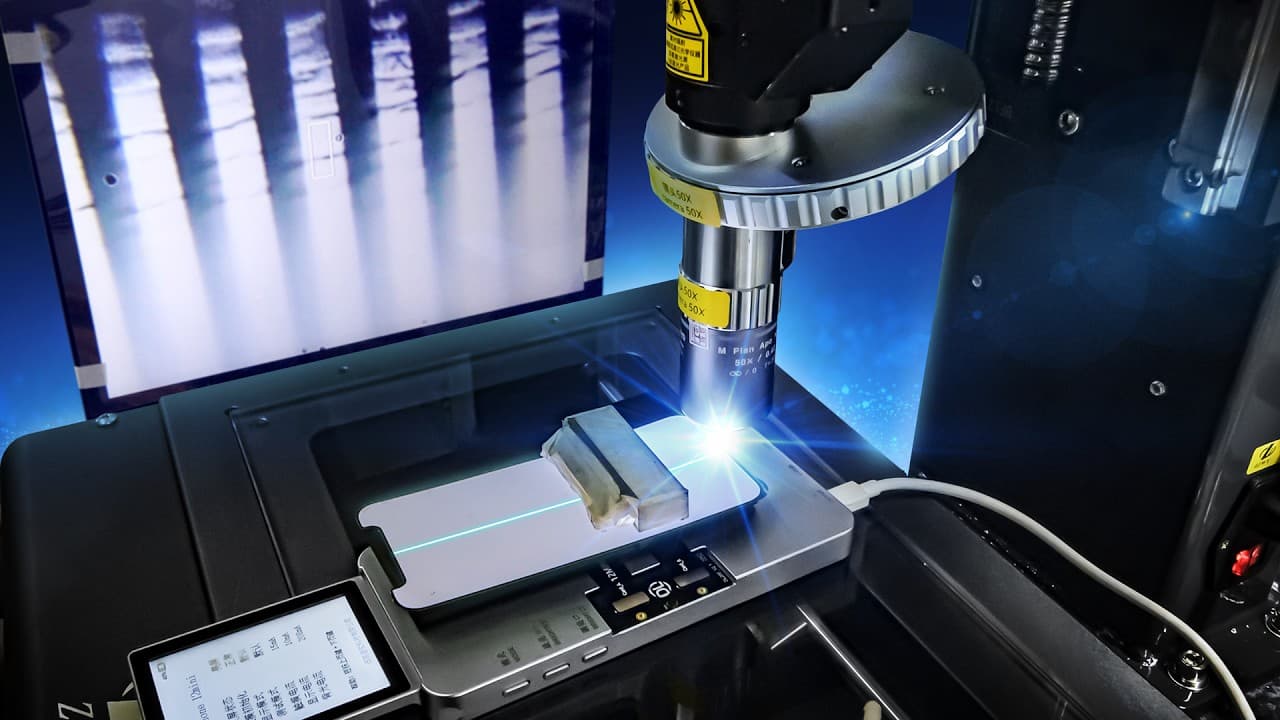
The video shows a laser-based repair system that can fix broken traces inside an OLED panel while the screen remains powered. It retraces the original laser paths used in manufacturing to repair defective lines by replacing or reconnecting internal traces, enabling the screen to function again without full disassembly. This method targets the glass, flex connections, and internal conductors to restore display integrity.
Transcript
- So this machine can repair OLED screens that have bad lines in them using a laser. So this is the future of OLED repair. This is super high tech. Brand new machine, barely hit the market. (technician speaks foreign language) What they're doing here is looking for broken traces in the OLED construction. - These are broken ones.
- And these are for... Read More
Key Insights
- The machine repairs OLED traces by using a laser to rewrite broken lines inside the panel.
- The process can work with the screen on, allowing immediate visual feedback as the line disappears.
- Two flex types exist: a soft bending flex and a hard fixed flex, each with its own attachment and bending constraints.
- ACF bonding is used in the assembly, enabling vertical conductive bonding while preventing cross-pin conduction.
- The repair can replace only the flex or the affected glass area, avoiding full panel replacement in many cases.
- Manufacturing lasers originally cut traces from large sheets; the repair laser recreates these traces within the panel.
- The technology enables refurbishers to fix many screens that would previously be discarded, increasing yield.
- Market impact suggests this could shift profitability toward screen refurbishing rather than outright LCD replacements.
Install to Summarize YouTube Videos and Get Transcripts
Explore YouTube Video Summarizer or Get YouTube Transcript Extractor
Questions & Answers
Q: A real search query question about the video (e.g. 'How to...', 'What is...', 'Why does...', 'When should...'). Question 1
How do laser repairs fix broken traces inside OLED panels while the screen is on, and what practical steps are involved in locating and repairing the faulty traces without fully disassembling the device? The video explains tracing the line with the laser, confirming the issue by watching changes in real time, and replacing the most affected flex where necessary.
Q: Question 2
What are the differences between the soft and hard flex cables in the repair process, and how does each type influence where the bend occurs and how edges are managed to avoid damage during reassembly? The soft flex can bend with fewer edge risks, while the hard flex requires precise alignment and front-side bonding.
Q: Question 3
Why is the ACF adhesive mentioned in the video important for the repair, and how does vertical conduction help prevent shorting between pins when the panel is bonded back together? ACF is used to ensure bonding while maintaining pin isolation due to its directional conductivity.
Q: Question 4
How does the repair approach extend the usable life of a screen that might otherwise be discarded, and what does this imply for refurbishers in terms of potential throughput and revenue? Repairing lines trace by trace increases yield and reduces waste, making refurbishing more cost effective.
Q: Question 5
What are the key indicators that a screen is repairable with the laser system, and how does one determine when to replace a flex versus re-bonding the existing glass? The decision hinges on whether the glass is intact and if the flex line is the root cause, with water damage also guiding the choice.
Q: Question 6
What is the significance of the laser being able to cut through the first layer of OLED, and how does this relate to retracing manufacturing steps to fix the lines? The laser mimics the original manufacturing process, effectively redoing the traces where they have become broken.
Q: Question 7
How does the video describe the business potential for operators of these laser repair machines in the phone repair ecosystem, and what caveats are mentioned about future scaling and quality? The presenters anticipate strong demand as more screens become fixable, but note that scaling could affect repair quality and price competition.
Q: Question 8
What practical guidance is provided about sourcing and using the laser repair machine, including cost and vendor relations, and how does the episode frame the installation as part of a broader strategy for screen refurbishment? The video mentions a specific contact and price in RMB, highlighting that partnerships and sourcing are integral to adopting this technology.
Summary & Key Takeaways
-
The video demonstrates a high-tech laser repair system for OLED screens, highlighting how repairing traces can revive otherwise unusable displays.
-
It explains two types of flex cables, the differences between soft and hard variants, and how laser tracing can extend the life of damaged panels by reestablishing connections.
-
The discussion covers practical implications for the refurbishing market, potential cost savings, and the money-making potential for repair shops adopting this technology.
Read in Other Languages (beta)
Share This Summary 📚
Summarize YouTube Videos and Get Video Transcripts with 1-Click
Try YouTube Summary with ChatGPT & Claude or YouTube Transcript Generator