How to Build and Market a Viral AI Consumer App
TL;DR
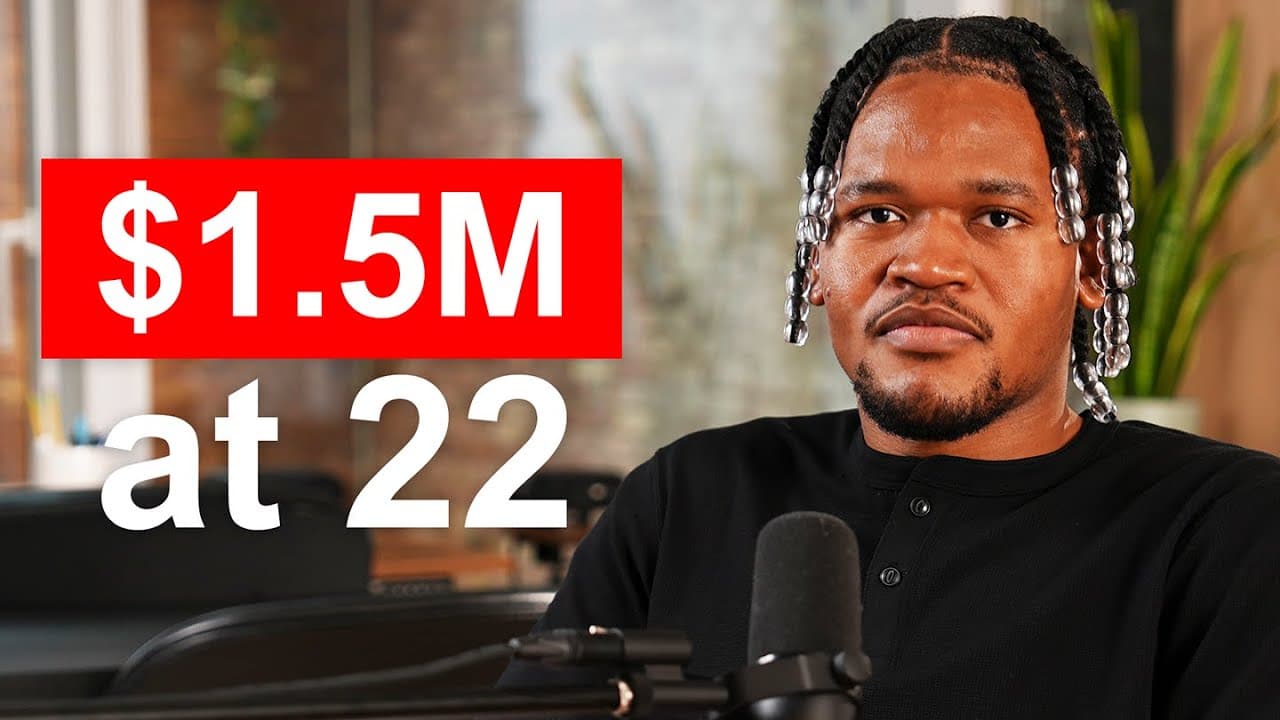
Build consumer apps around urgent human needs, launch when enabling technology is still emerging, and market through short-form platforms such as TikTok and Reels. Kelechi Onyeama says Social Wizard approached $1 million in revenue by helping users brainstorm replies, while his broader mobile app work generated about $1.5 million within the last year.
Transcript
How much money do you make? Within the last year, um, I've done about 1.5 million. Over the course of the next 10 years, I'll do a billion. All right. How old are you right now? I just turned 22. 22? Yeah. Okay. What do you do? I'm a solo founder and I build mobile consumer apps. Mobile consumer apps. So, you've done multiple or I've done multiple.... Read More
Key Insights
- Social Wizard is an AI-assisted communication app that helps users start conversations, answer messages, and respond to awkward situations. Its most-used capability is the reply feature, followed by suggestions based on pictures, while the awkward-situation feature receives the least use.
- Personalization is central to producing a useful reply because an appropriate message can depend on culture, age, relationship history, and situational details. Social Wizard lets users combine an image with written context so the AI can account for both visual and personal information.
- Manual message entry can produce more accurate results than screenshots because screenshots may be incomplete or poorly framed. When users type the message and supply context directly, the app does not need to determine the relevant conversation content from an image.
- Strong consumer apps often address one of three core desires identified by Onyeama: making more money, finding love, or having fun. He uses this framework to evaluate markets and argues that even health or fitness products can connect with those underlying motivations.
- Social Wizard benefited from timing because it was developed while GPT-4 vision was being released. Earlier competitors relied on OCR, while the emerging vision capability allowed the app to interpret pictures and screenshots with an LLM and generate context-sensitive conversation ideas.
- TikTok and Reels were the primary marketing channels for Social Wizard. Onyeama attributes its viral growth to both timing and persistent execution, especially because the product launched when AI-based visual understanding was not yet widely accessible in comparable consumer apps.
- Social Wizard moved from a $6.99 weekly subscription to a $9.99 weekly subscription after Onyeama judged the app to be higher quality than alternatives. He says the higher price increased lifetime value and brought more cash through the business, while weekly billing supported faster payback.
- The app primarily sells brainstorming support rather than ready-to-send wording. Usage data showed that the average user generated about 10 hints before copying one, leading Onyeama to conclude that repeated suggestions stimulate ideas even when users reject the exact language produced.
Install to Summarize YouTube Videos and Get Transcripts
Explore YouTube Video Summarizer or Get YouTube Transcript Extractor
Questions & Answers
Q: How does Social Wizard generate replies to messages?
Social Wizard accepts either a screenshot of a conversation or messages entered manually, then uses AI to suggest a reply. Users can add situational context to improve personalization. Onyeama prefers manual entry because it is more accurate, while screenshot processing requires the system to identify relevant content and can be hindered when users capture an incomplete or unsuitable image.
Q: What features does the Social Wizard AI app offer?
Social Wizard has three described features. The first analyzes a story, profile picture, or dating-app picture to suggest a conversation starter. The second examines an ongoing conversation and proposes a reply when the user is unsure what to say. The third lets users describe an awkward situation and receive a suggested response, although that feature is used least often.
Q: Why does conversational context matter for AI replies?
Conversational context matters because a good reply varies with factors such as culture, age, relationship history, and the specific situation. A user can upload an image and explain, for example, that the person is a high-school friend they have not spoken with in a year and that it is her birthday. The AI then combines those details with the picture.
Q: Why did Social Wizard gain traction so quickly?
Onyeama attributes Social Wizard's viral growth mainly to timing and persistent execution. He began developing it around December 2023 to January 2024 while GPT-4 vision was being introduced. At that point, apps could use OCR, but comparable LLM-based image understanding was not readily available, giving Social Wizard an early opportunity to generate suggestions from pictures and screenshots.
Q: How was Social Wizard marketed to consumers?
Social Wizard was marketed primarily through TikTok and Reels. The product's visual demonstration was suited to short-form content because viewers could see a user struggling with a conversation, submitting an image or message, and receiving suggestions. Onyeama says the app's growth was driven by the combination of this marketing approach, early timing, and continued execution.
Q: How much did Social Wizard charge for its subscription?
Social Wizard initially charged $6.99 per week, a price Onyeama selected after examining similar apps. He later raised the weekly subscription to $9.99 because he believed his app offered greater quality. He says this change increased lifetime value and cash entering the business. Monthly and yearly subscriptions also existed, but the weekly option was emphasized for faster payback.
Q: What problem are users actually paying Social Wizard to solve?
Users appear to be paying for help generating ideas, not simply for a finished line that can be copied without thought. Onyeama says the average user creates about 10 hints before copying one. He interprets this behavior as evidence that repeated suggestions activate the user's own thinking and help them formulate a response, even when none of the first suggestions feels suitable.
Q: What consumer needs can guide a successful app idea?
Onyeama groups strong consumer app opportunities into three needs: helping people make more money, find love, or have fun. He argues that successful apps generally connect with at least one of these motivations. He also links fitness to relationships in his own case, saying he works out for a good body rather than health and expects that appearance to help him in relationships.
Summary & Key Takeaways
-
Kelechi Onyeama is a 22-year-old solo founder who builds mobile consumer apps and says he generated about $1.5 million within the last year. His first app, Social Wizard, helps users start conversations, reply to messages, and handle awkward situations by combining conversational context with AI-generated suggestions.
-
Social Wizard differentiated itself by combining images with added context. Users can upload a story, profile picture, dating-app picture, or conversation screenshot, then explain details such as their relationship with the person. The AI uses both sources to suggest an opening message or reply tailored to the situation.
-
The app grew primarily through TikTok and Reels after launching near the arrival of GPT-4 vision capabilities. Onyeama initially charged $6.99 per week, then raised the price to $9.99 per week after concluding that the product had higher quality. He says the increase improved lifetime value and cash flow.
Read in Other Languages (beta)
Share This Summary 📚
Summarize YouTube Videos and Get Video Transcripts with 1-Click
Try YouTube Summary with ChatGPT & Claude or YouTube Transcript Generator
Explore More Summaries from Brett Malinowski 📚


Summarize YouTube Videos and Get Video Transcripts with 1-Click
Try YouTube Summary with ChatGPT & Claude or YouTube Transcript Generator