What Did Richard Osman Learn From His Childhood Trauma?
TL;DR
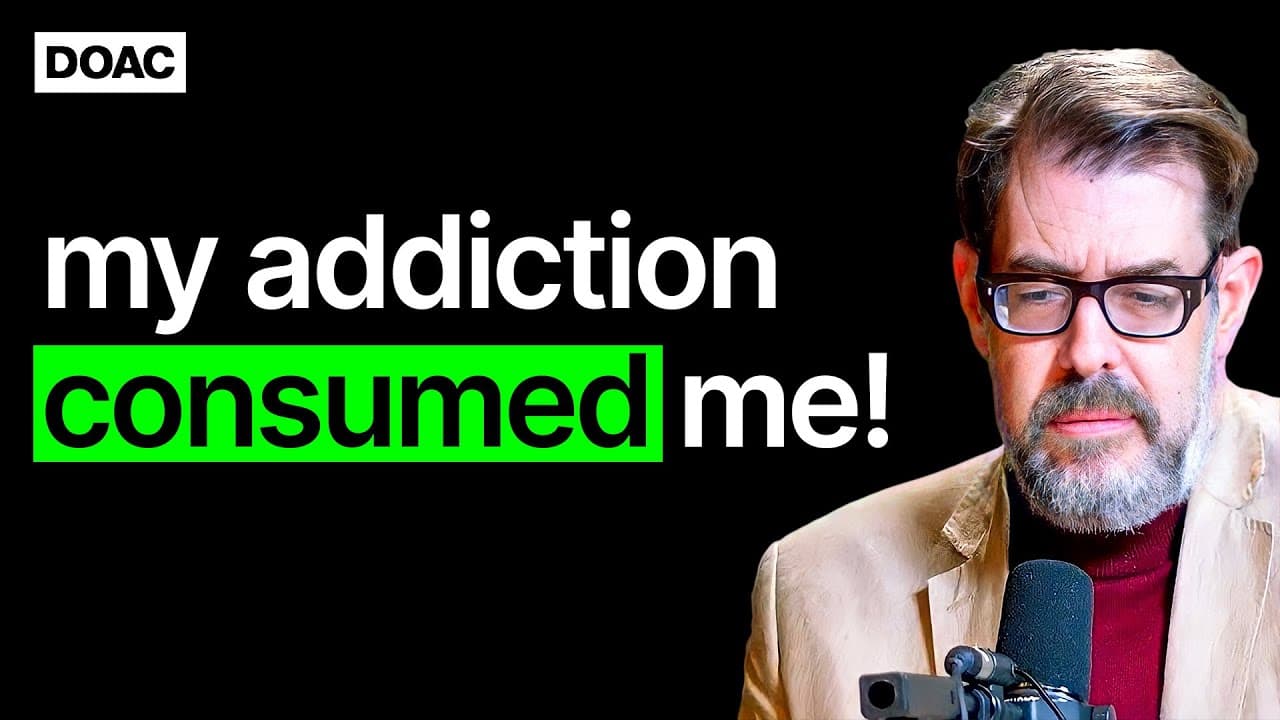
Richard Osman learned that trauma itself is not the problem; the inability to deal with it is. His father left when he was nine, in the 1970s, and left alone with it his own coping solutions never worked, later surfacing as addictive behaviors around food. He has since come to peace with his past and even credits it for his writing, though he wishes he had chosen more happiness over success. Read on for how he worked through it.
Transcript
my books wouldn't be as good if I if I haven't gone through that trauma welcome Richard Osmond ladies and gentlemen best-selling novelist television producer presented you know if you have a trauma of any type and and you are looked after and you're guided through it you can come out the other side if however you're sort of left alone in your traum... Read More
Key Insights
- 💡 Trauma experiences can impact one's ability to cope and find solutions. Support and guidance from others are crucial in navigating trauma successfully.
Install to Summarize YouTube Videos and Get Transcripts
Explore YouTube Video Summarizer or Get YouTube Transcript Extractor
Questions & Answers
Q: What did Richard Osman learn from his childhood trauma?
Osman's core lesson is that "trauma is not the problem; the inability to deal with trauma is the problem." He explains that if you are looked after and guided through a trauma you can come out the other side, but if you are left alone in it, the solutions you invent for yourself never work. He says he has now fully come to terms and made peace with his past, so it no longer makes him unhappy.
Q: What happened in Richard Osman's childhood?
He grew up happy and "gay lucky" in a big working-class family until the age of nine, when his father left. Because it was the 1970s, they did not really see him again and it was not a soft, everyone-still-loves-each-other separation. Osman describes his early years in two chapters: a pleasant first one and a dysfunctional, painful second one after his father's departure.
Q: How does Richard Osman describe his addictive behaviors around food?
He says he never sat and thought he had a problem, but he had addictive behaviors around food that he now names plainly as an addiction. He compares it to "having a bottle of vodka, then having another bottle of vodka, then having another bottle of vodka," stressing there is no other honest way to put it. He came to see the behavior as a symptom of his underlying trauma.
Q: How did Richard Osman's height affect how he sees other people?
His height made him a frequent target, which sharpened his awareness of how people who are visibly different get treated. He points out that a passing comment feels trivial to the person making it, but for the person on the receiving end it is "just you and five other people every single day." It taught him that if you can see someone is different, they do not need to be told.
Q: How did Richard Osman's trauma shape his career and writing?
He says outright that his books would not be as good if he had not gone through that trauma. After his father left he had to "build a mask" and pretend everything was okay, and that ability to create his own narrative and write a different story later proved useful in his career. He adds that he would rather not have had the experience, but it gave him empathy and understanding of pain.
Q: What does Richard Osman say about happiness versus success?
He reflects that he did not live the life he should have for many years and wishes he had been more himself. Looking back, he says he would have taken much less success and much more happiness. The regret is not about his achievements but about the years he spent pretending he was okay rather than being genuine.
Q: How did Richard Osman stay connected to his younger self?
Because his father's departure created a kind of interregnum where he became a slightly different person, Osman says he can still easily find the nine-year-old inside him. That nine-year-old loved popular and mainstream culture, wondered what was on television, who was playing football, and what was in the pop charts. He says that is still what drives him now, always asking "what's next, what's next."
Q: What did Richard Osman mean by "manufacturing" himself as a child?
He references a Sunday Times interview where he said that at that age he had to manufacture himself a little bit. After the trauma he built a mask, pretended he was okay, and pretended he was not in pain. He notes that this kind of disconnect affects everyone who goes through it one way or another, and for him it led to lasting unhappiness before he came to peace with it.
Summary & Key Takeaways
-
Richard Osmond grew up in a working-class family, experienced trauma at a young age, and struggled with addictive behaviors around food.
-
He realized that his addiction was a symptom of his trauma and sought therapy as a way to address and heal from his inner struggles.
-
Osmond emphasizes the need to shine a light on our shame, panic, and anxiety, and to have empathy for ourselves and others.
-
He believes that embracing and understanding our differences can lead to self-acceptance, success, and happiness.
Read in Other Languages (beta)
Share This Summary 📚
Summarize YouTube Videos and Get Video Transcripts with 1-Click
Try YouTube Summary with ChatGPT & Claude or YouTube Transcript Generator
Explore More Summaries from The Diary Of A CEO 📚





Summarize YouTube Videos and Get Video Transcripts with 1-Click
Try YouTube Summary with ChatGPT & Claude or YouTube Transcript Generator