How to Succeed Despite Family Favoritism
TL;DR
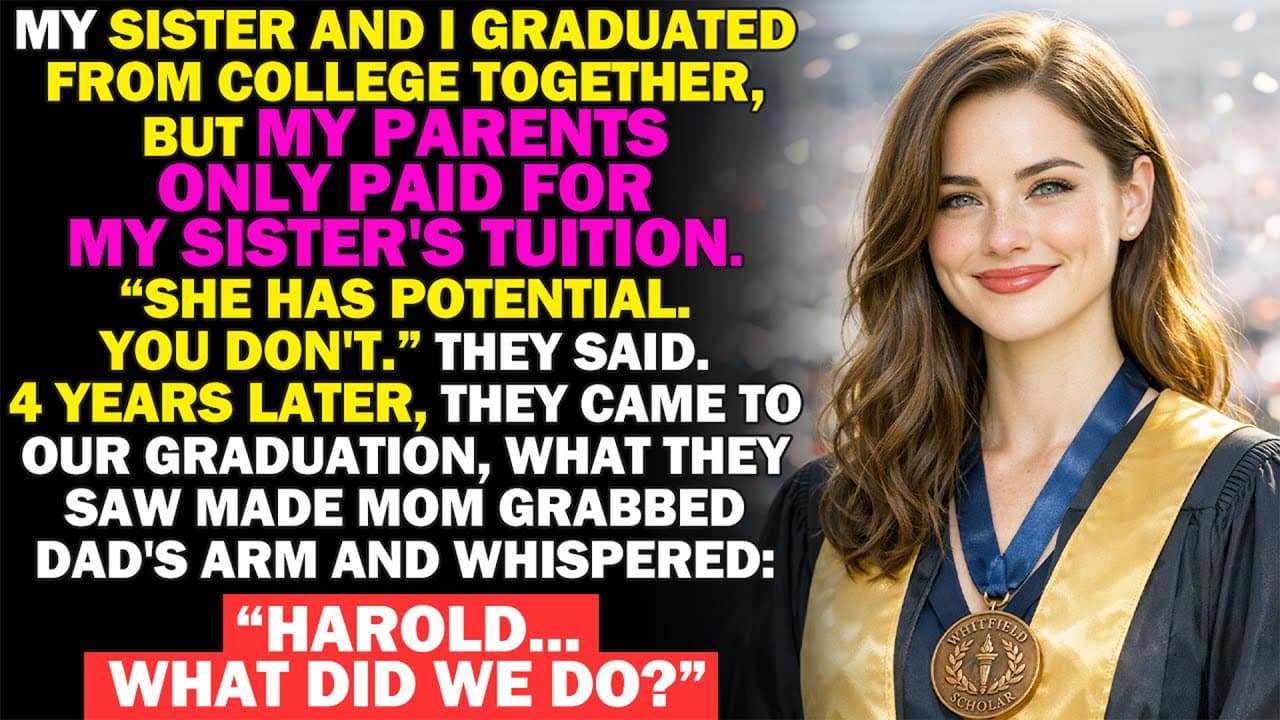
Francis overcomes parental rejection by pursuing scholarships, working three jobs, living cheaply, and turning academic excellence into independence. After being denied the college support given to her twin sister, she becomes a Whitfield Scholar and valedictorian, proving that her parents’ judgment did not determine her ability, value, or future.
Transcript
My name is Francis Townsend and I'm 22 years old. Two weeks ago, I stood on a graduation stage in front of 3,000 people while my parents, the same people who refused to pay for my education because I wasn't worth the investment, sat in the front row with their faces drained of all color. They came to watch my twin sister graduate. They had no idea ... Read More
Key Insights
- Parental favoritism is demonstrated through unequal financial support, gifts, travel opportunities, living arrangements, and family attention. Victoria receives a car, expensive experiences, and full college funding, while Francis receives used belongings, inferior accommodations, and no contribution toward her education.
- Francis’s college funding gap is substantial because Eastbrook State costs $25,000 annually and her parents contribute nothing. With only $2,300 saved from summer jobs, she must combine employment, scholarships, inexpensive housing, and strict budgeting to continue her education.
- Francis’s independence begins with a deliberate choice to design her own future rather than accept her parents’ assessment. She researches scholarships late at night, compares difficult financial options, and creates a detailed notebook containing income estimates, expenses, schedules, and contingency plans.
- The Whitfield Scholarship is a full ride with a $10,000 annual living stipend, awarded to only 20 students nationwide. Francis initially considers her chances remote, but bookmarks the opportunity and later receives encouragement from Professor Margaret Smith to pursue it.
- Francis’s work plan includes an early cafe shift, weekend residence hall cleaning, and possible economics teaching assistant duties. She estimates that the three jobs could produce about $1,500 per month, leaving scholarships to cover the remaining gap in her educational costs.
- Family exclusion becomes unmistakable during freshman Thanksgiving when Francis sees a photograph showing her parents and Victoria with only three chairs and three place settings. The experience changes her longing for approval into clarity about the family relationship and her need for emotional independence.
- Academic recognition provides Francis with support that her parents withheld. Professor Margaret Smith gives her microeconomics essay an A+, calls it one of the best undergraduate pieces she has seen in 20 years, and takes Francis’s abilities and circumstances seriously.
- Francis’s graduation achievement publicly contradicts her father’s judgment that she offered no return on investment. Her parents arrive to watch Victoria graduate without knowing Francis is present, then discover that Francis is the valedictorian delivering the keynote speech before 3,000 people.
Install to Summarize YouTube Videos and Get Transcripts
Explore YouTube Video Summarizer or Get YouTube Transcript Extractor
Questions & Answers
Q: How did Francis pay for college without parental support?
Francis developed a detailed plan combining employment, scholarship applications, inexpensive housing, and strict budgeting. She planned to earn money through a 5 a.m. cafe shift, weekend residence hall cleaning, and economics teaching assistant work. She also rented a $300-per-month room shared with four other students and pursued merit aid, including the Whitfield Scholarship.
Q: Why did Francis’s parents pay for Victoria’s college but not hers?
Francis’s father viewed college support as an investment and believed Victoria had greater leadership, networking, and social potential. He agreed to cover Victoria’s tuition, room, and board at Whitmore University but told Francis that she was smart without being special and offered no financial contribution. Their mother accepted the decision and privately described it as practical.
Q: What pattern of favoritism did Francis experience growing up?
Francis describes repeated unequal treatment throughout her childhood and teenage years. Victoria received a new Honda Civic, ski trips, a designer prom dress, a summer in Spain, private hotel rooms, and central placement in family photographs. Francis received Victoria’s damaged old laptop, slept on pullout couches or in a small nook, and was sometimes cropped from photographs.
Q: What was the Whitfield Scholarship in Francis’s story?
The Whitfield Scholarship offered a full ride and a $10,000 annual living stipend to only 20 students nationwide. Francis discovered it while searching scholarship databases after her parents refused to fund college. Although she initially thought winning was nearly impossible, she bookmarked it, and Professor Margaret Smith later encouraged her to pursue the opportunity.
Q: How did Professor Margaret Smith help Francis?
Professor Margaret Smith first recognized Francis after grading her Microeconomics 101 essay with an A+. She described it as one of the best pieces of undergraduate writing she had seen in 20 years. After hearing about Francis’s lack of family and financial support, she raised the Whitfield Scholarship and treated Francis as a talented student worth supporting.
Q: How did Thanksgiving change Francis’s view of her family?
During freshman Thanksgiving, Francis called home while sitting alone in her rented room. Her father refused to speak with her, and Victoria posted a family dinner photograph containing only three chairs and three place settings. Seeing that no place had been prepared for her changed Francis’s pain and desire for approval into a clearer understanding of her exclusion.
Q: What sacrifices did Francis plan to make for her education?
Francis planned an exhausting routine built around work, classes, study, and minimal rest. Her schedule began with cafe work at 5 a.m., continued with classes from 9 a.m. to 5 p.m., and reserved evenings for studying, work, or teaching assistant duties. She expected only four to five hours of sleep while living without privacy or air conditioning.
Q: What does Francis’s valedictorian achievement show about self-worth?
Francis’s achievement shows that her parents’ assessment did not define her academic ability or personal value. After being labeled a poor investment and denied the support provided to her twin sister, she built an independent plan, earned recognition from Professor Margaret Smith, became a Whitfield Scholar, and ultimately addressed 3,000 people as valedictorian while her surprised parents watched.
Summary & Key Takeaways
-
Francis and her twin sister receive college acceptances, but their parents agree to cover Victoria’s full costs at Whitmore University while offering Francis nothing for Eastbrook State. Their father calls Victoria a worthwhile investment and tells Francis she is smart but not special, continuing a long pattern of unequal treatment.
-
Facing $25,000 in annual college costs, Francis researches scholarships, calculates her expenses, finds inexpensive shared housing, and plans three jobs. She works at a campus cafe, joins a residence hall cleaning crew, and seeks teaching assistant duties while maintaining a demanding class and study schedule with only limited sleep.
-
Professor Margaret Smith recognizes Francis’s exceptional economics writing and learns about her financial and family circumstances. She encourages Francis to pursue the highly selective Whitfield Scholarship. Francis eventually becomes a Whitfield Scholar and valedictorian, surprising the parents who attended graduation expecting only to celebrate Victoria and did not know Francis would speak.
Read in Other Languages (beta)
Share This Summary 📚
Summarize YouTube Videos and Get Video Transcripts with 1-Click
Try YouTube Summary with ChatGPT & Claude or YouTube Transcript Generator
Explore More Summaries from Calm Drama Stories 📚






Summarize YouTube Videos and Get Video Transcripts with 1-Click
Try YouTube Summary with ChatGPT & Claude or YouTube Transcript Generator