What Is the True Cause of the Ukraine Conflict?
TL;DR
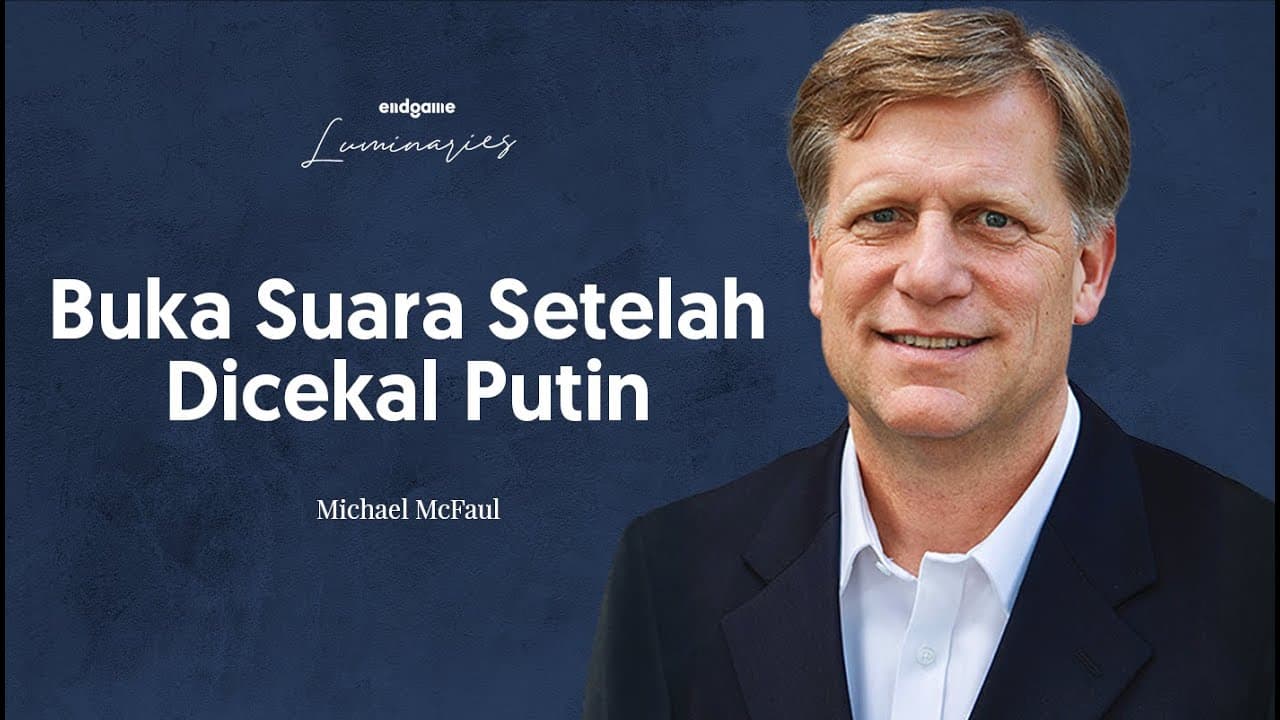
The Ukraine conflict stems from Russia's fear of democratic expansion rather than threats from NATO. Historically, the lack of Western support during Russia's democratic transition in the 1990s has fueled resentment and contributed to Putin's autocratic stance. The outcome of this conflict is critical for global democracy, as it will influence autocratic regimes worldwide.
Transcript
I don't think the war in Ukraine is not about NATO expansion, it's not about military threats from the West, it's about threats from democracy. He's afraid of democratic expansion, not NATO expansion. And what threatens them in Ukraine is a functioning democracy. The depression that we (U.S.) suffered in the 1930s was three times greater in Russia ... Read More
Key Insights
- The Ukraine war is driven by Putin's fear of democratic expansion, not NATO threats, challenging Russia's autocratic rule.
- Historical missteps in the 1990s linked democracy with economic depression in Russia, fostering resentment towards Western policies.
- Putin's leadership trajectory shifted Russia towards autocracy, influencing its confrontational stance against Western democracies.
- NATO expansion is a contentious issue, yet Russia's actions suggest imperial ambitions over genuine security concerns.
- The Russia-China alliance is stronger than ever, driven by mutual perceptions of Western threats, though it's an imbalanced relationship.
- The conflict in Ukraine is a pivotal moment for global democracy, with potential repercussions on autocratic regimes worldwide.
- The U.S. and its allies must enhance public diplomacy and democratic cooperation to counter the autocratic international alliance.
- Putin's narrative dismisses Ukraine's sovereignty, reflecting imperialistic ambitions and a rejection of democratic ideals.
Install to Summarize YouTube Videos and Get Transcripts
Explore YouTube Video Summarizer or Get YouTube Transcript Extractor
Questions & Answers
Q: What is the primary cause of the Ukraine conflict according to McFaul?
McFaul asserts that the Ukraine conflict is primarily driven by Putin's fear of democratic expansion, which he perceives as a threat to his autocratic rule. This fear is more significant than concerns over NATO expansion, as a functioning democracy in Ukraine undermines Putin's narrative that Russia is fundamentally different from Western democracies.
Q: How did the West's actions in the 1990s impact Russia's view of democracy?
In the 1990s, the West failed to adequately support Russia's transition to democracy, leading to significant economic depression. This period associated democracy with economic hardship in the minds of many Russians, fostering resentment towards Western policies and contributing to Russia's current adversarial stance. McFaul believes more should have been done to alleviate poverty and support democratic consolidation.
Q: What role does NATO expansion play in the Ukraine conflict?
While NATO expansion is often cited as a justification for Russia's actions, McFaul argues it is not the primary cause of the conflict. He notes that NATO relations with Russia have fluctuated over time, and the lack of imminent NATO membership for Ukraine undermines this justification. Instead, McFaul emphasizes Russia's imperial ambitions and fear of democracy as key drivers.
Q: How does McFaul view the Russia-China relationship?
McFaul views the Russia-China relationship as stronger than ever, driven by mutual perceptions of Western threats. However, he notes it is an imbalanced relationship, with Russia increasingly dependent on China for economic support. This alliance poses a challenge to global democratic norms, highlighting the need for greater cooperation among democratic nations.
Q: What are the implications of the Ukraine conflict for global democracy?
The Ukraine conflict is a pivotal moment for global democracy, with potential repercussions on autocratic regimes worldwide. A victory for Ukraine could deter autocratic aggression, while a defeat could embolden dictators. McFaul emphasizes the importance of supporting Ukraine to uphold democratic values and prevent the spread of authoritarianism.
Q: What criticisms does McFaul have regarding Western responses to the Ukraine conflict?
McFaul criticizes the West, particularly the U.S., for insufficient public diplomacy and efforts to unite democratic nations in response to the Ukraine conflict. He calls for enhanced cooperation among democracies to counter the autocratic international alliance and better communication to explain the importance of supporting Ukraine to global audiences.
Q: How does McFaul describe Putin's narrative about Ukraine?
McFaul describes Putin's narrative as dismissive of Ukraine's sovereignty, viewing it as an artificial construct imposed by the West and Bolsheviks. Putin's mission to reunite the Slavic nation is rooted in imperialistic ambitions, rejecting democratic ideals. This narrative serves to justify Russia's actions and undermine Ukraine's legitimacy as an independent state.
Q: What is McFaul's outlook on the resolution of the Ukraine conflict?
McFaul is uncertain about the resolution of the Ukraine conflict, acknowledging the complexities involved. He fears the conflict may continue for a long time due to the resilience of both Ukrainian and Russian forces. However, he emphasizes the potential for significant developments on the battlefield, which could influence the trajectory of the war and the possibility of a negotiated settlement.
Summary & Key Takeaways
-
Michael McFaul argues that the Ukraine conflict is rooted in Russia's fear of democratic expansion rather than NATO threats, highlighting the ideological clash between democracy and autocracy.
-
The West's failure to support Russia's transition in the 1990s linked democracy with economic hardship, contributing to Russia's current adversarial stance towards Western democracies.
-
The strengthening Russia-China relationship poses a challenge to global democratic norms, necessitating a coordinated response from democratic nations to uphold international order.
Read in Other Languages (beta)
Share This Summary 📚
Summarize YouTube Videos and Get Video Transcripts with 1-Click
Try YouTube Summary with ChatGPT & Claude or YouTube Transcript Generator
Explore More Summaries from Gita Wirjawan 📚
Summarize YouTube Videos and Get Video Transcripts with 1-Click
Try YouTube Summary with ChatGPT & Claude or YouTube Transcript Generator