How Roman Emperors Solved the Succession Problem
TL;DR
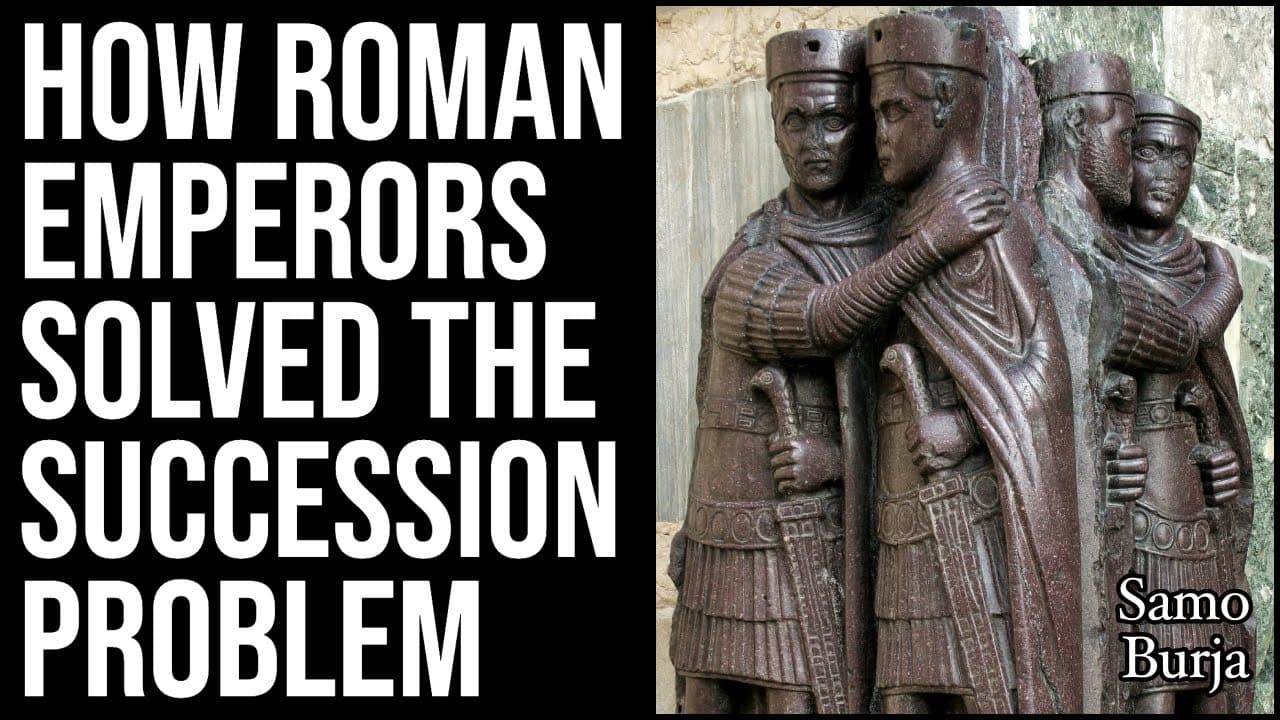
Roman emperors addressed succession by adopting a capable adult male as a son and heir, publicly positioning him to inherit the ruler’s power. During stable periods such as the Nerva-Antonine dynasty, this respected legal and social mechanism aligned the emperor’s interests with those of a rising younger rival. Read on to see why credible succession guarantees encouraged cooperation before power changed hands.
Transcript
Origianally published on the 16th of August, 2018. Institutions built by one generation of founders must be successfully handed off to the next to keep them functional. In the absence of such succession, organizational sclerosis or constant internal conflict sets in. The succession problem has two components: skill succession and power succ... Read More
Key Insights
- ✊ Successful institutions require both power and skill succession.
- 😀 The Roman Republic faced challenges with power succession as it expanded.
- ✊ Adult adoption in the Roman Empire facilitated peaceful power transitions.
- ❓ Aligning incentives between successors and current leaders is crucial for effective governance.
- 🥺 The complexity of succession solutions can lead to instability.
- 🇷🇴 Learning from historical practices like Roman adoption can provide insights for modern institutions.
- 😀 Modern society faces challenges in implementing historical succession practices due to different social norms.
Install to Summarize YouTube Videos and Get Transcripts
Explore YouTube Video Summarizer or Get YouTube Transcript Extractor
Questions & Answers
Q: How did Roman emperors solve the succession problem?
Roman emperors used adult adoption to make a chosen adult male their son, heir, and natural successor. Because Roman society understood and respected this mechanism, it provided a credible guarantee that the adopted heir would inherit the emperor’s position.
Q: What are the two components of institutional succession?
The succession problem consists of skill succession and power succession. The transcript argues that both are mutually necessary: an institution cannot remain functional if its solution addresses only one of them.
Q: Why was adult adoption useful for Roman emperors?
Adult adoption let an emperor bring a rising younger rival into his dynasty without relying on a blood relationship. It gave that rival a recognized path to power and aligned his aims with those of the current ruler.
Q: How did adult adoption change a successor’s incentives?
A potential rival who might otherwise undermine the emperor gained an interest in strengthening the power base he expected to inherit. This gave the current and future rulers a reason to cooperate even before the transfer of power.
Q: What did adoption mean in Roman society?
Roman adoption was not solely a way to care for orphaned or abandoned children. It was also a social and legal mechanism for making an adult male a son and heir who could inherit the adopter’s position.
Q: Why did power succession become difficult in the Roman Republic?
The republican system struggled as it expanded from governing provincial Rome and Italian client states to managing a complex urban economy and the political life of the Western Mediterranean. Religious and legal structures designed as a last recourse could not bear regular use, while economic, military, and political elites became less cooperative.
Q: How did the late Republic handle unresolved political disputes?
Talented people still emerged, but disputes increasingly led to bloody civil wars. Sulla’s career illustrates this deterioration because his political opponents were defeated both on the senate floor and on the battlefield.
Q: What does Cincinnatus illustrate about the early Roman Republic?
Cincinnatus could serve as dictator during an emergency and then retire to his farm after the crisis. His peers trusted that his retirement was genuine and did not fear that he would remain a dominant political figure, illustrating the unusually cooperative character of the early Republic.
Summary & Key Takeaways
-
Succession in institutions involves both power and skill succession, with the Roman Empire providing a historical example of successful power transition through adult adoption.
-
The Roman Republic faced challenges with power succession due to the complexity of managing provincial Rome and the Western Mediterranean.
-
The adoption of adults in the Roman Empire facilitated peaceful power transitions and aligned incentives for effective governance.
Read in Other Languages (beta)
Share This Summary 📚
Summarize YouTube Videos and Get Video Transcripts with 1-Click
Try YouTube Summary with ChatGPT & Claude or YouTube Transcript Generator
Explore More Summaries from Samo Burja 📚






Summarize YouTube Videos and Get Video Transcripts with 1-Click
Try YouTube Summary with ChatGPT & Claude or YouTube Transcript Generator