Lecture 1 | Programming Abstractions (Stanford)

Transcript
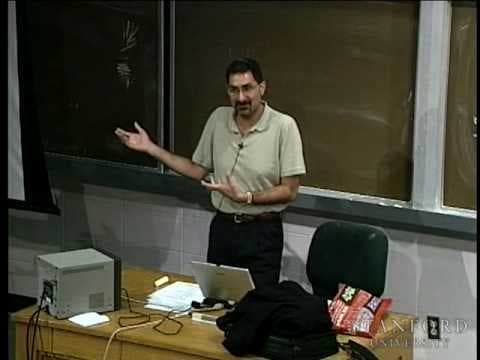
this presentation is delivered by the Stanford center for professional development hi welcome welcome to CS 106b programming extractions uh maybe now our mic is on oh that's interesting okay um the website actually was probably the most important thing to take away from here right is where can you find information about the class we're going to tal... Read More
Install to Summarize YouTube Videos and Get Transcripts
Explore YouTube Video Summarizer or Get YouTube Transcript Extractor
Summary
This presentation is delivered by the Stanford Center for Professional Development. The speaker introduces CS 106, the introductory programming sequence at Stanford. They discuss the structure of the course, the programming languages used (Java and C++), and the importance of problem-solving skills in programming. They also emphasize the value of learning multiple programming languages and the benefits of early exposure to different languages. The speaker concludes by discussing the workload of the course and the availability of resources for students.
Questions & Answers
Q: What is CS 106?
CS 106 is the introductory programming sequence at Stanford. It consists of two courses, 106 A and 106 B, which cover the fundamentals of programming and advanced programming techniques, respectively.
Q: What is the main focus of CS 106 A?
The main focus of CS 106 A, titled "Programming Methodology," is to teach students the basics of programming. It covers topics such as logic control flow and problem-solving techniques using a computer.
Q: Why do they use the Java programming language in CS 106 A?
The speaker mentions that they use Java in CS 106 A because it is a great tool for introductory programming. However, they also mention that if a student has learned programming in a different language, such as Python or C, they should still be fine as long as they grasp the fundamentals of programming.
Q: What is the main focus of CS 106 B?
The main focus of CS 106 B is to teach students advanced programming techniques and problem-solving skills. It covers topics such as recursion, algorithms for sorting and searching, dynamic data structures, and data abstraction.
Q: Why do they use the C++ programming language in CS 106 B?
The speaker explains that they use C++ in CS 106 B because it is a widely-used language and many upper division computer science courses at Stanford rely on a knowledge of C and C++. They want to ensure that students have a strong foundation in these languages before they reach those courses.
Q: Are students with experience in languages other than Java or C++ still eligible for CS 106 B?
Yes, the speaker reassures students that as long as they are proficient in programming and possess problem-solving skills, the details of the syntax in different languages are not as important in CS 106 B. The course focuses more on the techniques and concepts that extend the range of problems students can solve.
Q: How important is problem-solving skills in CS 106?
According to the speaker, problem-solving skills are crucial in CS 106. The course aims to teach students how to solve problems using a computer and how to break down, step through, develop, test, iterate, and debug programs. These problem-solving skills are transferrable across different programming languages and are a key focus of the course.
Q: What is the role of section leaders in CS 106?
Section leaders in CS 106 serve as mentors and provide individualized feedback to students. They grade assignments, hold conferences with students, and help them with problem-solving and answering questions. The speaker highlights the importance of section leaders in providing personalized support and guidance to students.
Q: What is the workload like in CS 106?
The speaker mentions that CS 106 is a five-unit class and has about seven programming assignments across a ten-week period. Students report spending around 15-20 hours on each assignment, but it can vary depending on personal work habits and approaches to problem-solving. The speaker suggests taking advantage of the help available from section leaders and utilizing the resources provided to manage the workload effectively.
Q: Do students need to bring anything or install specific software for CS 106?
The speaker explains that students will need to have access to a compiler to write and run their programs. They recommend using Xcode for Mac users and Microsoft's Visual Studio (2005 version) for Windows users. The compilers and libraries are also installed on the cluster computers in the dorms and libraries. The speaker mentions that students will receive handouts with instructions on how to install the required tools.
Q: Can students use their own preferred programming language in CS 106?
The speaker explains that CS 106 primarily focuses on Java and C++, so students are expected to work with these languages. However, they mention that the concepts and problem-solving skills acquired in the course can be applied to other programming languages.
Read in Other Languages (beta)
Share This Summary 📚
Summarize YouTube Videos and Get Video Transcripts with 1-Click
Try YouTube Summary with ChatGPT & Claude or YouTube Transcript Generator
Explore More Summaries from Stanford 📚
Summarize YouTube Videos and Get Video Transcripts with 1-Click
Try YouTube Summary with ChatGPT & Claude or YouTube Transcript Generator