How Would I Start Cold Email in 2025 and Build a Scalable System?
TL;DR
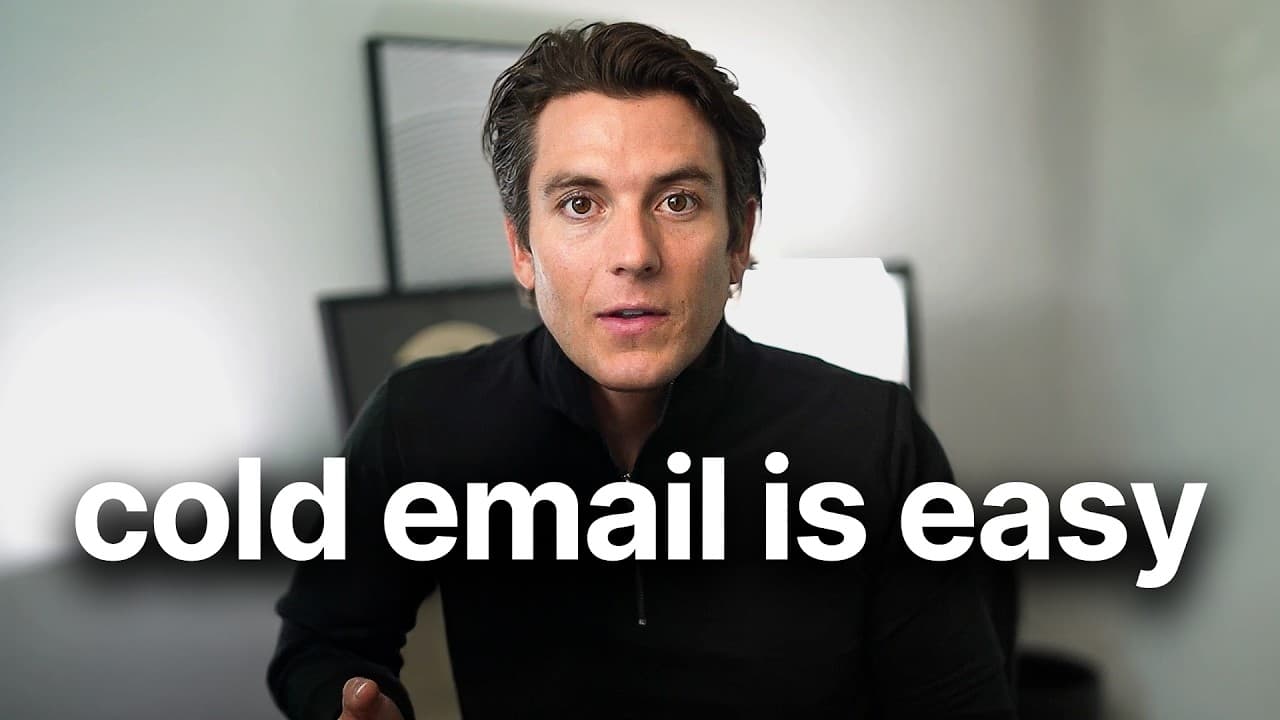
Start cold email by defining a precise ideal client profile, building an outcome-focused offer, and using a value-based call to action. Set realistic expectations, a 3% to 4% reply rate can be strong, and test with low-volume manual outreach before scaling through multiple accounts, verified prospect lists, AI-assisted personalization, and automated follow-ups. Read on for the exact foundation, sending volume, and system behind this approach.
Transcript
If you get these three steps right, you'll be able to send thousands of emails to your dream prospects, fill your calendar with qualified sales calls and grow your business with consistency and speed. So, in this video, I'm going to take all of my experience of the last 10 years making multiple seven figures as a result of cold email and condense i... Read More
Key Insights
- Cold email success is built on a clear foundation. The sender must define the ideal client profile, develop a compelling offer, set realistic expectations, and adopt a long-term mindset before increasing volume or investing heavily in automation.
- A broad prospect list produces messaging that speaks to nobody. Targeting a specific ideal client profile makes it possible to connect the email's language, pain points, offer, and desired outcomes to the people most likely to respond.
- A strong offer focuses on the customer's desired outcome. Prospects care about results such as attracting new clients, generating predictable business, or turning website clicks into customers, rather than receiving isolated deliverables such as views or leads.
- A value-based call to action gives prospects a useful reason to respond. Examples in the framework include offering a lead magnet, sharing a case study, inviting someone to a workshop, or featuring the prospect on a podcast.
- A 3% to 4% reply rate can represent strong cold email performance. Expecting nearly every recipient to answer creates discouragement, while realistic expectations support the testing and refinement required to make outreach effective over time.
- Multiple sending accounts support higher outreach volume while maintaining deliverability. The recommended configuration uses separate domains, creates five email accounts for each domain, and sends 30 to 50 emails per day from each account.
- AI-assisted research and writing can improve relevance. Available prospect details can include names, LinkedIn headings, company news, job listings, technologies, funding information, and website content, which provide inputs for personalized lines and direct-response email copy.
- Automated sending and follow-ups turn cold outreach into a repeatable sales system. Automation removes the need to transfer leads into spreadsheets, send every message manually, track each response by hand, or remember each follow-up independently.
Install to Summarize YouTube Videos and Get Transcripts
Explore YouTube Video Summarizer or Get YouTube Transcript Extractor
Questions & Answers
Q: How should you start cold email in 2025?
Start by defining your ideal client profile, its pain points, and its desired financial outcomes. Build an offer around those outcomes and use a value-based call to action, then set realistic expectations and commit to testing over the long term. You can begin with low-volume manual emails or LinkedIn messages before investing in sending software.
Q: How do you create a strong cold email offer?
Connect a specific ideal client profile and painful problem to an outcome the prospect genuinely wants. Focus on results such as turning website clicks into new clients or predictably generating new business, rather than isolated deliverables such as views or leads. The offer should speak the customer's language and give the right prospect a reason to respond.
Q: What call to action should a cold email use?
Use a value-based call to action instead of immediately asking to schedule a sales call. You could offer a lead magnet or case study, invite the prospect to a workshop, or feature them on a podcast. Whatever you choose should add value and make it worthwhile for the prospect to raise their hand.
Q: What is a good cold email reply rate?
A 3% to 4% reply rate can be a strong cold email result. Sending 100 emails should not create an expectation of receiving 75 or 100 replies. Realistic expectations make it easier to sustain the copy refinement, setup, and testing that cold email requires.
Q: How can AI help write cold email offers and copy?
Give AI a description of what you deliver, whom you help, and the language your ideal customers use. Ask it for five polarizing pain points and five financially driven desired outcomes to generate copy and offer angles. Prospect details such as LinkedIn headings, company news, job listings, technologies, funding information, and website content can also support personalized messages.
Q: How many cold emails should each account send per day?
The proposed system sends 30 to 50 emails per day from each account. It uses five email accounts for each separate sending domain, allowing outreach volume to grow across multiple accounts. Those accounts and domains are dedicated to cold email rather than the primary business email setup.
Q: How do you build a targeted cold email prospect list?
Filter prospects according to the ideal client profile instead of collecting the largest possible list. Verify email addresses and gather relevant information such as full names, LinkedIn headings, and company news. These details provide useful inputs for personalized opening lines and direct-response copy.
Q: Why should cold email follow-ups be automated?
Automation turns sending and follow-ups into a repeatable system instead of a collection of manual tasks. It removes the need to transfer every lead into spreadsheets, send each message individually, track every response by hand, or remember each follow-up. Outreach can continue while the business owner focuses on other work.
Summary & Key Takeaways
-
The foundation of cold email consists of identifying an ideal client profile, understanding that audience's pain points and desired financial outcomes, and developing an offer that speaks directly to those needs. A value-based call to action, such as a case study, lead magnet, workshop, or podcast invitation, gives prospects a reason to respond.
-
Cold email requires realistic expectations, sustained commitment, and repeated testing. A 3% to 4% reply rate can be an excellent result, so sending 100 messages should not create an expectation of receiving 75 or 100 replies. Beginners can build momentum through low-volume manual emails or LinkedIn messages before adopting dedicated sending software.
-
Scaling becomes practical when prospect research, personalization, sending, follow-ups, and reply tracking operate as a system. The proposed setup uses separate domains, five email accounts per domain, 30 to 50 daily emails from each account, searchable contact data, verified addresses, AI-generated copy, and automated campaign sequences instead of repetitive manual work.
Read in Other Languages (beta)
Share This Summary 📚
Summarize YouTube Videos and Get Video Transcripts with 1-Click
Try YouTube Summary with ChatGPT & Claude or YouTube Transcript Generator
Explore More Summaries from Instantly 📚


Summarize YouTube Videos and Get Video Transcripts with 1-Click
Try YouTube Summary with ChatGPT & Claude or YouTube Transcript Generator