Sam Altman on OpenAI's Journey and AI's Future
TL;DR
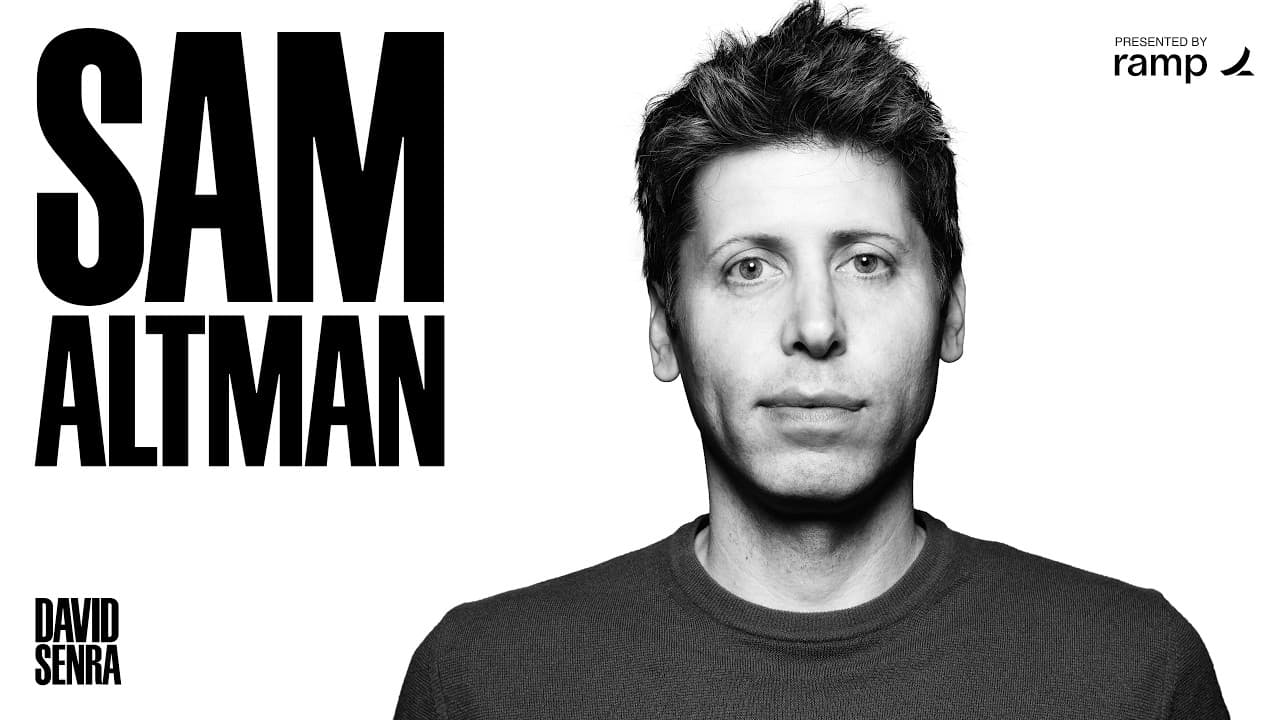
Sam Altman discusses the journey of building OpenAI, emphasizing the importance of making non-consensus bets and focusing on research and compute. He highlights the potential of AI to transform industries and the economy, while advocating for AI to expand human agency rather than concentrate power. Altman also reflects on lessons learned from Y Combinator and the challenges of managing a research lab without immediate customer feedback.
Transcript
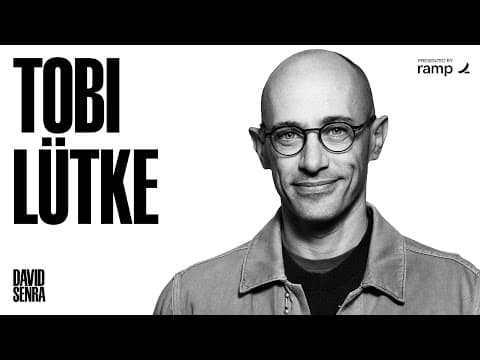
I just brought up Toby Lu and the fact that uh I recorded with him previously. Why' you say that you think he's one of the most interesting CEOs right now? >> One of the things that struck me the most about Toby is in the very early days of AI and then at every moment along the curve of it's developed, he has been the most forwardleaning CEO. He's ... Read More
Key Insights
- Sam Altman emphasizes the importance of making non-consensus bets in AI development.
- OpenAI focuses on research and compute, viewing it as a massive infrastructure project.
- Altman believes AI should expand human agency and avoid concentrating power.
- Human habits and institutional inertia may slow AI adoption, potentially smoothing the transition.
- OpenAI operates as a platform, providing a direct interface and API for AI use.
- Y Combinator's philosophy of shipping early and iterating shaped OpenAI's approach.
- OpenAI spent over four years without launching a product, learning to measure progress in novel ways.
- Altman anticipates a significant increase in small-business formation enabled by AI.
Install to Summarize YouTube Videos and Get Transcripts
Explore YouTube Video Summarizer or Get YouTube Transcript Extractor
Questions & Answers
Q: How does Sam Altman view the role of AI in society?
Sam Altman sees AI as a transformative tool that should expand human agency and empower individuals. He believes AI has the potential to drive significant economic and societal change, but emphasizes the importance of ensuring it does not concentrate power in a small number of companies or individuals. Altman advocates for AI to enable greater personal freedom and opportunity, particularly in the context of small-business formation and innovation.
Q: What is OpenAI's strategy according to Sam Altman?
OpenAI's strategy, as outlined by Sam Altman, is to function primarily as a platform offering powerful AI through a single interface and an API. This approach allows users to build on top of OpenAI's technology, fostering innovation and diverse applications. Altman emphasizes the importance of focusing resources on great ideas rather than spreading efforts across multiple good ones, ensuring OpenAI remains a leader in AI capabilities.
Q: Why does Sam Altman believe AI adoption will be slow?
Sam Altman believes AI adoption will be slower than the pace of technological advancement due to human habits and institutional inertia. He argues that this gradual adoption may actually be beneficial, allowing society and the economy to adapt more smoothly to changes. Altman suggests that while AI capabilities will advance rapidly, the transition will require time for people and institutions to integrate these new technologies effectively.
Q: How did Y Combinator influence OpenAI's development?
Y Combinator significantly influenced OpenAI's development by instilling a philosophy of making non-consensus bets, putting technical people in charge, and iterating quickly based on real-world feedback. This approach encouraged OpenAI to focus on developing its AI capabilities and deploying them iteratively, despite the challenges of operating without immediate customer feedback during the research phase. The emphasis on learning from reality and adapting swiftly has been central to OpenAI's success.
Q: What challenges did OpenAI face in its early days?
In its early days, OpenAI faced the challenge of operating without a clear product or immediate customer feedback, which is atypical for startups. The team had to invent new ways to measure research progress and maintain motivation, such as using leaderboards and external demos to simulate user feedback. The lack of a traditional startup playbook required OpenAI to navigate through 'chaotic stumbling' to eventually find a successful research path leading to GPT.
Q: What are Sam Altman's concerns about AI's impact on power distribution?
Sam Altman is concerned that AI could lead to a concentration of power if not managed correctly. He argues that AI should empower individuals and expand human agency rather than centralize control in a few companies or models. Altman stresses the importance of maintaining human control over AI development and ensuring that AI technologies are used to enhance personal and societal freedoms, rather than diminish them.
Q: How does Sam Altman view the relationship between AI and human connection?
Sam Altman believes that as AI capabilities advance, human connection will become increasingly valuable. He suggests that while AI can automate many tasks, the intrinsic value of human interaction and relationships will remain significant. Altman posits that AI should complement human experiences, enhancing productivity and creativity, rather than replacing the fundamental human desire for connection and interaction.
Q: What does Sam Altman predict for the future of small businesses with AI?
Sam Altman predicts a major increase in small-business formation facilitated by AI technologies. He believes AI will lower barriers to entry, enabling more individuals to start and run businesses by providing powerful tools for innovation and productivity. Altman envisions AI as a democratizing force in entrepreneurship, allowing more people to pursue their ideas and contribute to economic growth, ultimately leading to a diverse and dynamic business landscape.
Summary & Key Takeaways
-
Sam Altman discusses how OpenAI was built on making non-consensus bets, focusing on research and compute as key components. He views AI as a tool to expand human agency and cautions against concentrating power in a few entities. OpenAI aims to be a platform for AI use, with a single interface and API for building on top of its technology.
-
Altman reflects on the influence of Y Combinator in shaping OpenAI's operating philosophy, emphasizing shipping early and iterating based on real-world feedback. Despite spending over four years without a product launch, OpenAI found ways to measure research progress and eventually developed GPT.
-
Altman foresees AI capabilities advancing rapidly, outpacing societal and economic absorption rates. He expects human connection to become more valuable and predicts a boom in small-business creation facilitated by AI. The challenge lies in ensuring AI empowers individuals rather than centralizing power.
Read in Other Languages (beta)
Share This Summary 📚
Summarize YouTube Videos and Get Video Transcripts with 1-Click
Try YouTube Summary with ChatGPT & Claude or YouTube Transcript Generator
Explore More Summaries from David Senra 📚


Summarize YouTube Videos and Get Video Transcripts with 1-Click
Try YouTube Summary with ChatGPT & Claude or YouTube Transcript Generator