How to gain financial intelligence without a degree

TL;DR
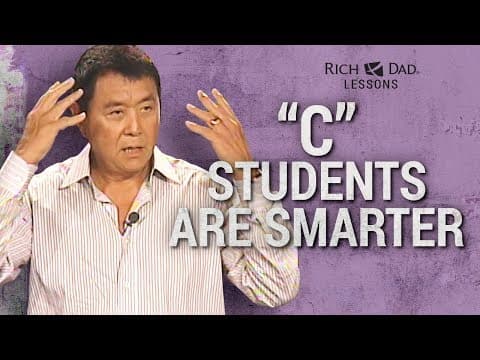
Financial intelligence matters more than degrees for building wealth. A students can work for C students, and taxes can burden high earners, but the missing piece is financial education. The episode argues that traditional schooling does not teach money, investing, debt, or cash flow and that anyone can build wealth by learning the money rules used by the rich.
Transcript
Hello, Robert Kiyosaki and this is another lesson for people who are member of cash flow clubs but especially for cash flow club leaders because you're the teachers that we need today. And so today's lesson comes from this book here. Why A students work for C students. I'll say it again. Why A students work for C students. In other words, A student... Read More
Key Insights
- Financial education is positioned as the key differentiator between rich and non rich, surpassing traditional academic credentials in wealth building.
- The video argues that A students can end up working for C students, illustrating that information asymmetries in money management persist regardless of classroom success.
- Professional education alone is not sufficient for financial freedom, and the missing element is practical financial intelligence related to taxes, debt, and cash flow.
- A team-based approach is recommended, with accountants, lawyers, and clients collaborating to align financial goals and legal structures for wealth.
- The cash flow game is presented as a teaching tool that bypasses conventional education to demonstrate real-world money dynamics and strategic thinking.
- The content critiques the way schools divide people and emphasize that financial education can empower those outside traditional professional tracks.
- The discussion stresses that tax considerations and legal structures can dramatically affect wealth accumulation, making tax planning a core skill for investors.
- Financial intelligence is described as learnable by anyone, not just the brightest students, enabling pathways to wealth through smart money management.
Install to Summarize YouTube Videos and Get Transcripts
Explore YouTube Video Summarizer or Get YouTube Transcript Extractor
Questions & Answers
Q: A real search query question about the video (e.g. 'How to...', 'What is...', 'Why does...', 'When should...'). Question 1
Financial intelligence is described as the essential skill that separates the wealthy from others, allowing people to build wealth despite their formal education level. The answer explains that money literacy includes understanding taxes, cash flow, debt, and investments and that this knowledge can be learned outside traditional schooling. The result is greater control of financial outcomes.
Q: Question 2
The video explains that traditional education focuses on professional tracks such as medicine, law, or accounting, but misses practical financial education. This gap creates a mismatch where high earners still struggle financially if they lack financial literacy. The remedy is integrating financial education into career planning and personal finance decisions.
Q: Question 3
It is stated that A students may end up working for C students because financial outcomes depend on money management, not only academic performance. The key factor is how individuals leverage financial intelligence to create cash flow, investments, and tax strategies that build wealth over time.
Q: Question 4
Collaboration among professionals is emphasized, with accountants and attorneys needing to communicate effectively for clients to optimize wealth strategies. The idea is that interdisciplinarity reduces miscommunication and helps clients implement tax-efficient and legally compliant plans for asset growth.
Q: Question 5
The cash flow board game is highlighted as a teaching tool that translates financial concepts into practical decision making. It demonstrates how different choices affect cash flow, investments, and risk, helping players understand how to move toward financial independence regardless of their formal education.
Q: Question 6
The description argues that taxes can punish high earners and that smart tax planning is part of financial intelligence. Learning tax implications and how to structure earnings affects net wealth and long-term stability, making tax-aware strategies central to wealth-building education.
Q: Question 7
Professional education is acknowledged as valuable, but the video asserts that it does not inherently teach money management. The recommended balance is acquiring both professional skills and financial literacy to maximize opportunities and create sustainable wealth.
Q: Question 8
The episode suggests that the real barrier to wealth is the lack of financial education, not the absence of intelligence or talent. It invites viewers to seek out financial knowledge, build a plan, and align home, work, and investment activities to escape the rat race.
Summary & Key Takeaways
-
A broad shift from traditional schooling to financial literacy is advocated, emphasizing that academic success does not guarantee wealth and that financial education is essential for escaping the rat race.
-
The episode highlights the contrast between professional education and financial education, noting that both are important but financial education uniquely enables wealth creation beyond professional degrees.
-
The content underscores collaboration among professionals, including accountants and attorneys, to support clients in building wealth through coordinated financial strategies and practical education about taxes and investments.
Read in Other Languages (beta)
Share This Summary 📚
Summarize YouTube Videos and Get Video Transcripts with 1-Click
Try YouTube Summary with ChatGPT & Claude or YouTube Transcript Generator
Explore More Summaries from The Rich Dad Channel 📚


Summarize YouTube Videos and Get Video Transcripts with 1-Click
Try YouTube Summary with ChatGPT & Claude or YouTube Transcript Generator