Light Painting (while pregnant) - Smarter Every Day 41
TL;DR
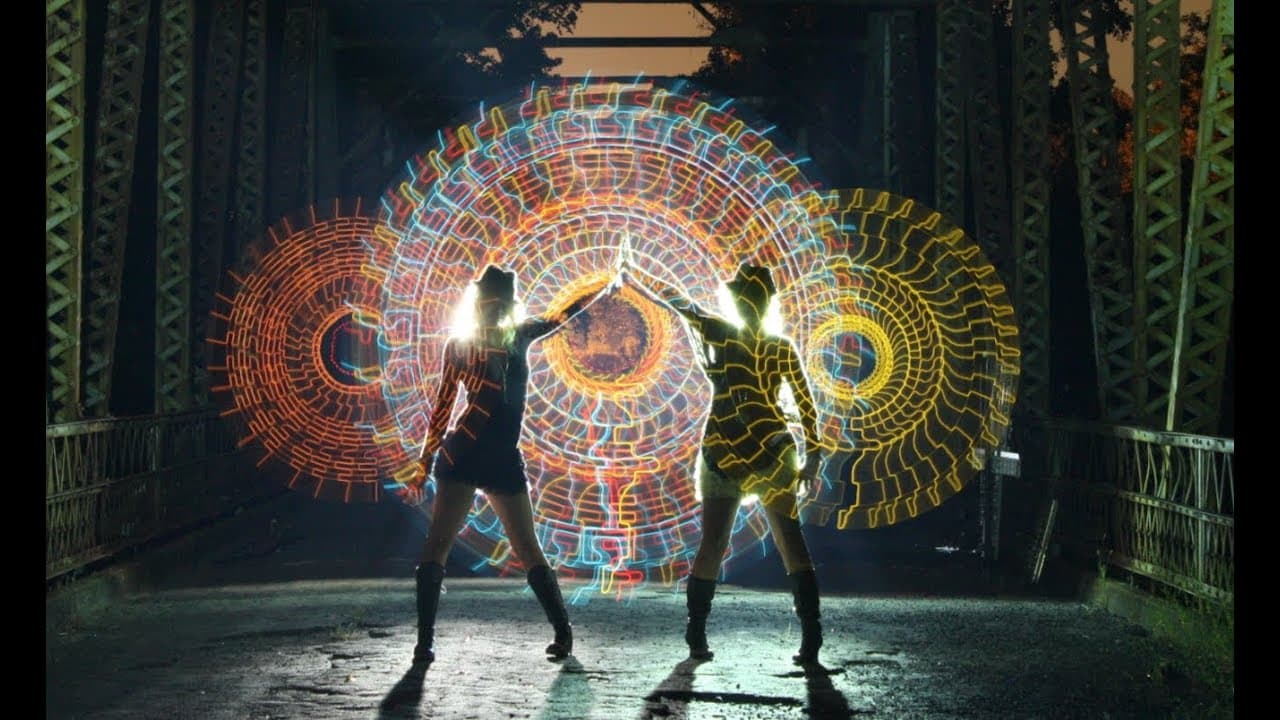
Light painting works by keeping the camera shutter open while light is added to the exposed image sensor, then closing the shutter to complete the picture. Destin and light painter Wes Whaley demonstrate the technique while creating pregnancy photos in an abandoned warehouse. The explanation also compares CCD and CMOS sensors and shows how red and green light mix into yellow, so read on to understand both the creative process and camera technology.
Transcript
Hey it's me Destin. Welcome to Smarter Every Day. So most women get pregnancy photos then a couple of months later look at them and say what the heck was I thinking, but I've decided to bring my wife here to a (wife) spooky abandoned warehouse. Yeah it is a spooky abandoned warehouse. And, there's a guy named Wes Whaley, and he is a light painter, ... Read More
Key Insights
- 🙂 Light painting involves exposing the image sensor to capture light energy converted into electrical energy.
- 🙂 The technique allows for the creation of unique images by adding light before closing the shutter.
- 😘 CCD and CMOS are the main types of image sensors, with CCDs being uniform and low noise, and CMOS sensors having on-chip processing capabilities.
- 🙂 Light painting can capture colors by mixing different light sources on the sensor.
- 💁 CMOS sensors are preferred for compact devices due to their form factor and integrated processing.
- 🙂 Light painting allows for creative and artistic photography.
- 🙂 Light painting can be used for various applications, including capturing pregnancy photos.
Install to Summarize YouTube Videos and Get Transcripts
Explore YouTube Video Summarizer or Get YouTube Transcript Extractor
Questions & Answers
Q: How does light painting work?
The camera shutter opens to expose an image sensor, and light is added before the shutter closes. The sensor converts the incoming light energy into electrical energy, producing an image as though the photographer had painted light onto a canvas.
Q: How were light painting pregnancy photos created on Smarter Every Day 41?
Destin brought his pregnant wife to an abandoned warehouse and worked with light painter Wes Whaley. They used light painting to create pregnancy photos by adding light to the camera sensor during the exposure.
Q: Why can a light painter move without appearing in the photograph?
The sensor records the light energy that reaches it during the exposure, regardless of exactly when that light arrives. This allows the light painter to move while directing light without necessarily becoming visible in the final image.
Q: Can light painting create different colors?
Yes. Different colored light sources can deposit color onto the sensor during the exposure. The demonstration shows red and green light mixing to produce yellow in part of the image.
Q: What are the two main types of camera image sensors?
The two main types discussed are CCD, or charge coupled device, and CMOS, or complimentary metal oxide semiconductor. A CCD produces an output voltage when light hits it, while a CMOS sensor uses onboard circuitry to process each pixel during exposure.
Q: What is the difference between CCD and CMOS image sensors?
CCDs are described as uniform and typically used for low-noise, low-cost applications. CMOS sensors process individual pixels with onboard circuitry, which can introduce more noise and cost more to manufacture, though the video says those issues are improving.
Q: Why are CMOS sensors useful in compact devices?
CMOS sensors can perform much of their processing directly on the chip. Because they require fewer auxiliary circuit boards, they are useful when a device needs a very tight form factor.
Q: How do light intensity and exposure time affect light painting?
A brief burst from a strong light can deposit an amount of energy comparable to a dimmer light shining for longer. Destin illustrates this by saying a 3 watt laser firing for a nanosecond might be equivalent to a very low-power LED shining dimly elsewhere.
Summary & Key Takeaways
-
The video introduces light painting as a technique where the image sensor converts light energy into electrical energy.
-
The process involves adding light to the sensor before closing the shutter to create unique images.
-
The video discusses the two main types of image sensors: CCD and CMOS, highlighting their differences and advantages.
Read in Other Languages (beta)
Share This Summary 📚
Summarize YouTube Videos and Get Video Transcripts with 1-Click
Try YouTube Summary with ChatGPT & Claude or YouTube Transcript Generator
Explore More Summaries from SmarterEveryDay 📚





Summarize YouTube Videos and Get Video Transcripts with 1-Click
Try YouTube Summary with ChatGPT & Claude or YouTube Transcript Generator