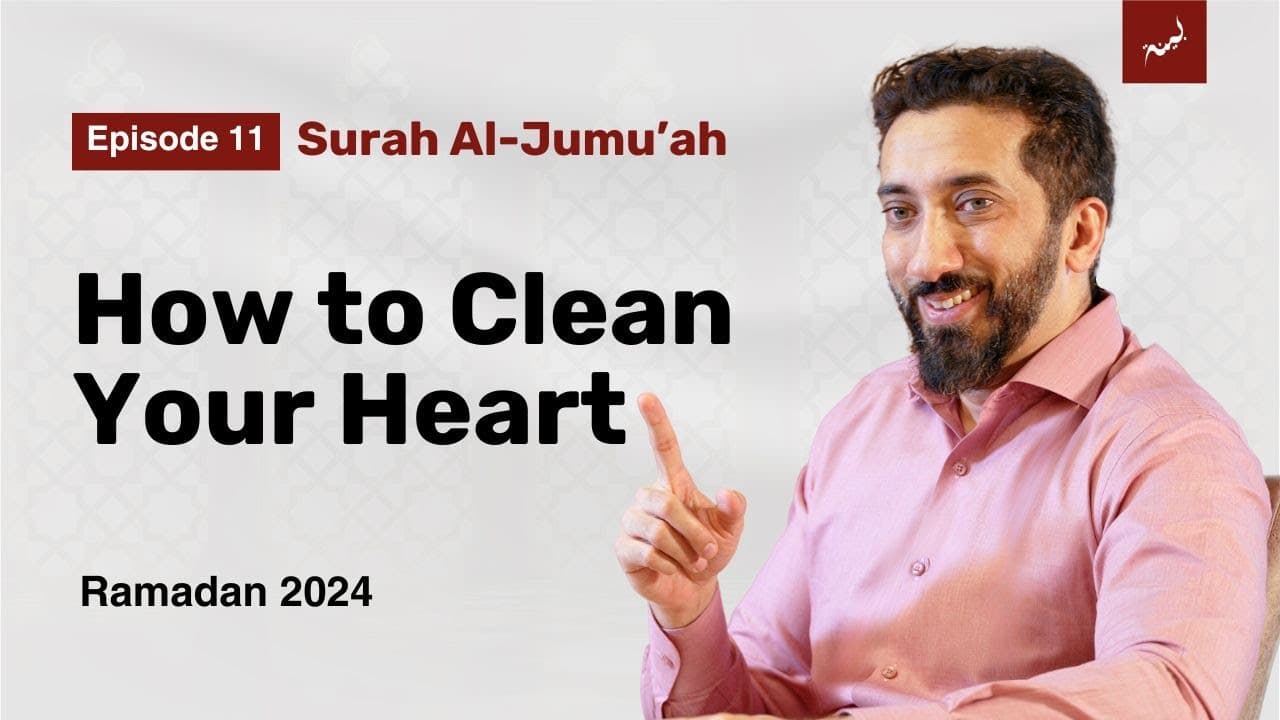
How to Build True Taqwa Through Quranic Practice
TL;DR
True taqwa is developed by practicing self-restraint and speaking truthfully, not by pursuing secret or exotic spiritual techniques. Fasting trains believers to avoid even permissible things so they can better resist prohibited actions, while Quranic purification requires direct ethical conduct, including avoiding slander, repaying debts, respecting others, and steadily learning from setbacks.
Transcript
but what do we do we say we use Islam to say oh parents have all the rights and children have none of the rights by the way the only relationship where one has all the rights and the other has no rights is Allah and the slave because Allah has all the rights and we are just slaves of Allah we don't have any rights against Allah everything Allah giv... Read More
Key Insights
- The relationship between Allah and a slave is presented as the only relationship in which one side has all rights and the other has none. Human relationships should therefore not use Islam to erase children’s rights while assigning every right to parents.
- The Quran changes how believers perceive the world by teaching them to recognize the wind, sun, and other features of creation as divine signs. Those visible signs lead believers back to revelation, while revelation encourages them to explore the signs surrounding them.
- Tazkiyah is a process of purification, repair, nurturing, and growth. Its linguistic associations include healthy soil, growing plants, a developing child, and the purification and growth connected with giving zakat, making it broader than a single spiritual experience.
- Purification begins with cleaning what prevents repair and healthy development. Doctors disinfect injuries before treating them, and restorers remove rust before repairing an old car. In the same way, personal reform starts by confronting damaging beliefs, sins, habits, and distorted ideas.
- Spiritual development is gradual and includes setbacks. A person may make progress, fall back into an old habit, learn from the failure, and begin progressing again. The important pattern is continued development overall, rather than expecting uninterrupted improvement every day.
- Fasting is practical training for taqwa because it teaches a person to stop themselves from permissible things. Repeated self-restraint can strengthen the ability to avoid prohibited actions, although the hoped-for development of taqwa is not presented as an automatic guarantee.
- Straightforward speech is a test of mindfulness toward Allah. Fear of people can cause someone to calculate, conceal, or distort what should be said, but taqwa requires stating what is right even when it displeases loved ones or appears to support an opponent.
- Quranic spirituality is expressed through direct ethical responsibilities, including avoiding backbiting, slander, and ridicule, and returning money that is owed. Emotional spiritual experiences or secret techniques cannot replace the demanding conduct that revelation places directly before a believer.
Install to Summarize YouTube Videos and Get Transcripts
Explore YouTube Video Summarizer or Get YouTube Transcript Extractor
Questions & Answers
Q: How can a person develop true taqwa?
A person can develop taqwa through practical self-restraint and direct obedience to Quranic guidance. Fasting trains someone to stop themselves from consuming things that are ordinarily permissible, which can strengthen the capacity to resist prohibited actions. Taqwa also appears in truthful speech, especially when fear of people creates pressure to hide, calculate, or distort what is right.
Q: How does fasting help build taqwa?
Fasting helps build taqwa by training a person to stop themselves from things that are otherwise permissible. If someone learns to exercise restraint around lawful food and drink during the fasting period, that discipline may help them resist prohibited actions as well. The training creates hope for greater taqwa, but the result is not described as automatically guaranteed.
Q: What does tazkiyah mean in Quranic spiritual development?
Tazkiyah refers to purification, repair, nurturing, and growth rather than an instant feeling of spiritual cleanliness. Its meanings are illustrated through healthy soil that produces good plants, a child who is still growing, and zakat that purifies wealth while bringing growth and blessing. Applied personally, it describes a continuing process of cleansing harmful influences and developing healthier qualities.
Q: Why are setbacks part of spiritual purification?
Setbacks are part of spiritual purification because development does not occur perfectly every day. A person may improve, return to an unhealthy habit, recognize what happened, and learn from the failure before continuing. The process resembles changing a poor diet, where temptation and occasional lapses can occur. What matters is that the overall direction remains one of learning, nurturing, and growth.
Q: How does the Quran change a believer’s view of nature?
The Quran teaches a believer to see natural phenomena such as the wind and sun as divine signs, not merely as subjects that can be studied scientifically. Revelation changes the person’s worldview by connecting the surrounding universe to Allah’s guidance. Observing signs in creation then directs the believer back to the Quran, while reading the Quran encourages further exploration of creation.
Q: What does straightforward speech have to do with taqwa?
Straightforward speech demonstrates taqwa because it places mindfulness of Allah above fear of human reactions. People often calculate what to say because they worry that others will dislike them or become offended. The Quranic direction presented here is to say what is right and mean exactly what one says, even when that position opposes a loved one or agrees with an enemy.
Q: How can someone purify the heart according to Quranic guidance?
Purifying the heart requires direct ethical action, including avoiding backbiting, slander, ridicule, and mockery, and returning money that belongs to other people. The approach is practical rather than secret or abstract. Feelings produced by devotional performances cannot substitute for correcting harmful behavior. Quranic purification addresses the problem directly by requiring conduct that cleans both the heart and one’s relationships.
Q: Why can exotic spiritual practices become a distraction?
Exotic spiritual practices can become a distraction when they provide a feeling of closeness to Allah while allowing a person to avoid clear Quranic responsibilities. The transcript criticizes the idea that selected religious figures possess hidden secrets unavailable to ordinary believers. Such thinking can enable manipulation and shift attention away from difficult duties such as honest speech, avoiding slander, and repaying money owed.
Summary & Key Takeaways
-
The Quran transforms a believer’s worldview by identifying the natural world as a collection of divine signs. Learning about the sun or wind becomes more than acquiring scientific information. Observing these signs directs a person back to revelation, while reading revelation encourages further exploration of the signs throughout the universe.
-
Tazkiyah combines purification, repair, nurturing, and growth. Like cleaning an injury before treating it or removing rust before restoring a car, personal development begins by removing harmful beliefs and behavior. The process is gradual, with progress, setbacks, lessons, and renewed effort contributing to a person’s continuing spiritual development.
-
True taqwa appears in practical self-restraint and truthful behavior. Fasting provides training by requiring believers to avoid permissible things, which can strengthen their ability to resist prohibited actions. Spiritual purification also requires straightforward speech, avoiding ridicule and slander, returning money owed, and following the Quran’s direct ethical guidance.
Read in Other Languages (beta)
Share This Summary 📚
Summarize YouTube Videos and Get Video Transcripts with 1-Click
Try YouTube Summary with ChatGPT & Claude or YouTube Transcript Generator
Explore More Summaries from Nouman Ali Khan - Official - Bayyinah 📚


Summarize YouTube Videos and Get Video Transcripts with 1-Click
Try YouTube Summary with ChatGPT & Claude or YouTube Transcript Generator