How to Find Your Purpose in Three Practical Steps
TL;DR
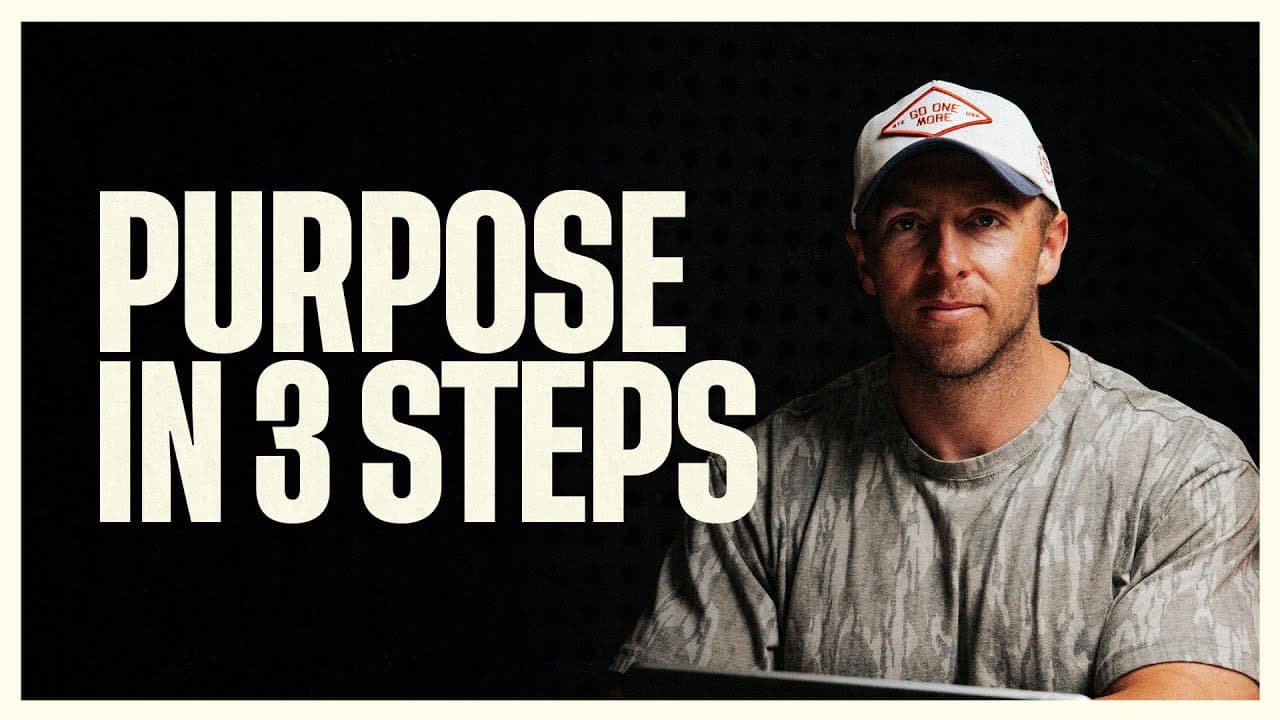
Choose a direction before waiting for a perfect life mission, because purpose becomes clearer through movement. Listen for honest internal guidance, identify what you naturally do well, and pursue curiosity with courage. Treat authentic failure as useful feedback, then carry the skills, resilience, habits, relationships, and knowledge you gained into your next decision.
Transcript
coming out of that injury like you had a very clear purpose and direction. Yeah. And I'm sure you speak to a lot of people who come to a a very critical point in their life similar to to you as you did who have this choice of going left or right. Mhm. How do you guide them often if they don't have that purpose and direction? Yeah, it's a great ques... Read More
Key Insights
- A mission is a beacon that gives actions direction, even when the initial destination is imperfect. Without a chosen aim, people can remain busy while making little meaningful progress because their efforts are not organized around who they want to become or what they want to accomplish.
- A perfect vision does not exist, and any chosen mission will eventually change. A person may accomplish it, discover a better direction while pursuing it, or die before reaching it, so uncertainty is not a sound reason to postpone choosing and acting.
- A pivot does not make earlier effort worthless because the original path creates the position from which a new direction becomes visible. Physical capability, mental resilience, discipline, habits, relationships, and lessons acquired along the way remain available after the mission changes.
- Internal dialogue is a method for discovering direction through prayer, reflection, or honest self-questioning. The answer may arrive as a quiet impression rather than an unmistakable revelation, which means a person must deliberately become still, listen, and notice what emerges.
- Talent is an organic capability that allows someone to perform relatively well with comparatively little effort. Purpose can become clearer by identifying those natural strengths and deliberately stacking learned skills on top of them, increasing the likelihood of effective performance.
- Weaponized curiosity is the practice of actively testing what interests you instead of demanding a complete path beforehand. Passion may appear only after execution begins, as illustrated by discovering a love for soldiering after becoming a soldier and for helping others after pursuing a book.
- Courage activates curiosity by enabling action despite fear and the possibility of failure. Missteps need not be wasted time because each serious attempt can produce experience, knowledge, and opportunities that support the next experiment or change in direction.
- Failure is different from defeat because missing a goal can still produce learning and renewed action. A loss must come from a deliberate, authentic attempt to succeed, and its discomfort can provide the catalyst for analysis, knowledge transfer, adjustment, and improvement.
Install to Summarize YouTube Videos and Get Transcripts
Explore YouTube Video Summarizer or Get YouTube Transcript Extractor
Questions & Answers
Q: How can I find my purpose when I lack direction?
Start by choosing a provisional mission based on who you want to be or what you want to do. Do not wait for a perfect answer, because no perfect vision exists and your direction will change. Use internal reflection, examine your natural talents, and try activities that spark curiosity. Movement creates experience, and experience can reveal interests, strengths, and better directions that remain invisible during prolonged analysis.
Q: What are the three practical steps for finding purpose?
The three steps are to listen to your internal dialogue, identify and build upon your natural talents, and practice weaponized curiosity. Internal dialogue uses prayer, reflection, or honest self-questioning. The talent approach focuses on abilities that come with relatively little effort and adds skill through practice. Weaponized curiosity means testing interests with courage so that passion and direction can emerge through experience.
Q: Why should I choose a mission before I feel completely certain?
A mission provides a beacon that organizes action, while waiting for certainty can create endless paralysis by analysis. The mission does not need to be perfect because it will change through accomplishment, a pivot, or circumstances. Choosing a direction allows you to develop discipline, resilience, habits, relationships, and knowledge. Those gains remain valuable even if you later decide that another destination fits you better.
Q: How does internal dialogue help clarify life purpose?
Internal dialogue creates space to ask who you genuinely want to become and then listen without immediately forcing an answer. It can take the form of prayer, reflection, or looking into a mirror and asking yourself directly. Guidance may arrive quietly, like a whisper rather than an overwhelming revelation. If you never pause and listen for that response, you are less likely to notice it.
Q: How can natural talent guide a career or personal mission?
Natural talent offers a practical direction because it identifies what you do well with relatively little effort. Talent is not the same as your current skill level. It is an organic capability that can serve as a foundation. Once identified, you can deliberately stack learned skills on top of it. Combining talent and skill increases the likelihood of success while giving your effort a clearer focus.
Q: What does weaponized curiosity mean for finding purpose?
Weaponized curiosity means turning a question or interest into deliberate action. Instead of demanding a clearly defined route from the present to a distant goal, you try something and discover what the experience teaches you. Interest, passion, and purpose may develop only after execution begins. Curiosity becomes especially powerful when paired with courage, because courage allows experimentation despite uncertainty, fear, and possible failure.
Q: Why is failure valuable when pursuing a mission?
Failure is valuable when it follows a sincere attempt to win because it reveals information that success may not expose. The correct response is to examine what failed, determine whether the issue involved the idea, design, market, or timing, and apply that knowledge. Failure does not equal defeat when you learn, get back up, and move forward with improved judgment, skills, and understanding.
Q: What did the unsuccessful relay race teach the business?
The relay attracted only six teams despite expectations that thousands of people might sign up, while the event had room for about 25 teams. That result suggested the audience did not want an easy, casual race. They preferred demanding marathons and ultra-distance events that required 10 to 20 weeks of preparation and produced an earned sense of exhaustion at the finish line.
Summary & Key Takeaways
-
Purpose begins with choosing who you want to be or what you want to do, even when the answer is incomplete. A mission provides direction, but it will eventually change through accomplishment, a deliberate pivot, or circumstances. Waiting for a perfect vision only extends paralysis and prevents useful movement.
-
Three practices can create clarity: listen to internal dialogue through prayer or reflection, identify talents that require relatively little effort, and explore unanswered curiosities. Natural talent becomes more powerful when skills are deliberately built on top of it, while curiosity allows passion and purpose to emerge through direct experience.
-
Failure becomes valuable when someone makes a sincere effort to win, misses the goal, studies the result, and continues moving. An unsuccessful relay race revealed that the audience preferred difficult endurance events requiring substantial preparation. The goal failed, but the team gained consumer knowledge without being permanently defeated.
Read in Other Languages (beta)
Share This Summary 📚
Summarize YouTube Videos and Get Video Transcripts with 1-Click
Try YouTube Summary with ChatGPT & Claude or YouTube Transcript Generator
Explore More Summaries from The Nick Bare Podcast 📚
Summarize YouTube Videos and Get Video Transcripts with 1-Click
Try YouTube Summary with ChatGPT & Claude or YouTube Transcript Generator