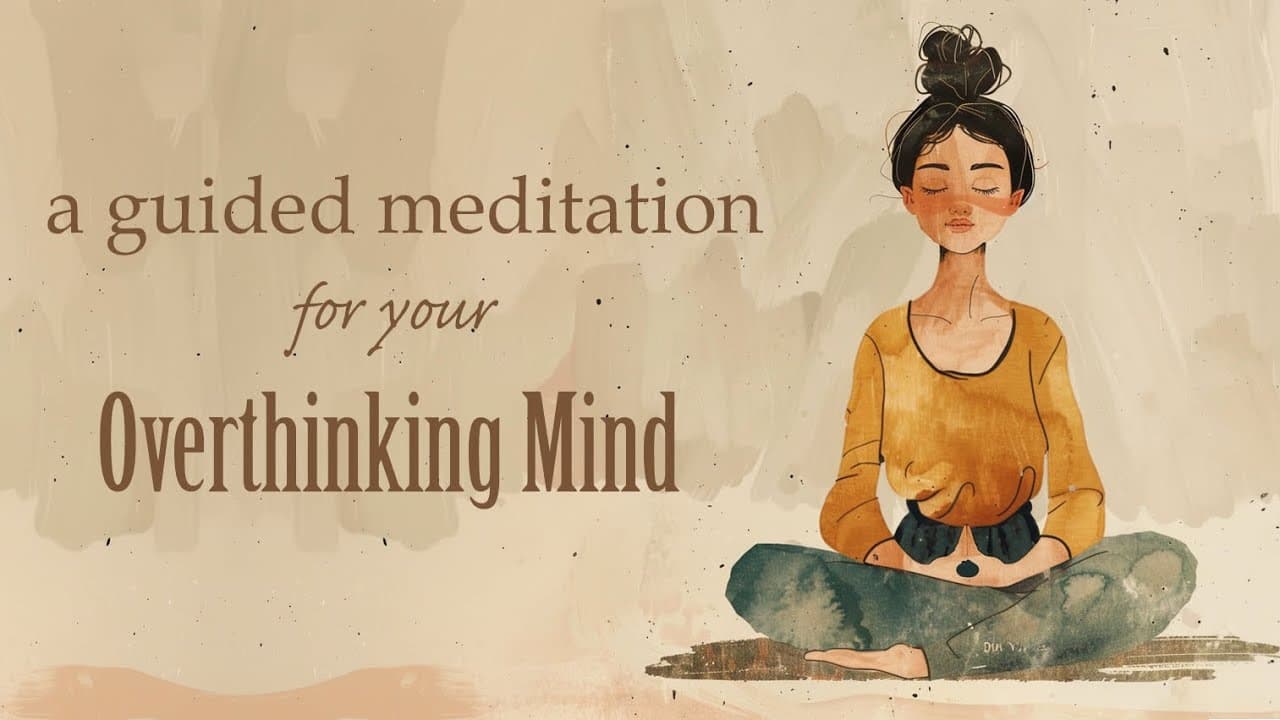
How to Calm an Overactive Mind With a 10 Minute Meditation
TL;DR
Calm an overactive mind by syncing your breath with a simple hand movement: close your hands on each exhale and open them on each inhale. Focusing on this rhythm gives your mind a break, and the open palms become a symbol of willingness to receive creative solutions.
Transcript
Begin by getting into a comfortable seated position sitting upright spine tall and straight set bones balanced on either side shoulders rolled back slightly to open up your heart dropping your shoulders away from your ears and P Palms resting facing open in your lap when you're ready gently close your eyes begin to tune in to your breath and your b... Read More
Key Insights
- Sitting upright with a tall spine, balanced sit bones and shoulders rolled back opens the heart and sets up a sense of inner balance before the breathing practice begins.
- Breath is compared to ocean waves: sometimes large, sometimes small, each one unique. Imagining waves rolling in and out gives the mind a gentle image to follow instead of racing thoughts.
- The hand movement is done by closing a hand on each exhale and opening it on each inhale, first alternating left and right, then moving both hands together.
- The hands should follow the breath, not the other way around. The breath is never controlled, and movement stays slow, gentle and light in pressure.
- Deep and shallow breaths can alternate naturally during the practice. The guidance is to allow whatever the body does rather than force a particular pace.
- Focusing on breath and hand movement gives the mind the break it needs, which is the core mechanism by which the meditation quiets overthinking.
- Keeping the palms closed and noticing sensations such as warmth, coolness or tingling keeps attention in the present moment, and the sensation may spread through the body.
- Open palms symbolize an open mind, paired with the affirmation: I am open, willing and ready for Creative Solutions. Slowing the mind often clears the way for helpful ideas.
Install to Summarize YouTube Videos and Get Transcripts
Explore YouTube Video Summarizer or Get YouTube Transcript Extractor
Questions & Answers
Q: How do you meditate to calm an overactive mind?
This meditation calms an overactive mind by combining breath awareness with a simple hand movement. You sit upright, close your eyes, and follow your breath like ocean waves. Then you close your hands on each exhale and open them on each inhale, which gives your mind a needed break from overthinking.
Q: What is the best sitting posture for this guided meditation?
The guide suggests sitting upright with a tall, straight spine and sit bones balanced on either side. Shoulders are rolled back slightly to open the heart and dropped away from the ears, with palms resting open in your lap. Adjust your body if needed until you feel a sense of balance.
Q: How does the hand closing and opening exercise work?
You close a hand gently on each exhale and open it on each inhale. First you alternate hands, left then right, and later both hands move together. The pressure stays very light, and the pace matches your breath. The key rule is that your hand follows your breath, not the reverse.
Q: Do I need to control my breathing during this meditation?
No. The guide says you should not control the breath. Let it flow at whatever pace feels good, and trust what is natural. Inhales may sometimes be deep and sometimes shallow, and that is fine. Your hands simply move in rhythm with whatever the breath is already doing.
Q: Why is the ocean wave image used in this meditation?
The ocean wave image gives the mind something gentle to follow. Waves roll in and out continually, just like breath, and some are large while others are small, yet each is unique. Picturing your breath as waves helps you accept natural variation in how you breathe instead of judging it.
Q: What should I notice when I keep my palms closed?
After an exhale you keep your palms gently closed and tune in to the sensations in your hands. You might notice warmth, coolness or tingling. The guide asks you to stay present and aware, and to see whether that sensation spreads through your body.
Q: What does opening the palms symbolize in this practice?
The open palms symbolize an open mind and an open willingness. While your palms are open, you affirm to yourself: I am open, willing and ready for Creative Solutions. The guide pairs this with a feeling of surrender and appreciation for yourself for taking this break.
Q: Why does slowing the mind help with overthinking?
According to the guide, when we are overthinking, slowing our minds down often clears the way for thoughts or ideas that are just what we need. Focusing on breath and hand movement gives the mind a break, so you are encouraged to trust any good feeling inklings that arise afterward.
Summary & Key Takeaways
-
The session begins with posture: sit upright with a tall, straight spine, balanced sit bones, shoulders rolled back and dropped away from the ears, and palms open in the lap. Eyes close, and attention turns to the breath and a sense of inner balance.
-
The central technique pairs breath with hand movement. First the hands alternate, closing on each exhale and opening on each inhale, then both hands move together. The movement stays gentle, with light pressure, and follows the natural pace of the breath without controlling it.
-
After the last exhale the palms stay closed while attention rests on sensations like warmth or tingling. The palms then open as a symbol of an open mind, with an affirmation of readiness for creative solutions, and the session ends with a slow return to the room.
Read in Other Languages (beta)
Share This Summary 📚
Summarize YouTube Videos and Get Video Transcripts with 1-Click
Try YouTube Summary with ChatGPT & Claude or YouTube Transcript Generator
Explore More Summaries from Great Meditation 📚



Summarize YouTube Videos and Get Video Transcripts with 1-Click
Try YouTube Summary with ChatGPT & Claude or YouTube Transcript Generator