What Is Alicia Escott and Heidi Quante’s Bureau of Linguistical Reality Performance Lecture?
TL;DR
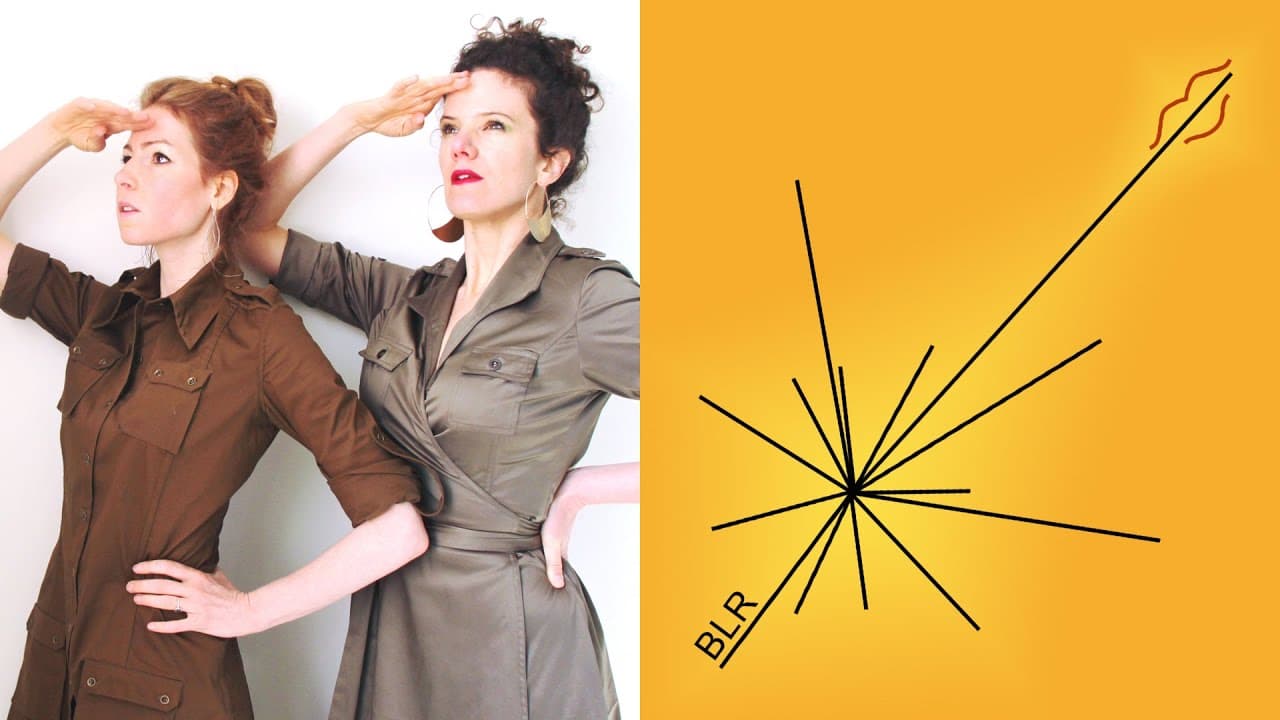
Alicia Escott and Heidi Quante’s Bureau of Linguistical Reality creates words for emotions and experiences arising as climate change and other anthropogenic events rapidly alter the world. Founded in 2014 after an unusually warm winter exposed a gap in their vocabulary, the socially engaged artwork invites others to expand the shared lexicon. Read on to understand its word-making process, linguistic premise, and defining examples.
Transcript
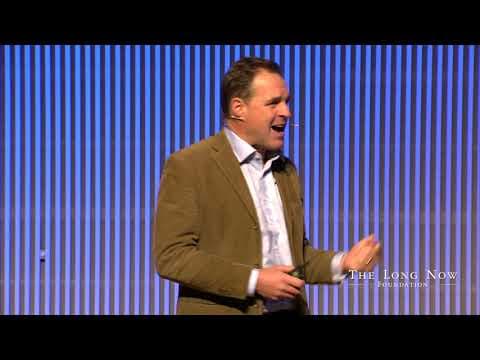
hello hello good evening everyone um I believe we have one chair up here if anyone is still looking for a seat Prime seating up here good evening my name is Andrew Warner I'm your host for this evening um before we begin a little bit of housekeeping please remember to silence your devices before long now had the name long now we call ourselves the ... Read More
Key Insights
- Words expose overlooked experiences: The lecture treats vocabulary as more than a passive container for information. A well-chosen word can make an experience perceptible, give people a practical way to discuss it, and potentially influence their actions. This premise connects Long Now’s interest in preserving language with the Bureau’s effort to enlarge language for a rapidly changing environment.
- Pleasure and worry can coexist: The Bureau began with a specific emotional conflict during an unusually warm winter. Escott and Quante enjoyed the sunlight and warmth as sentient beings, yet they also worried that the pleasurable conditions indicated environmental disruption. Their inability to state both responses at once revealed the linguistic gap that motivated the project.
- PCD names embodied contradiction: Psychic corpus dissonance does not refer only to unusual weather. It captures the split between an ecstatic or elated bodily response to warm sunshine and an intellectually troubling recognition that such warmth is historically out of season. The word gives a communicable form to a feeling the founders initially struggled to describe.
- Synonyms remain deliberately unlimited: Bureau participants generated multiple expressions for experiences resembling psychic corpus dissonance, including “openhen,” described as a new Dutch term meaning “eerie weather.” It concerns watching people enjoy weather that one fears may herald climate chaos. The Bureau accepts an unlimited number of similar synonyms because it approaches word creation as an artwork.
- Language influences collective perception: The Bureau invokes linguistic relativity to explain why naming matters. In the lecture’s formulation, language affects how speakers conceptualize their world, while words influence thoughts, actions, culture, and worldviews. Creating vocabulary is therefore presented as a way to improve people’s capacity to recognize and communicate environmental transformation.
- Understanding requires adequate language: Escott and Quante argue that people cannot fully grasp what is happening around them without words that describe the changing world. The Bureau’s work responds by generating terms and inviting others to participate. Its purpose is not merely stylistic invention, but the creation of a greater lexicon for shared environmental experience.
- The artwork invites participation: The event is structured around more than a conventional lecture. After explaining their language-building work, the Bureau plans questions and answers followed by an accelerated word-making field session. The audience is expected to collaborate in building a new word, making collective creation part of the artwork rather than leaving naming solely to the founders.
- The seal extends communication outward: The Bureau’s official seal expresses its ambition to communicate with all sentient beings. Its starburst draws on the depiction of the solar system’s galactic location etched onto the golden record created for NASA. Red lips were added to represent the desire to communicate across the cosmos.
- Environmental change repeatedly creates vocabulary: The speakers position their project within a longer practice of inventing words for altered surroundings. They cite the Industrial Revolution as a period that inspired many new terms. Their examples suggest that unfamiliar environmental conditions can create experiences that remain difficult to discuss until someone supplies a concise name.
- Smog made pollution discussable: Dr. Henry Antoine des Voeux coined “smog” in 1905 for dirty air caused by factories burning large amounts of coal. The phenomenon resembled fog but contained smoke and dense particulate matter. Once the term entered the popular lexicon, people could discuss a condition that existing language had not fully explained.
- Solastalgia relocates homesickness: Glenn Albrecht’s 2003 neologism describes homesickness felt without leaving home. Industrial mining, logging, or climate-crisis impacts can alter a familiar environment so drastically that it becomes unrecognizable within one lifetime. The lecture adds that this condition is often intensified by the affected person’s sense of powerlessness.
- Anthropocene prompted wider conversation: The lecture names “Anthropocene” as another consequential new word. Paul Crutzen introduced it in 2000 as a proposed geological term for an epoch beginning with human influence. The speakers emphasize that the proposal stimulated substantial conversation, illustrating how a new term can organize discussion around broad environmental change.
Install to Summarize YouTube Videos and Get Transcripts
Explore YouTube Video Summarizer or Get YouTube Transcript Extractor
Questions & Answers
Q: What is Alicia Escott and Heidi Quante’s Bureau of Linguistical Reality?
The Bureau of Linguistical Reality is a socially engaged artwork founded by Alicia Escott and Heidi Quante in 2014. It generates new words for emotions and experiences arising as climate change and other anthropogenic events rapidly alter the world. It also invites other people to create terms representing their own encounters with environmental change. The project does this because its founders believe people need adequate language before they can fully grasp and communicate what is happening around them.
Q: Why was the Bureau of Linguistical Reality founded in 2014?
Escott and Quante founded the Bureau after an unusually warm winter exposed a gap in their vocabulary. They physically enjoyed the warm, sunny weather while also worrying that conditions historically associated with winter were deeply amiss. When they tried to communicate this dissonance between mind and body, they found themselves at a loss for words. The Bureau arose from their need for a greater lexicon capable of expressing such responses to a rapidly changing environment.
Q: What does psychic corpus dissonance mean?
Psychic corpus dissonance, abbreviated PCD, describes enjoying unseasonably warm and sunny weather during a period that has historically been winter. The person may feel ecstatic or elated in the pleasant conditions while retaining a nagging concern about what those conditions signify. The phrase holds the bodily pleasure and intellectual worry together instead of reducing the experience to either one. It was the Bureau of Linguistical Reality’s first official word.
Q: How does the Bureau create new environmental words?
The Bureau begins with emotions or experiences that people recognize but cannot adequately express using their existing vocabulary. It invites others into the naming process, as demonstrated by the planned accelerated word-making field session at the event. Participants can propose different terms for related experiences, and the Bureau accepts an unlimited number of similar synonyms because it is an artwork. This collaborative method allows multiple linguistic responses to emerge from a shared environmental condition.
Q: Why does linguistic relativity matter to the Bureau?
The Bureau’s name playfully references the linguistic relativity hypothesis, which the lecture describes as the view that language affects how speakers conceptualize their world. Escott and Quante connect words with thoughts, actions, culture, and worldviews. They therefore believe that missing vocabulary can limit how fully people grasp environmental changes. Creating new words matters because those words provide forms through which unfamiliar experiences can be recognized, discussed, and understood.
Q: How does the term smog support the Bureau’s argument?
The lecture presents “smog” as an example of vocabulary responding to an altered environment. Dr. Henry Antoine des Voeux coined it in 1905 to describe dirty air produced by factories burning large amounts of coal. The condition resembled fog but was smoky and contained dense particulate matter. Once the new word entered the popular lexicon, people gained a concise way to discuss a phenomenon that they previously lacked language to explain fully.
Q: What is solastalgia according to the lecture?
Solastalgia is a form of homesickness experienced while a person remains at home. It arises when industrial mining, logging, or climate-crisis impacts alter that environment so drastically that it becomes unrecognizable within the person’s lifetime. The condition is often intensified by a sense of powerlessness among those affected. Glenn Albrecht created the neologism in 2003, deriving it in part from “nostalgia.”
Q: What happens during the Bureau’s performance lecture?
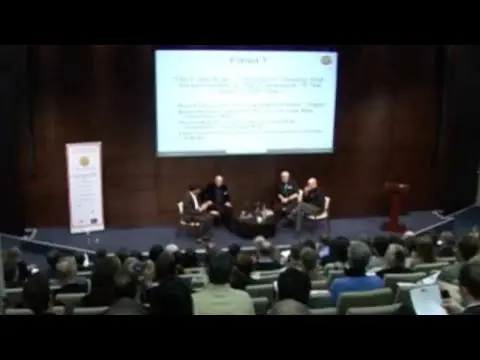
The Bureau first explains its work in language building and the experiences that led to its creation. The event then includes time for audience questions and answers. After that discussion, the Bureau hosts an accelerated word-making field session with the people present. The intended result is a collaboratively built new word, which demonstrates how the project turns unnamed experiences into shared vocabulary.
Summary & Key Takeaways
-
Introducing language as infrastructure: Host Andrew Warner connects the performance to Long Now’s efforts to transmit information across 10,000 years through a clock, a library, and the Rosetta project’s linguistic archive. Language does more than passively encode information, he argues. The right word can reveal a new experience, provide a way to discuss it, and possibly change how people act in the world. He introduces Alicia Escott and Heidi Quante’s Bureau of Linguistical Reality as a socially engaged artwork devoted to language building.
-
Founding the Bureau in 2014: Escott and Quante explain that they lacked words for emotions and experiences emerging as climate change and other anthropogenic events rapidly transformed their surroundings. During an unusually warm winter, they enjoyed the sunny weather physically while simultaneously sensing that something was wrong. Attempts to communicate this conflict between pleasure and concern left them at a loss for words. That moment established the need for a larger environmental lexicon and led to the Bureau of Linguistical Reality.
-
Naming psychic corpus dissonance: The Bureau’s first official expression, psychic corpus dissonance, or PCD, describes enjoying unseasonably warm, sunny weather during what was historically winter while carrying a nagging concern that the beauty may signal something deeply amiss. Participants reported experiencing this dissonance and proposed related terms, including a Dutch expression translated as “eerie weather.” Because the Bureau operates as an artwork, it accepts an unlimited number of similar synonyms rather than insisting on one exclusive label.
-
Explaining linguistic relativity: The Bureau’s name playfully references the linguistic relativity hypothesis, presented as the idea that language affects how speakers conceptualize their world. Escott and Quante sincerely maintain that people cannot fully grasp a changing world until they possess language capable of describing it. The Bureau therefore assumes the task of generating new words and inviting others to name environmental changes. Its official seal combines a starburst inspired by the solar system’s location on NASA’s golden record with red lips representing communication among sentient beings.
-
Learning from earlier neologisms: The speakers place their work within a history of people naming changing environments. They describe “smog,” coined in 1905 by Dr. Henry Antoine des Voeux for dirty air produced when factories burned large amounts of coal. They then discuss “solastalgia,” Glenn Albrecht’s 2003 term for homesickness experienced while remaining in a home made unrecognizable by mining, logging, or climate impacts. Finally, they identify Paul Crutzen’s 2000 introduction of “Anthropocene” as a proposed geological term that stimulated substantial conversation.
Read in Other Languages (beta)
Share This Summary 📚
Summarize YouTube Videos and Get Video Transcripts with 1-Click
Try YouTube Summary with ChatGPT & Claude or YouTube Transcript Generator
Explore More Summaries from Long Now Foundation 📚
Summarize YouTube Videos and Get Video Transcripts with 1-Click
Try YouTube Summary with ChatGPT & Claude or YouTube Transcript Generator