How to Record Acoustic Guitar in Four Simple Steps
TL;DR
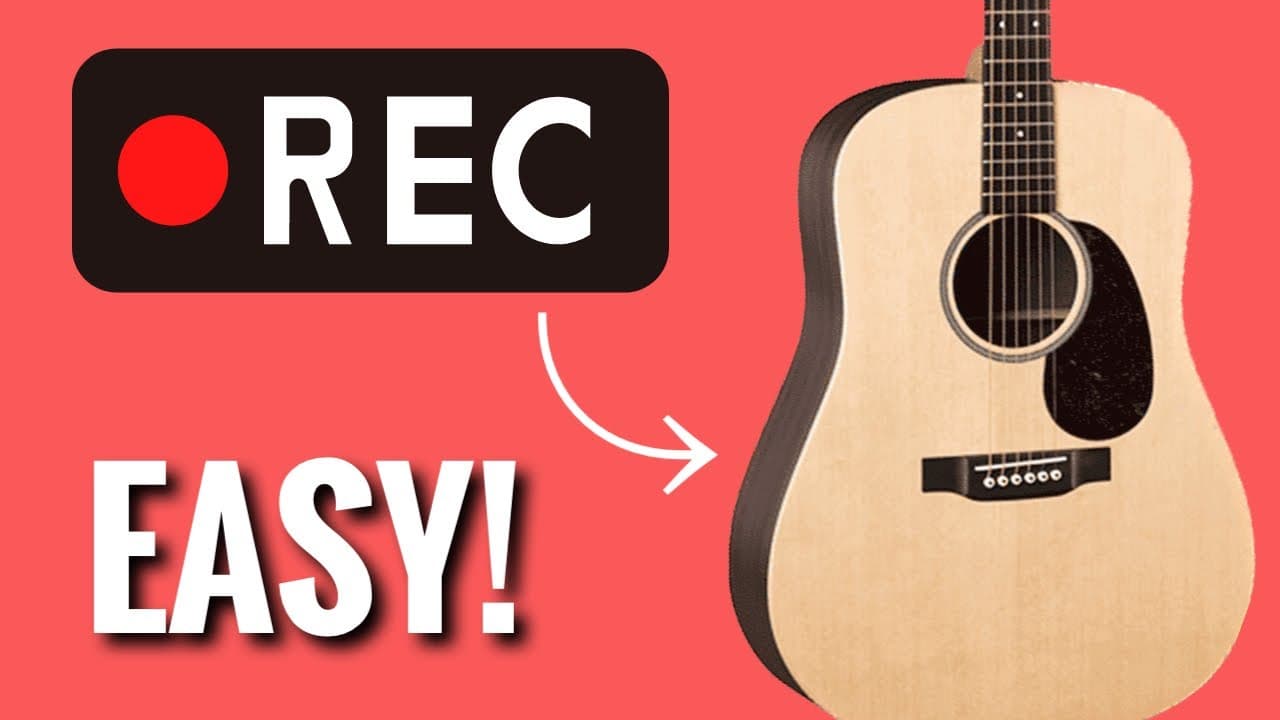
To record acoustic guitar effectively, start by setting up a microphone with phantom power, configuring your DAW, positioning the mic about a foot from the 12 to 14 fret, and adjusting the gain levels between -18 and -6 dB to prevent clipping. Avoid miking the sound hole to achieve a clearer sound.
Transcript
in this video i'll be showing you how to record acoustic guitar in four easy steps coming up welcome to the home studio academy everybody my name is nolan freitas and my goal is to help you build your own home studio and teach you how to create professional sounding recordings at home independently so in today's video i'm going to be showing you ho... Read More
Key Insights
- 🥠 Recording an acoustic guitar requires specific equipment: a DAW, audio interface, microphone, and a properly tuned instrument.
- 📶 Engaging phantom power is essential when using condenser microphones to ensure adequate signal strength for the recording.
- ❎ Proper gain settings are critical; maintaining levels between negative 18 and negative 6 dB helps prevent audio clipping while retaining quality.
- 👂 Mic placement impacts recording quality; avoid directing the microphone at the sound hole, as it can muddy the sound.
- 👻 Monitoring for latency during recording can significantly enhance the playback experience, allowing for real-time feedback.
- 👂 Recording the most intense part of a song helps test levels effectively, ensuring optimal sound quality during the final take.
- 👂 The video emphasizes that careful attention to equipment setup ensures professional sound in home recordings.
Install to Summarize YouTube Videos and Get Transcripts
Explore YouTube Video Summarizer or Get YouTube Transcript Extractor
Questions & Answers
Q: What basic equipment do I need to start recording acoustic guitar?
To record acoustic guitar, you'll need a computer with recording software, an audio interface, a microphone, and a tuned guitar. The software is your DAW, which facilitates recording and editing audio, while the audio interface connects your microphone to the computer for digital processing.
Q: Why is the placement of the microphone important when recording acoustic guitar?
Microphone placement is crucial as it affects the tonal qualities of the recording. Placing the mic about a foot away from the guitar and aiming between the 12 and 14 fret balances the sound, avoiding a thin sound from the neck and the muddy sound that results from mic'ing the sound hole.
Q: How do I ensure my gain levels are set correctly for recording?
Proper gain setting involves adjusting the gain knob on your audio interface until it reaches a green to yellow level, avoiding red signal peaks that indicate distortion. Aim for audio levels between negative 18 to negative 6 dB peak to maintain audio clarity without clipping.
Q: What’s a common mistake to avoid when recording acoustic guitar?
A common mistake is positioning the microphone too close to the guitar's sound hole, which can result in a muddy sound due to overemphasis on bass frequencies. Instead, a more balanced sound is achieved by mic’ing the body around the 12 to 14 fret area.
Summary & Key Takeaways
-
The video focuses on the essential equipment needed for recording acoustic guitar, including a computer, digital audio workstation (DAW), audio interface, and microphone, while emphasizing the importance of a properly tuned guitar.
-
Nolan Freitas outlines a four-step process to record acoustic guitar: setting up the microphone with phantom power, configuring the DAW, positioning the microphone, and adjusting gain levels for optimal audio quality.
-
Key techniques advised include miking the guitar at the 12 to 14 fret for a balanced sound rather than the sound hole, and ensuring audio levels are properly adjusted to avoid clipping, maximizing creative headroom.
Read in Other Languages (beta)
Share This Summary 📚
Summarize YouTube Videos and Get Video Transcripts with 1-Click
Try YouTube Summary with ChatGPT & Claude or YouTube Transcript Generator
Explore More Summaries from Home Studio Academy 📚
Summarize YouTube Videos and Get Video Transcripts with 1-Click
Try YouTube Summary with ChatGPT & Claude or YouTube Transcript Generator