How to Plan Your Next Business Moves Like a Grandmaster
TL;DR
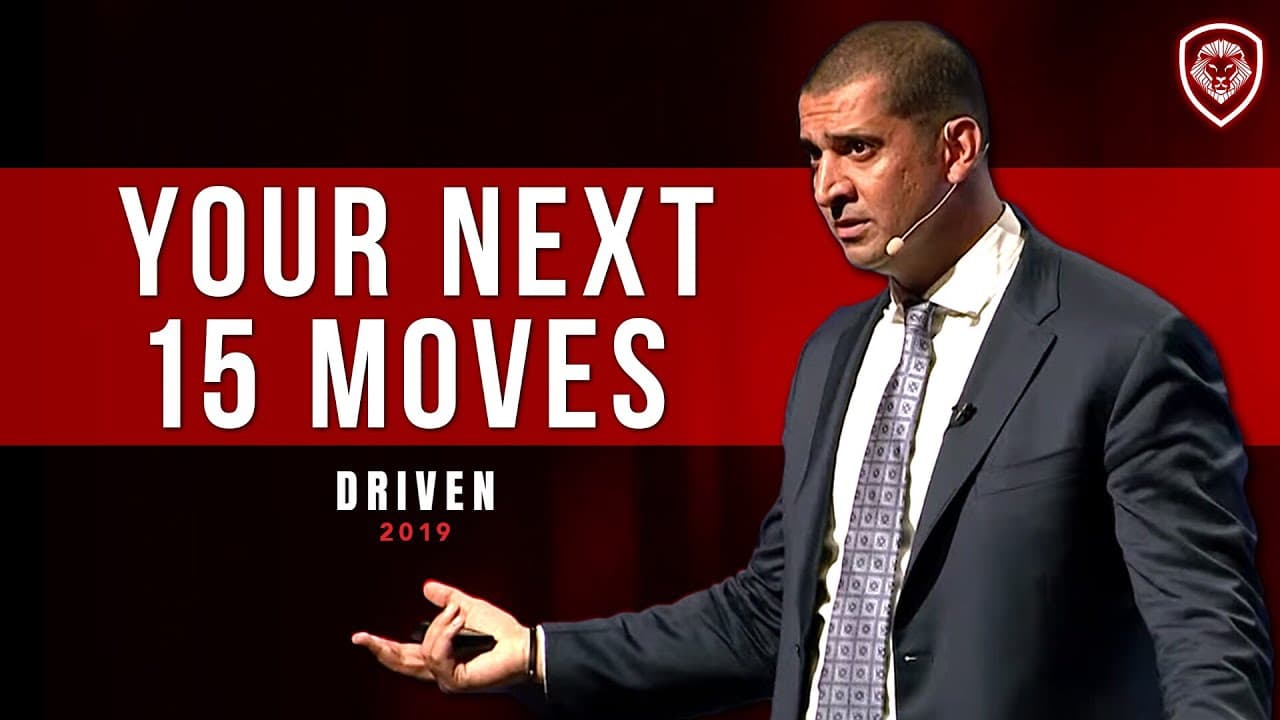
Grandmaster entrepreneurs plan 11 to 15 moves ahead, while most people know only their next one to three. Success starts with two decisions: who you want to be (entrepreneur, CEO, influencer, solopreneur, intrapreneur) and how you want to make money, because both define your positioning in the marketplace. Where most people struggle is lens and language.
Transcript
in the game of chess the average chess player knows their next one to three moves amateur oh my gosh HS here any chess players here the average chess player knows their next one two three moves a pro knows four to five a master knows six to ten a grandmaster knows their next 11 to 15 moves by the way the same thing you see here with chess it's the ... Read More
Key Insights
- Chess skill maps directly to foresight: the average player knows their next one to three moves, a pro four to five, a master six to ten, and a grandmaster eleven to fifteen. The same gap separates most people from top entrepreneurs.
- Timing failure comes from playing the wrong move at the wrong stage. Many people try to make 'move number fourteen at move number two,' attempting advanced plays before the earlier positioning is in place, and it does not work out.
- Every business game reduces to two questions: who do you want to be and how do you want to make your money. Both answers are ultimately about your positioning in a marketplace.
- Identity options are specific and worth choosing deliberately: entrepreneur, investor, inventor, co-founder, CEO of a small business, Fortune 500 or startup CEO, salesperson, influencer, solopreneur, support-team member, or intrapreneur who owns a piece of a company from inside.
- Being a support person or number six or eight on a team is a legitimate goal, not a failure. Some people perform best knowing responsibility rests on someone else rather than carrying everything themselves.
- There are many distinct wealth-creation paths: marrying rich, taking equity, building a company to sell, holding domains, salaried long-term planning, becoming an influencer paid for shout-outs, licensing a proprietary product, investing, lawsuits, owning land, and inheritance.
- It is the easiest time in the history of mankind to become a millionaire, because social media erased the scarcity value of celebrity. YouTubers and Instagram influencers now attract more followers than traditional TV figures.
- Where most people actually struggle is not opportunity but 'lens and language.' Treating every person you meet as a potential customer is a small, wrong lens that repels people, like propositioning a stranger at a bar.
Install to Summarize YouTube Videos and Get Transcripts
Explore YouTube Video Summarizer or Get YouTube Transcript Extractor
Questions & Answers
Q: How many moves ahead does a grandmaster think compared to an average player?
According to the keynote, the average chess player knows their next one to three moves, a pro knows four to five, a master knows six to ten, and a grandmaster knows their next eleven to fifteen moves. Patrick Bet-David applies the same scale to life and business, arguing that most people operate at the amateur level, planning only one to three moves ahead, which limits their long-term success as entrepreneurs.
Q: Why do people fail at business timing?
People fail because they try to make an advanced move before earlier positioning is in place. Bet-David describes it as wanting to do 'move number fourteen at move number two.' The play itself may be sound, but the timing is wrong, so it does not work out. Success in the business game comes from knowing your sequence of moves and executing each at the correct stage rather than rushing to later, more ambitious moves prematurely.
Q: What two questions should every entrepreneur answer first?
The two outcomes of the exercise are: who do you want to be, and how do you want to make your money. Bet-David stresses that both come down to your positioning in a marketplace. Most people cannot clearly answer either, drifting instead toward imitating people they admire on Instagram. Getting clear on your desired identity and your wealth-creation method is the foundation for planning your next moves as an entrepreneur.
Q: What identity or positioning options does Patrick Bet-David list?
He lists many roles: entrepreneur, investor, inventor, co-founder, CEO of a small business, CEO of a Fortune 500, CEO of a startup, salesperson (volume or high ticket), influencer, solopreneur, support-team member, and intrapreneur. Each is a valid position depending on temperament. For example, a solopreneur wants to work alone, while a support person prefers being number six or eight rather than carrying full responsibility as number one.
Q: What are the different ways to make money according to the keynote?
Bet-David enumerates several wealth paths: marrying a rich person, taking equity in a company, building a company to run for five years and sell for around twenty million, buying and holding domains, salaried long-term planning, the lottery, becoming an influencer paid for shout-outs, licensing a proprietary product, investing while others do the work, filing lawsuits, owning land that buyers like Walmart purchase, and inheritance from having 'the right last name.'
Q: Why does Patrick Bet-David say it is the easiest time ever to become a millionaire?
He argues social media eliminated the scarcity value of being a celebrity. He contrasts 1998, when people were awestruck to see a local weather guy, with today, when YouTubers and Instagram influencers have more followers than TV personalities. Figures like PewDiePie, Logan Paul, and Jake Paul are known as widely as major Hollywood stars. Because attention and celebrity are now accessible to regular people, making millions has become far easier than ever before.
Q: What does Patrick Bet-David mean by 'lens and language'?
Lens and language are where he says most people struggle despite the easy opportunity. 'Lens' is how you see and approach people. He tells of a young man who handed him a card saying to call if he ever wanted to buy real estate in Vegas, treating everyone purely as a customer. Bet-David calls this a small, wrong lens, comparing it to a man at a bar immediately propositioning a woman instead of building a genuine connection first.
Q: What is the lesson behind the Eli story?
Bet-David met Eli at age twenty-one at an event near LAX while working as a weekend assistant manager at Bally Total Fitness. Despite being a nobody, he built a genuine relationship, got invited to Eli's fiftieth birthday, and while washing dishes asked how he could help. Eli confided that his son was in prison for nine years at Men's Colony near San Luis Obispo and that no friends or relatives would visit. The lesson contrasts authentic relationship-building with the transactional customer lens.
Summary & Key Takeaways
-
Patrick Bet-David opens with a chess analogy: amateurs see one to three moves ahead, pros four to five, masters six to ten, and grandmasters eleven to fifteen. Life and business work identically, yet most people plan only their next few moves and misfire on timing.
-
The keynote frames every entrepreneur's path around two decisions. First, who do you want to be, choosing among roles like entrepreneur, investor, CEO, salesperson, influencer, solopreneur, or intrapreneur. Second, how you make money, whether through equity, selling a built company, licensing products, investing, or land.
-
Bet-David argues millionaire status has never been easier because social media destroyed celebrity scarcity, then pivots to the real obstacle: lens and language. He illustrates with a man who saw everyone only as a sales target, contrasting it with genuine relationship-building shown in his Eli story.
Read in Other Languages (beta)
Share This Summary 📚
Summarize YouTube Videos and Get Video Transcripts with 1-Click
Try YouTube Summary with ChatGPT & Claude or YouTube Transcript Generator
Explore More Summaries from Valuetainment 📚

Summarize YouTube Videos and Get Video Transcripts with 1-Click
Try YouTube Summary with ChatGPT & Claude or YouTube Transcript Generator