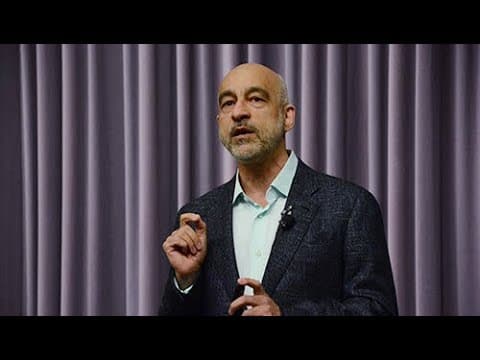
Barry Silbert: A New Vision for Capital Markets [Entire Talk]

TL;DR
SecondMarket began with five people, five telephones, and an Excel spreadsheet, proving demand before investing heavily in technology. By creating a marketplace for illiquid assets, the company sought to improve transparency, centralize information, and make alternative financial markets more efficient, eventually expanding from restricted public stock into bankruptcy claims, private company shares, loans, and complex securities.
Transcript
Barry Silbert is the founder and CEO of SecondMarket which he founded in 2004. It is arguably the world's largest market place for buying and selling alternative financial assets and we'll let him define that for you if that's new to you, but it essentially includes private company stock and what makes this so exciting is he's been... he and his co... Read More
Key Insights
- Silbert's baseball-card business was his first exposure to illiquid and inefficient markets. Dealers possessed better pricing information than ordinary collectors, showing him why marketplaces benefit from greater transparency, centralized information, and reduced dependence on insiders who control knowledge.
- SecondMarket's original business opportunity emerged from repeated requests by bondholders who wanted to sell stock received through corporate reorganizations. Silbert encountered these requests while performing restructuring work at Houlihan Lokey and concluded that a dedicated marketplace could address a recurring liquidity problem.
- The market opportunity included trillions of dollars in illiquid assets, according to Silbert's research. He saw few efficient mechanisms for trading those holdings, which suggested that a centralized marketplace could create meaningful efficiencies across multiple alternative asset classes rather than serving only one narrow category.
- SecondMarket launched with five employees, five telephones, and an Excel spreadsheet. This minimal structure allowed the team to begin matching buyers and sellers without first spending substantial time and money on a sophisticated technology platform, making the company profitable essentially from its first day.
- SecondMarket initially focused on restricted stock in public companies. That single asset class supported about $1 million in revenue during 2005, about $2.5 million in 2006, and an approximately $5 million run rate by 2007, while the business remained very profitable.
- External financing supported SecondMarket's transition toward a more scalable platform. After initially securing about $350,000 from angel investors, the company raised $3.8 million from FirstMark Capital at approximately a $16 million valuation and used the funding for aggressive hiring and technology development.
- The economic collapse in 2008 created conditions for SecondMarket to expand beyond restricted public-company stock. Its marketplace added securities auctions, bankruptcy claims, toxic collateralized debt obligations and mortgage-backed assets, private-company stock, whole loans, and other alternative financial assets.
- SecondMarket's private-company market attracted international investors interested in Asian expansion. Li Ka Shing and Temasek invested $15 million at a $135 million valuation, with the funding intended for scaling and expansion, while attention around companies such as Facebook and Twitter increased the marketplace's visibility.
Install to Summarize YouTube Videos and Get Transcripts
Explore YouTube Video Summarizer or Get YouTube Transcript Extractor
Questions & Answers
Q: How did Barry Silbert identify the idea for SecondMarket?
Barry Silbert identified the opportunity while working on corporate restructurings at Houlihan Lokey. Bondholders repeatedly called because they had received stock in reorganized companies, including Enron and WorldCom, and wanted to sell it. Those recurring requests revealed a liquidity problem. His subsequent research indicated that trillions of dollars in illiquid assets existed without an efficient marketplace for trading them.
Q: How did SecondMarket start without a technology platform?
SecondMarket opened in early 2005 with five people, five telephones, and an Excel spreadsheet serving as its marketplace. Silbert followed advice to begin operating instead of first raising $2 million and building an elaborate eBay-style platform. Because the company avoided heavy infrastructure spending and started matching market participants directly, it became profitable essentially on its first day.
Q: Why did baseball cards influence Barry Silbert's business vision?
Buying and selling baseball cards introduced Silbert to illiquid assets and inefficient markets when he was about 13 years old. Professional dealers seemed to know which cards would become hot or cold before the monthly pricing guide appeared, while collectors lacked that information. Looking back, he saw this imbalance as evidence that markets need transparency, centralization, and broader access to pricing information.
Q: What assets did SecondMarket initially trade?
SecondMarket initially concentrated on restricted stock in public companies. Silbert said this single illiquid asset class was enough to support the early business, even though the company expected to enter additional categories eventually. The focused approach produced about $1 million in revenue in 2005, about $2.5 million in 2006, and an approximately $5 million run rate by 2007.
Q: How did the 2008 economic collapse affect SecondMarket?
The economic collapse in 2008 positioned SecondMarket to broaden its marketplace beyond one asset class. The company began handling securities auctions, bankruptcy claims, toxic collateralized debt obligations and mortgage-backed assets, private-company stock, whole loans, and related holdings. Its prior investment in hiring and platform technology gave it a foundation for serving these newly relevant categories of illiquid assets.
Q: How was SecondMarket financed during its early growth?
Silbert initially deposited $50,000 to start the business and later secured about $350,000 from angel investors at what he described as a $1.7 million valuation. In 2007, FirstMark Capital invested $3.8 million at approximately a $16 million valuation. About a year before the talk, Li Ka Shing and Temasek invested $15 million at a $135 million valuation.
Q: What entrepreneurial lesson did Silbert draw from launching SecondMarket?
Silbert's launch demonstrated the value of starting with the simplest workable operation. His original business plan was about 100 pages long and proposed raising $2 million for a sophisticated platform. A trusted adviser told him that technology was unnecessary at the outset. By opening with phones and a spreadsheet, he tested demand, generated revenue, and achieved profitability before building substantial infrastructure.
Q: What was SecondMarket's broader vision for capital markets?
SecondMarket aimed to create a new model for trading alternative financial assets by addressing the inefficiency of illiquid markets. Silbert's experiences suggested that fragmented information and insider advantages made transactions difficult for ordinary holders. The marketplace sought to centralize activity, improve transparency, connect buyers and sellers, and eventually serve multiple asset classes, including private-company shares associated with Facebook and Twitter.
Summary
This video features Barry Silbert, the founder and CEO of SecondMarket, discussing the company's journey and vision for the future. SecondMarket is a marketplace for buying and selling alternative financial assets, such as private company stock. Silbert explains how the company started with just five employees and an Excel spreadsheet, and has since grown to become a major player in the market. He also discusses the challenges of the current public market system and the need for disruption. Silbert highlights the benefits of SecondMarket's approach, including more transparency and control for companies, and better access to liquidity for employees. He concludes with some lessons learned as a first-time entrepreneur.
Questions & Answers
Q: What is SecondMarket and what types of assets does it deal with?
SecondMarket is a marketplace for buying and selling alternative financial assets. It primarily deals with private company stock, but also includes other illiquid assets such as restricted stock in public companies, bankruptcy claims, and even toxic assets like CDOs and mortgage-backed securities.
Q: How did SecondMarket start and what was its initial market place?
SecondMarket started in 2004 with just five employees and an Excel spreadsheet. Its initial market place was restricted stock in public companies. They focused on this one asset class and built a profitable business before expanding into other asset classes.
Q: How did SecondMarket get involved in the private company market?
SecondMarket got involved in the private company market after receiving a phone call from a former employee of Facebook looking to sell their stock. They realized there was a need for a marketplace for private company stock and decided to create one. They saw institutions willing to buy Facebook stock without much information, and realized there was a demand for transparency and centralization in this market.
Q: What is the current state of the IPO market?
The IPO market has been declining over the past decade, with fewer IPOs and larger companies dominating the market. The average hold period for a share of stock has also decreased significantly. Silbert argues that the IPO market is broken and needs disruption.
Q: How does high-frequency trading impact the market?
High-frequency trading represents over 60% of trade in the public markets and has increased market volatility. Silbert believes that high-frequency trading is "screwing the market" and sees an opportunity to create a new exchange and market structure that is better for companies and long-term investors.
Q: How does SecondMarket's market model differ from traditional stock exchanges?
SecondMarket's market model is designed to conform to the company rather than forcing the company to conform to the market. Companies have control over when the market is open, who the buyers and sellers are, and how much information they disclose to potential investors. It is a more flexible and customizable approach.
Q: How does SecondMarket ensure information disclosure and protect investors?
SecondMarket requires certain information to be disclosed by sellers, such as audited financials and balance sheets. Companies are encouraged to provide additional information to investors. SecondMarket has also created an ecosystem of analyst firms that provide research on the private company market, which is funded by the exchange rather than the companies themselves.
Q: Can companies manipulate when they open up a market on SecondMarket?
Companies have control over when they open up a market, but there are certain safeguards in place to protect investors. The company's intentions to open a market are disclosed to investors, and if the company does not follow through, they may face potential consequences and reputational damage.
Q: What benefits does SecondMarket offer to companies and employees?
SecondMarket offers companies more control over their stock and the ability to provide liquidity to employees in a more flexible and efficient manner. Employees can realize the value they have created earlier in the company's lifespan. It also allows companies to remain private if they choose and avoid the challenges and costs associated with going public.
Q: What are some lessons learned as a first-time entrepreneur?
Silbert emphasizes the importance of not fearing established companies and the need to disrupt traditional systems. He recommends launching with a minimum viable product and not waiting for everything to be perfect. Silbert also encourages entrepreneurs to be fearless and pursue opportunities in areas they are passionate about. He believes that the tools and ability to change the world are available to this generation.
Takeaways
Barry Silbert's talk highlights the need for disruption in the current public market system and the benefits of SecondMarket's approach. By creating a marketplace for alternative financial assets, such as private company stock, SecondMarket provides more transparency, control, and liquidity for companies and employees. The IPO market has been declining and the rise of high-frequency trading has further complicated the public markets. SecondMarket's market model is designed to be flexible and customizable, allowing companies to set their own rules and timing for trading. The company also encourages information disclosure and provides analyst coverage funded by the exchange. Silbert shares some lessons learned as a first-time entrepreneur, emphasizing the importance of not fearing established companies, launching with a minimum viable product, and being fearless in pursuing opportunities.
Summary & Key Takeaways
-
Barry Silbert traces his interest in inefficient markets to buying and selling baseball cards as a teenager. Dealers appeared to know which cards would rise or fall before monthly pricing guides arrived. That information imbalance taught him the importance of transparency, centralization, and preventing professional intermediaries from controlling valuable market information.
-
While restructuring companies at Houlihan Lokey, Silbert repeatedly heard from bondholders seeking to sell stock received from reorganizations involving companies such as Enron and WorldCom. He recognized a broader opportunity across trillions of dollars in illiquid assets, left investment banking, and began developing a marketplace intended to make those transactions more efficient.
-
SecondMarket opened in early 2005 with minimal infrastructure and became profitable almost immediately. Revenue reached about $1 million in 2005 and $2.5 million in 2006. After raising venture capital, the company hired aggressively, improved its platform, expanded into several alternative asset classes, and later pursued international growth in Asia.
Read in Other Languages (beta)
Share This Summary 📚
Summarize YouTube Videos and Get Video Transcripts with 1-Click
Try YouTube Summary with ChatGPT & Claude or YouTube Transcript Generator
Explore More Summaries from Stanford eCorner 📚
![Brit Morin: Inspiring Creativity with Great Content [Entire Talk] thumbnail](/_next/image?url=https%3A%2F%2Fi.ytimg.com%2Fvi%2FPn-gi0EXZIE%2Fhqdefault.jpg&w=750&q=75)
Summarize YouTube Videos and Get Video Transcripts with 1-Click
Try YouTube Summary with ChatGPT & Claude or YouTube Transcript Generator