Is It Possible to Get Identity Right?
TL;DR
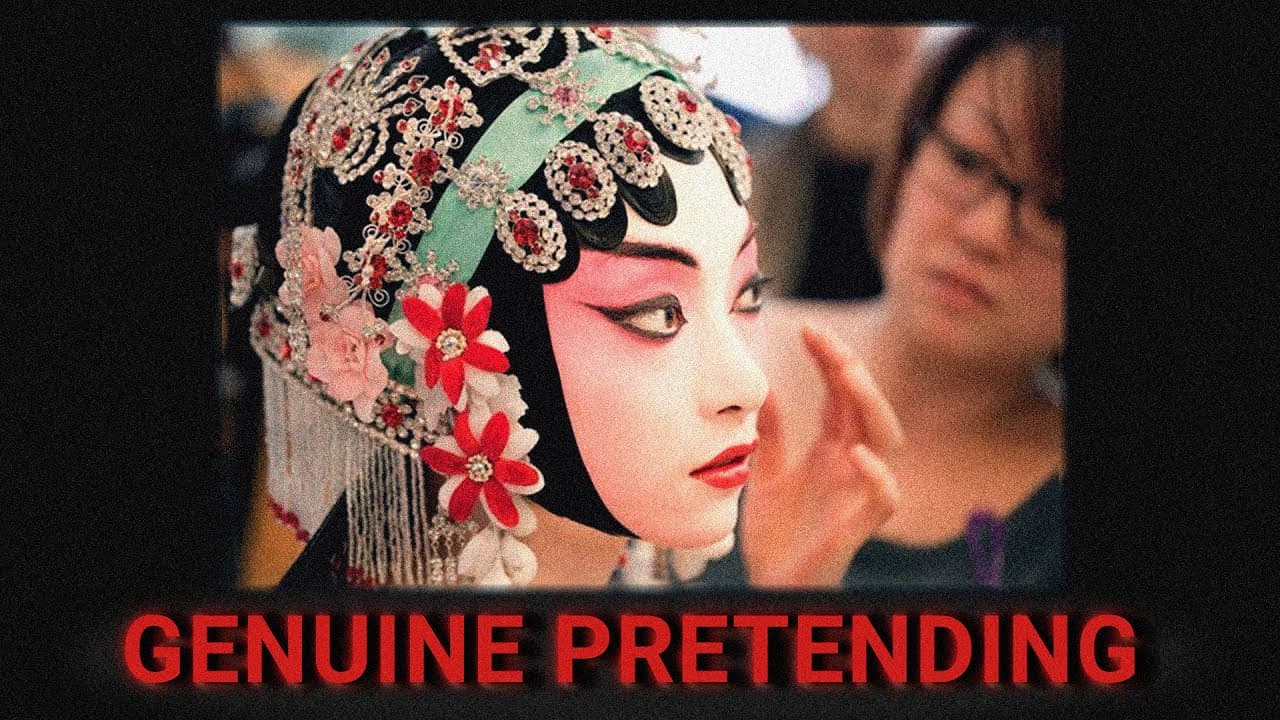
Identity cannot be made fully right because it is both performed and inherently incongruent across bodily characteristics, mental experience and social conditions. The speaker calls this paradox “genuine pretending”: performance does not express a preexisting genuine identity, but helps produce the experience of genuineness for both performer and audience. Read on to see why sincerity, authenticity and proficiency fall short, and how profilicity and Taoism offer alternatives.
Transcript
we got quite a few responses to the previous videos i'm just going to respond to the responses now the first one i want to talk about is from hugh cresswell he said the following where you discussed abigail not performing anymore you missed how it's specifically her not performing the role of ollie anymore not performing the character who she used ... Read More
Key Insights
- Abigail’s claim has a scope: When Abigail says she is no longer performing, the intended meaning is that she no longer performs Ollie, masculinity or a male persona with which she does not identify. The speaker accepts this interpretation completely. The remaining paradox concerns identity in general, not whether Abigail’s feminine identity is sincere or whether her personal account should be rejected.
- Visibility requires performed expression: An identity becomes noticeable through forms that other people can perceive. Hairstyle, clothing and gestures are given as examples of how gender is displayed. This does not mean that a gender is merely deceptive. It means that even an identity experienced as real must enter social life through observable conduct that has the character of performance.
- Nonperformance can become performance: Declaring “I am not performing” does not escape the structure of performance when the declaration occurs in a staged, scripted, edited and socially posted presentation. The statement communicates sincerity, yet it does so through deliberate expressive means. This second level makes the paradox especially clear: denying performance may itself be one of the things being performed.
- Performance does not imply falsity: The speaker explicitly separates the presence of performance from accusations that something is bad, wrong or personally defective. Performance is described as a general condition of expressing identity. The philosophical point is therefore not that performed identities are fraudulent, but that the contrast between a performed identity and a completely unperformed real self is difficult to sustain.
- Genuineness follows the performance: Genuine pretending reverses the usual sequence between inner truth and outward expression. Instead of assuming that a fully formed genuine self exists first and then produces a performance, the account proposes that performance can generate the experience of genuineness. Both the person performing and the audience can come to experience the expressed identity as real through that process.
- Identity is its own enactment: Atopia’s comment suggests that pretending to have a personal identity constitutes the personal identity itself. This formulation removes the need to locate a separate identity behind every act of identification. Taking on, expressing and living an identity is not merely evidence for an unseen self. On this account, those activities help form the self that appears to stand behind them.
- Three technologies construct selves: Sincerity, authenticity and proficiency are presented as technologies for achieving a real self through performance. They are not simply descriptions of identity but different ways of organizing its construction and evaluation. Each can produce an identity that functions according to its own logic, yet none resolves the deeper paradox and incongruity built into identity itself.
- No single identity is right: Sebastian Hoso’s response proposes that asking for the right identity may begin from a false premise. If identity is constructed, the chosen technology creates an artifact suited to that technology. The result can function without corresponding to one independently correct identity. The speaker strongly agrees with this response and treats it as an answer to KL’s search for better alternatives.
- Identity spans three dimensions: The speaker distinguishes bodily characteristics, mental experiences and social conditions. Bodily features include sex, mental life includes thoughts and feelings, and social life includes circumstances a person is born into and must navigate. Any theory claiming that these three realms naturally align overlooks the complexity, instability and contingency that the speaker sees in each one.
- Incongruity is not an exception: The lack of fit among body, mind and society is described as inherent rather than as a rare malfunction. Thoughts and feelings do not fully match one another, biological characteristics are neither wholly stable nor congruent, and social circumstances lack a natural correspondence with the other dimensions. A theory of identity must therefore begin with mismatch instead of explaining it away.
- Profilicity permits changing profiles: Profilicity offers a contrast with traditional roles that demand stability and coherence. It allows a person to maintain multiple, dynamic profiles that evolve with changing expectations. Its concept of the general peer uses second-order observation, through which identity preferences are established in relation to how a broader peer perspective observes. This makes social recognition part of identity construction rather than an external afterthought.
- Taoism reframes authenticity’s problem: Taoism is presented as an alternative to the demand for authenticity by supporting genuine pretending in identity formation. This approach does not require a perfect match among every bodily, mental and social dimension before an identity can count as real. It instead accommodates the paradox that an identity may become genuine through enactment, even though that enactment remains a performance.
Install to Summarize YouTube Videos and Get Transcripts
Explore YouTube Video Summarizer or Get YouTube Transcript Extractor
Questions & Answers
Q: Is it possible to get identity right?
The speaker’s answer is that there may be no single right identity to uncover. Identity is constructed through technologies such as sincerity, authenticity and proficiency, and each produces an artifact that functions according to its own organizing logic. No technology can create a natural perfect match among bodily characteristics, mental experiences and social conditions because those dimensions are inherently incongruent. The question is therefore reframed from finding the correct identity to understanding how an identity is constructed, performed and experienced as genuine.
Q: What does Abigail mean when she says she is not performing anymore?
She means that she is no longer performing Ollie, masculinity or a male persona with which she does not identify. After coming out as feminine, she presents what she understands as her real self rather than continuing that former gender role. Hugh Cresswell raised this clarification, and the speaker agrees that it is correct. The philosophical paradox remains because femininity is still expressed through visible forms such as hairstyle, dress and gestures, which makes it socially perceptible as a gender.
Q: Why is not performing still a performance?
A person must express the claim of nonperformance in a form that others can perceive. In Abigail’s discussed presentation, the assertion is part of a stage performance that is scripted, edited and posted on social media. Those conditions make the declaration itself an organized public act. This does not invalidate the identity, but it shows why someone cannot publicly demonstrate that they are not performing without using performance to communicate that point.
Q: What does genuine pretending mean for personal identity?
Genuine pretending means that personal identity is performed and can become genuine through that very performance. Genuineness is not necessarily a preexisting source that causes outward expression. Instead, taking on and expressing an identity can produce the experience that it is real for both the performer and the audience. The concept is intentionally paradoxical because the performance gradually creates an identity that is experienced as no longer merely a performance.
Q: Why do sincerity, authenticity and proficiency fail to get identity right?
All three are technologies for constructing and presenting a real self, but each imposes its own logic on identity. They tend to presume that the relevant dimensions of a person can be brought into a perfect or natural match. The speaker argues that bodily characteristics, mental experiences and social circumstances are inherently incongruent, so this presumed harmony is false. Each technology can still produce a functioning identity, but none establishes that the resulting identity is uniquely or naturally correct.
Q: Which dimensions of identity fail to match naturally?
The speaker identifies bodily characteristics, mental experiences and social conditions as three distinct dimensions. Bodily characteristics, including sex, can be random, unstable and internally incongruent, while thoughts and feelings are complex and do not fully match each other. Social conditions are circumstances into which a person is born and then has to live, and they do not naturally correspond with either body or mind. Because these realms lack guaranteed alignment, identity begins from incongruity rather than from an underlying perfect unity.
Q: How does profilicity differ from traditional identity roles?
Traditional roles demand stability and coherence, while profilicity permits multiple profiles that can change with shifting expectations. This makes identity dynamic rather than requiring one fixed role to remain consistent across every situation. Profilicity also involves the general peer and second-order observation, so a person relates to how identity is observed from a broader peer perspective. The difference matters because profilicity can work with social variability instead of presuming that one stable role perfectly expresses the whole person.
Q: How does Taoism provide an alternative to authenticity?
Taoism offers an alternative by supporting the idea of genuine pretending in identity formation. Authenticity can suggest that outward expression should perfectly correspond to a true identity already located within the person. Genuine pretending instead treats identity as something enacted and then experienced as real through that enactment. This helps accommodate the mismatch among bodily, mental and social dimensions without requiring a final, perfectly coherent identity behind every performance.
Summary & Key Takeaways
-
Clarifying Abigail’s identity statement: Hugh Cresswell argues that Abigail’s claim about no longer performing refers specifically to no longer playing Ollie or displaying a male persona after coming out as feminine. The speaker agrees that she has stopped performing masculinity and is showing what she regards as her real self. The philosophical issue is not a criticism of Abigail. Her example instead introduces a general question about whether anyone can express an identity without performing it in some observable form.
-
Unpacking the performance paradox: Gender remains performed through visible features such as hairstyle, dress and gestures, regardless of which gender is expressed. A gender must be displayed to some extent for other people to notice it. A second layer appears when someone publicly says that they are not performing, because that declaration may itself be scripted, edited, staged and posted on social media. Expressing the absence of performance therefore still requires a performance, without making the identity false or wrong.
-
Defining genuine pretending: A comment from Atopia captures the argument by saying that pretending to have a personal identity is the personal identity itself. The speaker connects this idea to “genuine pretending,” an intentionally paradoxical expression developed with Paul Ambrosia. Identity is performed, then experienced as genuine by both the performer and the audience. Genuineness is therefore not necessarily the origin of identity performance. It can be the effect produced through repeatedly taking on, expressing and inhabiting an identity.
-
Testing three identity technologies: The discussion identifies sincerity, authenticity and proficiency as three technologies for producing a real self through performance. None fully gets identity right because each treats identity through its own organizing assumptions. Responding to KL’s question, Sebastian Hoso suggests that there may be no independently correct identity at all. Identity is constructed through whichever technology is used, and the resulting identity is an artifact that functions according to that technology rather than a perfect discovery of an already unified self.
-
Recognizing identity’s underlying incongruity: Identity contains bodily characteristics, including sex, mental experiences such as thoughts and feelings, and the social conditions into which a person is born. These dimensions do not naturally or perfectly match. Thoughts and feelings are complex, biological characteristics can be random, unstable and internally incongruent, and social circumstances do not automatically correspond with either body or mind. Technologies of identity often presume a natural fit among these realms, while profilicity, Taoism and genuine pretending allow identity to be understood without requiring that perfect correspondence.
Read in Other Languages (beta)
Share This Summary 📚
Summarize YouTube Videos and Get Video Transcripts with 1-Click
Try YouTube Summary with ChatGPT & Claude or YouTube Transcript Generator
Explore More Summaries from Carefree Wandering 📚



Summarize YouTube Videos and Get Video Transcripts with 1-Click
Try YouTube Summary with ChatGPT & Claude or YouTube Transcript Generator