What Social Media Marketing Trends Define 2026?
TL;DR
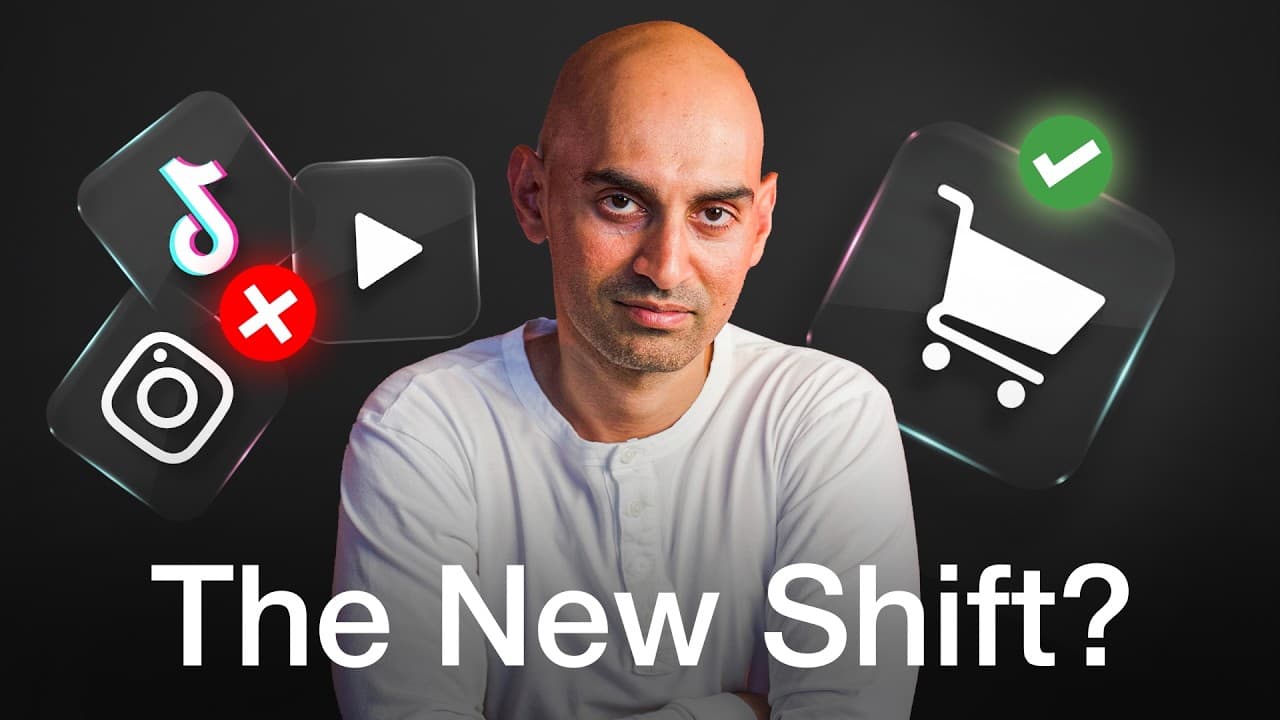
Brands should prioritize native social checkout, searchable content, sustained audience value, and credible expertise. The predicted shift gives users more control over what they see while rewarding long-form storytelling, meaningful engagement, and human authority. Strategies built mainly around website traffic, viral short clips, follower counts, virtual influencers, or high publishing volume may become less effective.
Transcript
Social media is changing fast and what worked just a few years ago doesn't work anymore. Right now, we're seeing the biggest shift in social media since the rise of short form video where users, not algorithms, are taking control. I'm Neil Patel, founder of NP Digital, one of the largest marketing agencies in the world. In this video, I'll break do... Read More
Key Insights
- On-platform conversion is replacing website-centered social funnels as TikTok, Instagram, YouTube, and Facebook develop complete sales ecosystems. Native checkout, lead forms, direct messages, and phone calls can move customers from discovery to action without requiring them to open a separate browser.
- Native social commerce can increase conversion performance, according to the cited Shopify 2025 update. Brands using social commerce stores reportedly experienced conversion increases between 20% and 40%, supporting the recommendation to enable TikTok Shop, Instagram Shopping, Stripe connections, and platform-specific checkout experiences.
- User-controlled feeds are shifting discoverability from algorithmic momentum toward intentional audience choice. Instagram's topic controls let people add or exclude interests, so creators must publish consistently valuable material that audiences actively want rather than depend on occasional viral hits or passive exposure.
- Long-form video is returning because viewers increasingly want depth, storytelling, and substance. A cited September 2025 study found that long-form videos generated 10 times more views and five times more meaningful comments than short-form posts, while YouTube held over 50% of global social watch time.
- Audience retention is more valuable than surface-level virality for longer videos. The transcript argues that a five-minute video with 35% retention usually outperforms a 30-second video with 40% retention, encouraging brands to test three-to-five-minute formats and serialized narratives that bring viewers back.
- Social platforms are becoming primary search tools for product research, recommendations, and how-to information. The cited data says 64% of Gen Z use TikTok for search, while 41% of all US consumers do the same, making keyword optimization necessary for social posts.
- Social search optimization works through titles, captions, descriptions, spoken words, and comments that platforms can index. Creators should research platform-specific queries, build content around demonstrated search demand, and optimize for durable discovery because ranked videos can continue attracting views for months or years.
- Expert personal brands are becoming more valuable than generic influencers because companies increasingly seek credible specialists and educators. A niche authority with 50,000 highly engaged followers can be more useful than a broad influencer with one million followers, especially for partnerships and co-branded products.
Install to Summarize YouTube Videos and Get Transcripts
Explore YouTube Video Summarizer or Get YouTube Transcript Extractor
Questions & Answers
Q: How should brands prepare for on-platform conversions in 2026?
Brands should connect their stores and payment systems to native social commerce tools, including TikTok Shop, Instagram Shopping, and supported social checkout systems. Calls to action should invite users to shop, buy, comment, message, or call directly instead of merely visiting a website. Ads, product pages, lead capture, and checkout should form one seamless journey inside the platform.
Q: Why are user-controlled feeds changing social media marketing?
User-controlled feeds let people actively add, exclude, or suppress entire interest categories instead of relying only on platform algorithms. Content that repeatedly fails to provide value can therefore lose reach when users tune it out. Brands should compete for intentional attention through audience-specific value, recurring engagement, and a varied but relevant set of content themes.
Q: How can brands adapt to the return of long-form video?
Brands can begin by testing three-to-five-minute videos that offer genuine storytelling and useful substance rather than relying exclusively on Reels, TikToks, or other short clips. They can also structure videos as serialized narratives, similar to television episodes, so viewers return for the next installment. Performance should be assessed through watch time and retention, not views alone.
Q: Why is long-form video becoming more important on social media?
Long-form video is becoming more important because audiences are described as tired of fast, snackable, dopamine-driven posts and increasingly interested in depth, storytelling, and substance. The cited September 2025 study found 10 times more views and five times more meaningful comments for long-form videos than short-form posts, while YouTube accounted for over 50% of global social watch time.
Q: How do you optimize videos for search on social platforms?
Creators should place relevant search terms in video titles, captions, and descriptions, treating every post as searchable content. They should use platform tools such as TikTok's search insights, or the referenced AnswerThePublic service, to identify active queries across TikTok, Instagram, and YouTube. Content should answer those queries clearly and prioritize lasting discoverability alongside engagement.
Q: Why are social platforms becoming alternatives to Google search?
Many users now go directly to TikTok, Instagram, or YouTube for restaurants, skincare advice, product research, and repair instructions. The transcript cites 64% of Gen Z using TikTok for search and 41% of all US consumers doing the same. Because platforms index titles, captions, spoken words, descriptions, and comments, optimized videos can surface for specific queries over long periods.
Q: Why are expert personal brands replacing traditional influencers?
Brands increasingly want creators with specific expertise, credibility, and authority rather than entertainers selected mainly for large audiences. The transcript argues that an established niche authority with 50,000 highly engaged followers can provide more value than a generic influencer with one million followers. Creators should own a focused subject, while brands should evaluate authority and explore expert-led co-branded products.
Q: What content strategy does the predicted social media quality reset favor?
The predicted quality reset favors meaningful, story-driven content over publishing volume. It aligns with rising social fatigue, renewed interest in long-form narratives, user-controlled feeds, and demand for credible human experts. Brands should focus on substance, relevance, retention, and consistent audience value, while reducing dependence on virtual personalities, generic influencer reach, isolated viral hits, and constant low-value output.
Summary & Key Takeaways
-
Social platforms are evolving into complete conversion ecosystems for products, leads, and services. Brands should integrate native commerce tools, replace website-focused calls to action with in-app actions, and redesign ads, product pages, and checkout journeys for the platform. Keeping users inside the app can also reduce lead acquisition costs.
-
User-controlled feeds will make intentional attention more important than passive algorithmic discovery. Brands need to deliver consistent value, encourage recurring engagement, and cover enough relevant themes to avoid easy suppression. This transition favors marketers who clearly define their target audiences and create content aligned with those audiences' deliberate interests.
-
Long-form storytelling, social search, and expert-led personal brands are expected to gain importance as audiences seek depth, useful answers, and credible authority. Meanwhile, virtual influencers face rejection, and social fatigue is prompting a quality reset. Brands should prioritize meaningful, searchable, story-driven content instead of maximizing volume or chasing generic reach.
Read in Other Languages (beta)
Share This Summary 📚
Summarize YouTube Videos and Get Video Transcripts with 1-Click
Try YouTube Summary with ChatGPT & Claude or YouTube Transcript Generator
Explore More Summaries from Neil Patel 📚


Summarize YouTube Videos and Get Video Transcripts with 1-Click
Try YouTube Summary with ChatGPT & Claude or YouTube Transcript Generator