How Does Fasting Affect Cancer and Health? Dr. Alan Goldhamer Explains
TL;DR
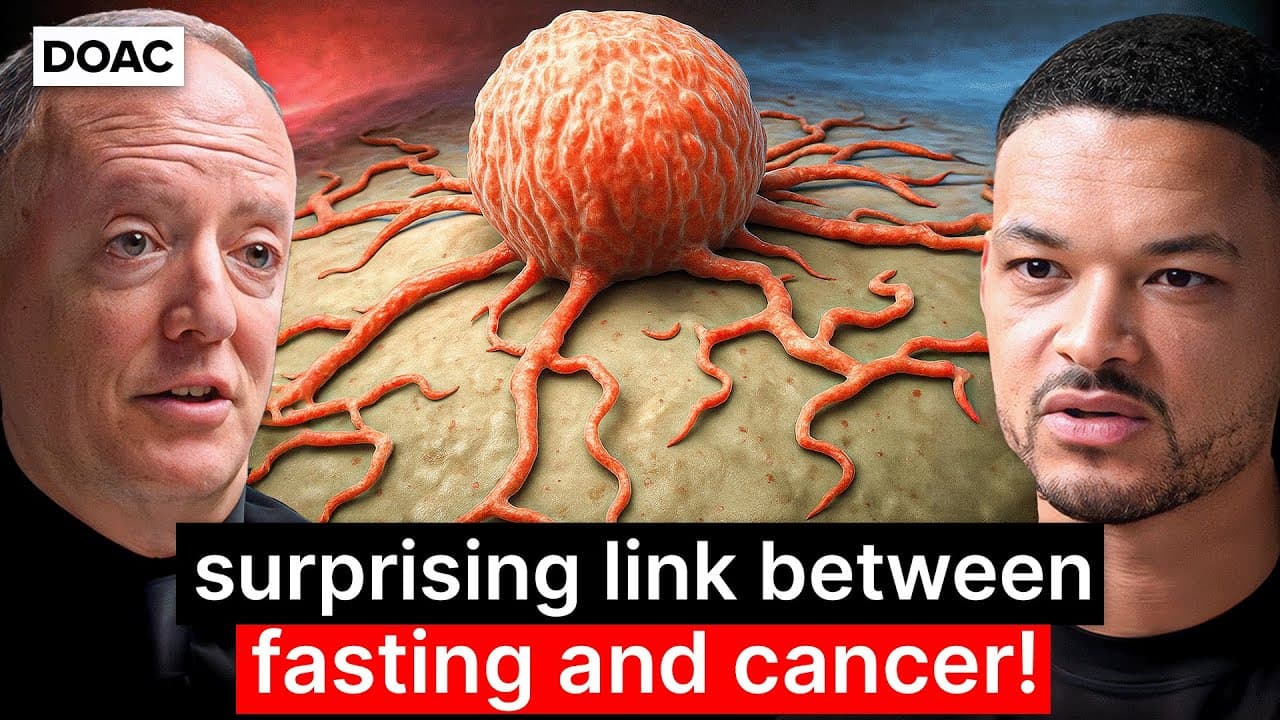
Fasting may support health by mobilizing inflammatory visceral fat associated with cancer, heart disease, and diabetes while also reducing insulin resistance and blood pressure. Dr. Alan Goldhamer describes a study in which all 174 patients with hypertension normalized their blood pressure without medication and explains why therapeutic fasting includes complete rest. Read on for the physiological sequence, potential benefits, and fasting methods discussed.
Transcript
This is the most effective treatment that's ever been shown in treating the leading cause of death and disability, which is high blood pressure. It also reduces insulin resistance. It can enhance cognitive capacities. And you also see it affecting things like depression and anxiety. It's called fasting. And there's more. Fasting introduces not just... Read More
Key Insights
- Fasting is effective in treating high blood pressure, the leading cause of death and disability.
- Fasting reduces insulin resistance, a condition that contributes to type 2 diabetes.
- Visceral fat, linked to heart disease and cancer, is mobilized through fasting.
- Fasting enhances cognitive functions and may protect the brain from Alzheimer's disease.
- Water fasting has shown profound effects on patients with polycystic ovarian syndrome.
- Fasting can lead to a state of autophagy, clearing out damaged cells and waste products.
- Intermittent fasting can help control overeating by limiting the feeding window.
- Fasting can reset the gut microbiome, potentially benefiting conditions like Crohn's disease.
Install to Summarize YouTube Videos and Get Transcripts
Explore YouTube Video Summarizer or Get YouTube Transcript Extractor
Questions & Answers
Q: How does fasting affect cancer and overall health?
Fasting mobilizes visceral fat around the belly and organs, which releases inflammatory products associated with cancer, heart disease, and diabetes. It may also lower blood pressure, reduce insulin resistance, enhance cognitive capacity, and affect depression and anxiety.
Q: What evidence does Dr. Alan Goldhamer give for fasting lowering blood pressure?
Dr. Alan Goldhamer describes a study of 174 consecutive patients with high blood pressure. According to him, all 174 normalized their blood pressure without medication.
Q: What type of fasting does Dr. Alan Goldhamer practice?
He defines fasting as complete abstinence from all substances in an environment of complete rest. His work focuses on medically supervised water-only fasting, an approach he studied in Australia with Alec Burton.
Q: Why is complete rest part of therapeutic fasting?
Activity during fasting requires the body to produce more glucose after glycogen reserves are depleted. Dr. Goldhamer says this can drive gluconeogenesis and the breakdown of lean tissue, so rest helps maximize fat loss while minimizing lean-tissue loss.
Q: What happens after 24 hours of fasting?
After 24 hours, the body's glycogen stores, the sugar stored in the muscles, are depleted. The body must then convert to burning fat or break down muscle to form the glucose it needs.
Q: How does fasting affect visceral fat?
Fasting helps mobilize visceral fat stored around the belly and organs. This fat gives off inflammatory products associated with heart disease, cancer, and diabetes, so reducing it is presented as an important benefit beyond ordinary weight loss.
Q: How can fasting affect the brain and cognitive function?
The discussion says fasting can enhance cognitive capacity and increase BDNF, a neurochemical that protects the brain from damage associated with Alzheimer's disease. During fasting, the brain also begins converting from glucose toward fat-derived fuel after glycogen stores are depleted.
Q: What conditions does Dr. Alan Goldhamer say water-only fasting may help?
He reports seeing people with chronic diseases such as high blood pressure resolve their hypertension and stop medication. He also says patients with polycystic ovarian syndrome who had not resolved their conditions with medication were profoundly affected by water fasting.
Summary & Key Takeaways
-
Fasting is a natural process that helps the body heal by reducing inflammation and mobilizing visceral fat, which is linked to chronic diseases like heart disease and cancer. It also lowers blood pressure and insulin resistance, enhancing overall health.
-
Dr. Alan Goldhamer emphasizes the benefits of water-only fasting, which can lead to significant health improvements, including the potential reversal of chronic illnesses such as hypertension and type 2 diabetes.
-
Fasting impacts the gut microbiome, potentially improving gastrointestinal and mental health conditions. It is a powerful intervention for those struggling with dietary excess and related health issues.
Read in Other Languages (beta)
Share This Summary 📚
Summarize YouTube Videos and Get Video Transcripts with 1-Click
Try YouTube Summary with ChatGPT & Claude or YouTube Transcript Generator
Explore More Summaries from The Diary Of A CEO 📚






Summarize YouTube Videos and Get Video Transcripts with 1-Click
Try YouTube Summary with ChatGPT & Claude or YouTube Transcript Generator