How to Become More Intelligent Than 99% of People
TL;DR
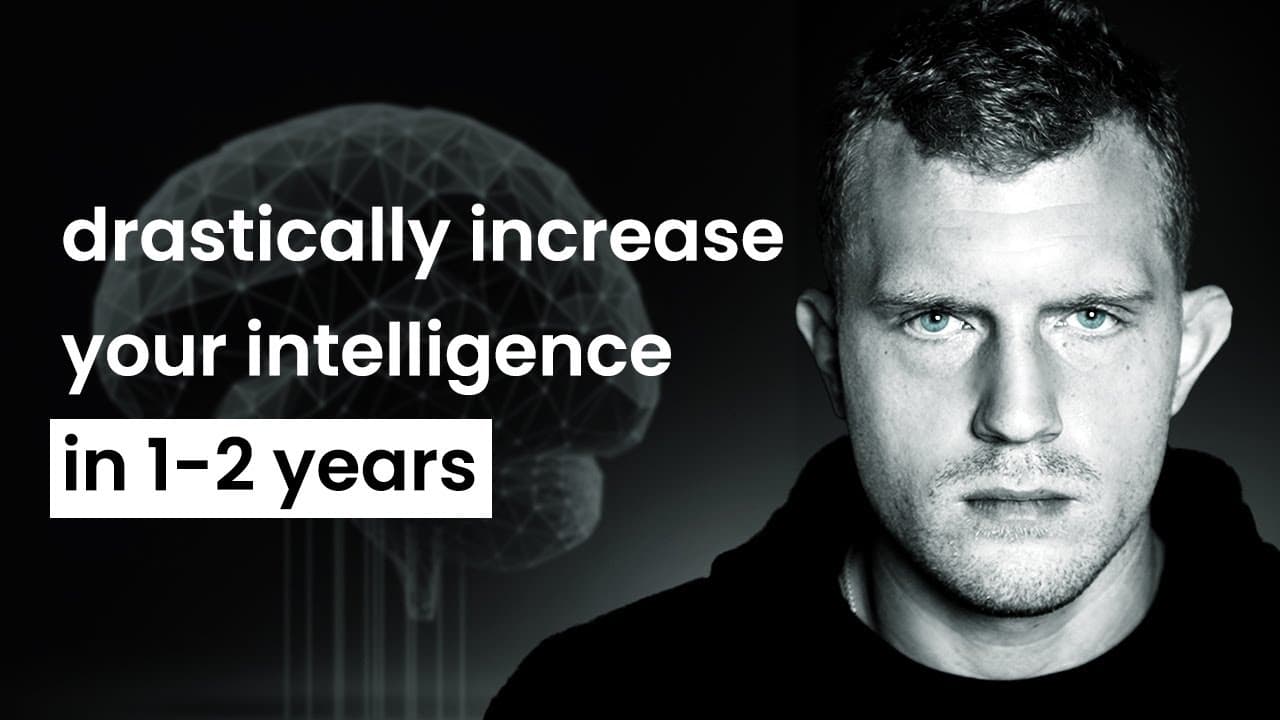
To become more intelligent than 99% of people, develop a holistic understanding of life and repeatedly steer toward meaningful goals instead of relying on IQ alone. The cybernetic process is to set a goal, act, sense your position, compare it with the goal, and adjust from feedback. Progress through broader psychological perspectives takes years, supported by studying an hour a day and applying what you learn. Read on for the stages and practices involved.
Transcript
the only real test of intelligence is if you get what you want out of life there is a science to intelligence but most people get it wrong because they think intelligence is about book smarts and Performing cognitive tasks and while those play a major role in success of course there is much more to the story people who score well on IQ tests usuall... Read More
Key Insights
- Intelligence is the ability to get what you want out of life, not just high IQ.
- Cybernetics is the art of steering towards goals, involving acting, sensing, and adjusting.
- High intelligence involves understanding and iterating on the big picture, not just solving specific problems.
- Goals frame our perception of reality and influence our actions and decisions.
- Psychological development involves moving through preconventional, conventional, and postconventional stages.
- Most people operate within conventional stages, focused on societal norms and status.
- Postconventional stages involve systemic thinking and multi-perspectival understanding.
- The unitive stage, representing the top 1% of intelligence, embraces a universal perspective and transcends ego.
Install to Summarize YouTube Videos and Get Transcripts
Explore YouTube Video Summarizer or Get YouTube Transcript Extractor
Questions & Answers
Q: How can you become more intelligent than 99% of people?
Treat intelligence as the ability to understand reality, create a rich life, and get what you want from life, not merely as book smarts or cognitive performance. Set goals, act toward them, observe the results, and repeatedly correct your course. The speaker also recommends studying an hour a day and building something that applies what you learn.
Q: What does cybernetics mean in the context of intelligence?
Cybernetics is presented as the art of steering toward a goal and as the art of getting what you want. It describes an intelligent system that acts, senses its position, compares that position with its goal, and adjusts using feedback.
Q: Why is a high IQ not enough to create a rich life?
The transcript says people with high IQs can solve complex problems yet may struggle with the larger, holistic problem of creating a rich life. In its camera analogy, high IQ provides magnification but not necessarily aperture, so intelligence also requires a wider view.
Q: How do goals shape intelligent action?
A goal supplies the destination against which present results can be compared. Intelligent action means moving toward that destination, noticing when life or mistakes push you off course, and changing your actions rather than persisting in the wrong direction.
Q: What is the cybernetic feedback process for reaching a goal?
First, choose a goal and act toward it. Then sense where you are, compare that position with the goal, and act again based on the feedback. The process depends on iteration, persistence, and trial and error.
Q: What are the main stages of psychological development discussed?
The page groups psychological development into preconventional, conventional, and postconventional stages, with nine stages discussed overall. Conventional stages emphasize societal norms and status, while postconventional stages introduce systemic thinking and multiple perspectives.
Q: What characterizes the unitive stage of intelligence?
The unitive stage is presented as the highest stage and as representing the top 1% of intelligence. It adopts a universal perspective, transcends ego, and integrates insights from earlier stages into a holistic understanding of reality and conscious action.
Q: How long does it take to progress through stages of development?
The speaker says moving through developmental stages takes years and cannot be achieved simply by watching one video. A continuing practice is required, including studying for an hour a day, building something, and applying what you learn.
Summary & Key Takeaways
-
Intelligence goes beyond high IQ and involves achieving desired outcomes through understanding and adjusting to reality. Cybernetics, the art of steering toward goals, is essential for this process. By understanding and moving through psychological development stages, one can expand their perspective and reach the top 1% of intelligence.
-
Most people operate within conventional stages of psychological development, focusing on societal norms and status. However, reaching higher intelligence requires moving beyond these stages to a postconventional understanding that embraces systemic thinking and multiple perspectives.
-
The highest stage of intelligence, the unitive stage, involves adopting a universal perspective and transcending ego. This stage allows for a holistic understanding of reality and the ability to act with conscious intention, integrating insights from previous stages of development.
Read in Other Languages (beta)
Share This Summary 📚
Summarize YouTube Videos and Get Video Transcripts with 1-Click
Try YouTube Summary with ChatGPT & Claude or YouTube Transcript Generator
Explore More Summaries from Dan Koe 📚


Summarize YouTube Videos and Get Video Transcripts with 1-Click
Try YouTube Summary with ChatGPT & Claude or YouTube Transcript Generator