What Is the Psychology of Money and Its Impact on Finances?
TL;DR
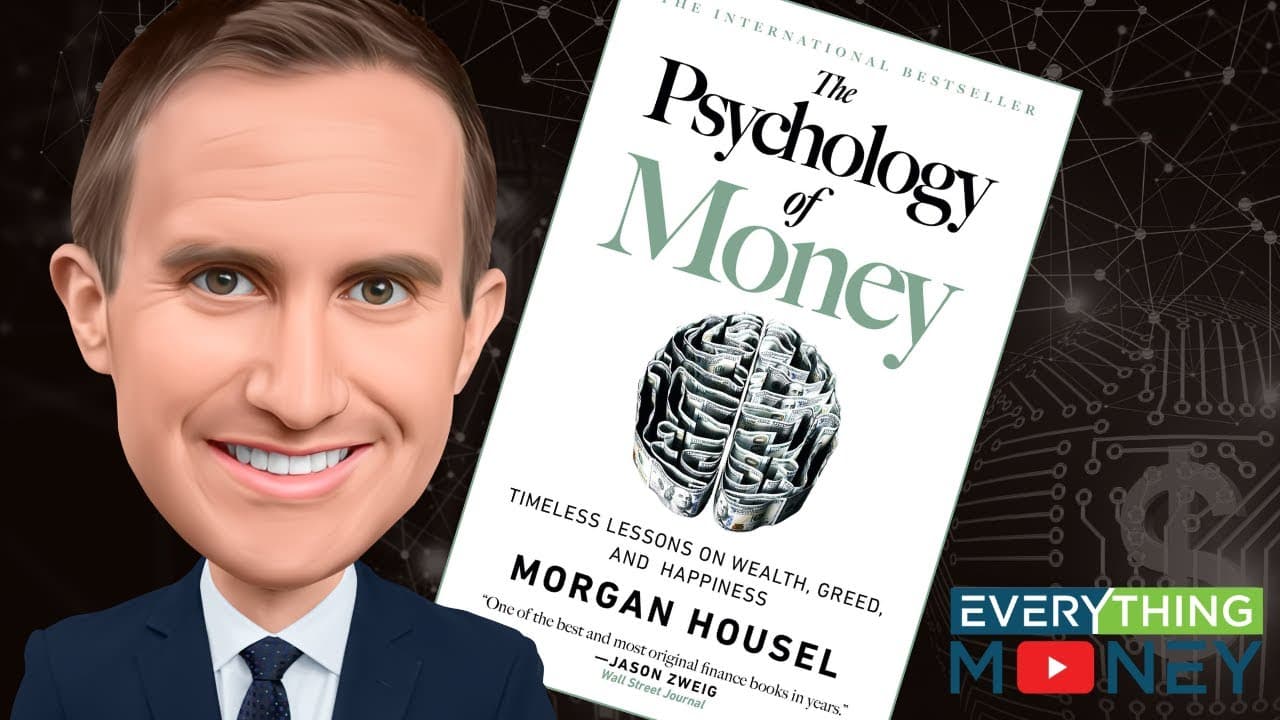
The psychology of money illustrates that financial success is deeply tied to emotions and individual behaviors, not just numbers. Understanding one's relationship with money is crucial for making informed financial decisions and building long-term success. By acknowledging the psychological factors at play, individuals can develop a healthier perspective on money, focusing on independence, gratitude, and meaningful goals.
Transcript
hey guys we did an awesome interview here with Morgan howel we spoke about the psychology of money and his new book same as ever it was a fantastic conversation I hope you guys enjoy it all right so Morgan um one thing I want you to know and I just mentioned guy spe to you ahead of time before we started this there are two books so we have a commun... Read More
Key Insights
- 📈 Financial success is intrinsically connected to one's mindset and emotions, not just numerical metrics.
- 🤑 Understanding our individual relationship with money is essential for financial well-being.
- 🆘 Recognizing the role of emotions in financial decision-making helps individuals make more informed choices.
- 🤑 Developing a healthy perspective on money involves embracing gratitude, focusing on long-term goals, and avoiding unnecessary risks.
- 🖐️ The belief that financial success is solely determined by numbers is a fallacy; psychological and emotional factors also play a significant role.
- 💄 Financial behaviors are often influenced by societal norms and personal experiences, making it essential to reflect on our own beliefs and choices.
- 🤑 Money is a tool for independence and freedom, but it should not be the sole measure of one's self-worth.
- 🎙️ More videos with Morgan Housel:
Install to Summarize YouTube Videos and Get Transcripts
Explore YouTube Video Summarizer or Get YouTube Transcript Extractor
Questions & Answers
Q: How did the author's background and personal experiences influence his understanding of the psychology of money?
The author's upbringing, independent mindset from a young age, and continuous focus on behavioral finance throughout his career have shaped his perception of money and its psychological underpinnings. These experiences have contributed to his deep understanding of the subject matter.
Q: What is the significance of recognizing the role of emotions in financial decision-making?
Understanding the influence of emotions on financial decisions is crucial as it helps individuals gain self-awareness and make more informed choices. By recognizing how our emotions impact our financial behavior, we can develop healthier money mindsets and improve our long-term financial well-being.
Q: How does the book challenge the belief that financial success is solely based on numbers?
The book argues that financial success is not solely determined by numerical factors but is also shaped by how individuals approach money psychologically and emotionally. It emphasizes that one's mindset, attitudes, and behaviors towards money play a significant role in achieving financial success.
Q: What are some practical takeaways from the book that can help individuals develop a healthier relationship with money?
The book provides valuable insights such as recognizing the role of luck in financial outcomes, focusing on long-term goals rather than short-term gains, avoiding unnecessary risks, and embracing a mindset of gratitude and contentment. These insights can assist individuals in developing a more balanced and positive relationship with money.
Summary & Key Takeaways
-
The book delves into the psychological aspects of money, highlighting the role of emotions and behaviors in financial decision-making.
-
It challenges the notion that financial success is solely determined by numbers, emphasizing the significance of psychological and emotional factors in our financial well-being.
-
The author discusses his personal experiences and insights, drawing from his extensive research on behavioral finance to provide valuable lessons and perspectives on money management.
Read in Other Languages (beta)
Share This Summary 📚
Summarize YouTube Videos and Get Video Transcripts with 1-Click
Try YouTube Summary with ChatGPT & Claude or YouTube Transcript Generator