How to Prepare Your Thinking Skills for the AI Era
TL;DR
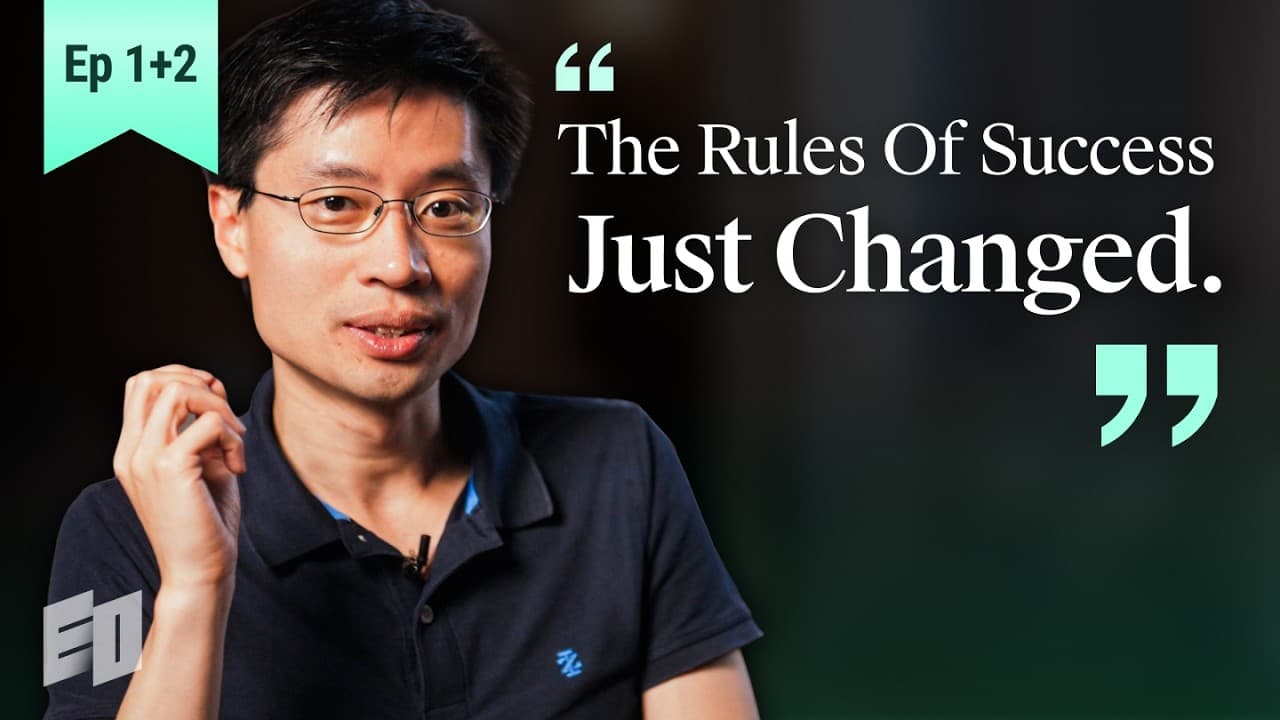
Protect your ability to think by practicing reading, writing, communication, logic, and unfamiliar problem-solving instead of outsourcing schoolwork to AI. As AI becomes increasingly capable and creative, people will need to evaluate answers, synthesize ideas, exercise judgment, understand different perspectives, and build relationships with kind, knowledgeable people.
Transcript
For many many years, [music] humans were the top species, the most capable things on this planet. Soon, it will not be that case. The creativity [music] in the AI can probably surpass what we can do, too. The AI is advancing so fast with my own kids. I have three kids. I'm a math professor at Carnegie Melon University. I'm not even sure what's goin... Read More
Key Insights
- AI creativity is already strong enough to solve highly original mathematics problems. Google's artificial intelligence solved four of the six International Math Olympiad problems discussed by Loh, exceeding what he says he could accomplish and challenging the belief that creativity will remain exclusively human.
- Writing practice is a form of mental exercise, not merely a way to produce an assignment. Using AI to complete school writing removes the language practice through which students develop communication, logical reasoning, and the ability to organize their own thoughts.
- The key educational skill is learning to evaluate answers rather than merely produce rehearsed ones. Loh describes this shift as moving from doing homework and exams to grading homework, because people must judge the quality and reliability of work produced by increasingly capable systems.
- Unfamiliar problems reveal how a person actually thinks. Loh interviews students by asking questions they have not encountered, then provides hints and observes how quickly they combine those hints into a possible solution, without expecting them to solve the problem immediately.
- Test preparation can replace invention with recognition. When students practice every likely problem type until tests contain no surprises, they may earn higher scores but lose opportunities to develop mental flexibility, create original approaches, and respond constructively to genuinely new situations.
- Human purpose should focus on helping others rather than proving superiority. Loh observed highly capable mathematics students who were depressed or unsure what to do after high school, leading him to favor a philosophy based on creating happiness and value for growing communities.
- Sustainable impact requires a workable source of money. Loh says money does not buy happiness but remains important for influence and impact, so educational projects need revenue that can support free resources, continued development, and broader access over time.
- Live education works best when expertise is paired with friendliness. Loh identifies knowledgeable, approachable human interaction as highly valuable but difficult to scale, motivating his effort to build an ecosystem where learners and mathematically strong participants contribute while receiving distinct benefits.
Install to Summarize YouTube Videos and Get Transcripts
Explore YouTube Video Summarizer or Get YouTube Transcript Extractor
Questions & Answers
Q: How should students prepare for increasingly capable AI?
Students should deliberately practice reading, writing, communication, logic, and solving unfamiliar problems. These activities develop the ability to organize thoughts, synthesize hints, evaluate proposed answers, and form independent judgments. AI can assist with practical tasks, but using it to replace the learning activity itself can prevent students from developing the mental skills they will later need.
Q: Why should students avoid using AI to write homework?
Writing homework is intended to exercise thinking rather than simply create a finished document. Loh compares outsourcing it to AI with driving a mile instead of running a mile for exercise. The task may be completed, but the student receives none of the intended practice in language, reasoning, communication, and structuring ideas, increasing the risk of future dependence.
Q: Why is creativity alone insufficient preparation for AI?
Creativity may not remain a uniquely human advantage because AI can already solve problems specifically designed to be original. Loh cites Google's artificial intelligence solving four of six International Math Olympiad problems, which national coaches examine to ensure they are unlike earlier contest questions. People therefore also need judgment, empathy, perspective, language skills, and concern for human well-being.
Q: What does it mean to think like a teacher instead of a student?
Thinking like a teacher means evaluating the quality, logic, and reliability of an answer rather than only trying to produce the expected response. Loh says that people once went to school to learn how to do homework and exams, but now everyone needs to learn how to grade homework. This requires independent standards, careful judgment, and the ability to detect weaknesses.
Q: How do unfamiliar problems develop independent thinking?
Unfamiliar problems force students to reason instead of recalling a memorized procedure. In interviews, Loh asks questions until body language indicates that a student has not seen the problem before. He then supplies hints and watches how quickly the student synthesizes them into a solution. The objective is not immediate success, but evidence of flexibility, creativity, and responsive thought.
Q: Why can intensive test preparation weaken creativity?
Intensive preparation can expose students to so many possible question types that a test never surprises them. Although this approach may improve scores, Loh argues that it consumes many hours and removes opportunities to invent. Earlier mathematics competition practice treated each new problem as an exercise in mental flexibility, while cramming can reduce new problems to rehearsed patterns.
Q: What philosophy of success does Po-Shen Loh recommend?
Loh recommends measuring success through the ability to make other people happy and create useful impact, rather than constantly trying to prove superiority. He observed clever and capable mathematics students who remained depressed or uncertain after high school. Helping progressively larger groups can provide continuing motivation, while also correlating with forms of success that society traditionally recognizes.
Q: Why are expert human relationships still important in education?
Learners often want a live experience with a knowledgeable person, but expertise alone is insufficient because the person must also be friendly. Loh describes this combination as rare, valuable, and difficult to scale. His educational ecosystem attempts to connect different groups so learners receive human guidance while mathematically strong participants develop broader interpersonal abilities and everyone gains from contributing.
Summary & Key Takeaways
-
AI can solve highly original problems, so creativity alone may not remain a uniquely human advantage. Po-Shen Loh argues that students should strengthen language, logic, communication, and independent judgment. Writing and unfamiliar problems are valuable because they exercise thinking, while delegating those learning activities to AI can create intellectual dependence.
-
Education should shift from preparing students to reproduce practiced answers toward teaching them to evaluate work and invent approaches. Loh tests students with unfamiliar questions, offers hints, and watches how quickly they synthesize those hints. This method treats surprise as an opportunity to develop flexibility rather than a failure to prepare.
-
Success based only on outperforming others can leave capable students dissatisfied and uncertain about their purpose. Loh proposes creating happiness and value for increasing numbers of people instead. His educational work seeks a sustainable ecosystem that combines human expertise, friendliness, empathy, and broad access while generating enough money to support greater impact.
Read in Other Languages (beta)
Share This Summary 📚
Summarize YouTube Videos and Get Video Transcripts with 1-Click
Try YouTube Summary with ChatGPT & Claude or YouTube Transcript Generator
Explore More Summaries from EO 📚

Summarize YouTube Videos and Get Video Transcripts with 1-Click
Try YouTube Summary with ChatGPT & Claude or YouTube Transcript Generator