How Does Muscle Strength Support a Longer Life?
TL;DR
Maintaining muscle strength supports longevity by improving blood sugar control, metabolic flexibility, balance, recovery, and independence. Muscle loss can begin after the mid-30s and compound over decades, but intentional resistance training can rebuild strength at any age and reduce the vulnerability associated with sarcopenia, falls, metabolic disease, and functional decline.
Transcript
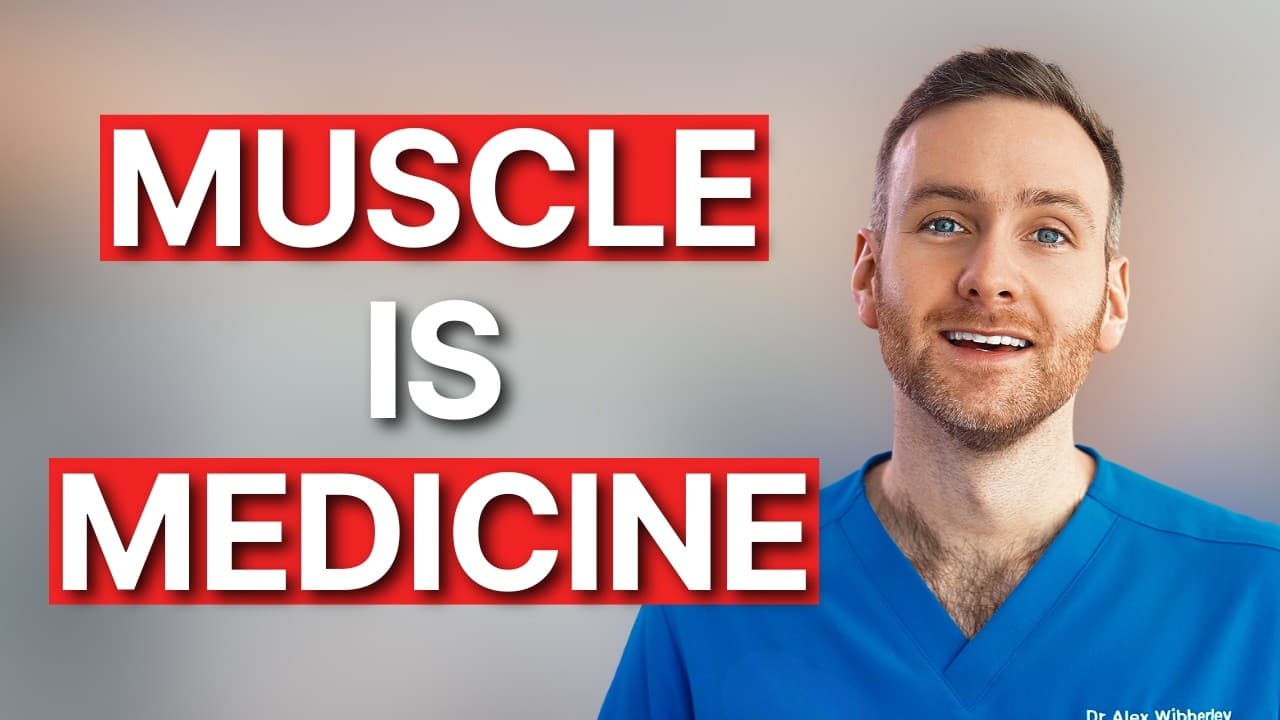
If you want to predict how long somebody will live, then forget their cholesterol, forget their weight, look instead at their muscle. Because muscle mass and strength are two of the strongest predictors of longevity that we have in medicine. Hi, I'm Dr. Alex. I'm an emergency medicine doctor. And after nearly 10 years in the A&E, I've seen what hap... Read More
Key Insights
- Muscle mass and strength are strong predictors of longevity because they influence resilience, recovery, disability risk, and independence. Functionally strong patients are described as better able to recover from illness and avoid rapid deterioration, while people who lose muscle become more vulnerable to infections, falls, metabolic disease, and cardiovascular events.
- Muscle loss can begin after the mid-30s at a rate of 1–3% per year when no effort is made to maintain it. Because this decline compounds over decades, a person may have lost 40–50% of total muscle mass by their 70s, even if the process initially seems unnoticeable.
- Sarcopenia is age-related muscle loss and an independent risk factor for death. The transcript states that it can increase mortality risk by two to five times, depending on the study, because reduced muscle leaves the body less capable of handling illness, injury, metabolic dysfunction, and other physical stresses.
- Muscle tissue is the body’s primary destination for blood glucose, absorbing around 70–80% of glucose from the bloodstream. Lower muscle mass means fewer muscle cells and glucose receptors, reducing storage capacity and prompting the pancreas to release more insulin, which can contribute to insulin resistance and type 2 diabetes.
- Metabolic flexibility is the ability to switch between burning carbohydrates and fat according to fuel availability and activity. Muscle contains mitochondria that generate energy, so maintaining more muscle increases the capacity for fat oxidation and helps support stable energy between meals, during fasting, and while exercising.
- Strong quadriceps, glutes, and core muscles protect against falls by helping a person regain balance and absorb impact. Hip fractures caused by falls carry a stated one-year mortality rate of 20–30% among older people, and many survivors never regain their former independence.
- Grip strength is a simple indicator that correlates with total-body strength and overall health. Low grip strength predicts higher rates of heart attack, stroke, and early death in the population studies described, while declining grip strength may reveal functional deterioration years before obvious disability develops.
- Resistance training is a practical way to counter muscle loss at any age. Intentional strength work and movement practice can interrupt the cycle in which fear after a fall causes less movement, accelerated muscle loss, and greater fall risk, while grip exercises can improve upper-body strength and functional capacity.
Install to Summarize YouTube Videos and Get Transcripts
Explore YouTube Video Summarizer or Get YouTube Transcript Extractor
Questions & Answers
Q: How does muscle strength affect longevity?
Muscle strength affects longevity by supporting resilience against illness, falls, metabolic disease, cardiovascular events, and functional decline. Patients who remain strong are described as recovering faster and preserving their independence, while people with low muscle mass deteriorate more easily. Sarcopenia is presented as an independent mortality risk factor because it makes the body vulnerable to many different stresses rather than causing only one disease.
Q: When does age-related muscle loss begin?
Age-related muscle loss can begin after the mid-30s. Without action to maintain muscle, the transcript states that people may lose 1–3% of their muscle mass each year. Although that annual decline can appear small, it compounds over decades. By the 70s, a person could have lost 40–50% of total muscle mass, substantially weakening resilience, mobility, and independence.
Q: What is sarcopenia and why is it dangerous?
Sarcopenia is the loss of muscle mass associated with aging. It is dangerous because low muscle mass reduces the body’s capacity to withstand infections, falls, metabolic disease, and cardiovascular events. The transcript describes sarcopenia as an independent risk factor for death and states that it can increase mortality risk by two to five times, depending on the research being considered.
Q: How does muscle help control blood sugar?
Muscle helps control blood sugar by absorbing around 70–80% of glucose from the bloodstream after carbohydrates are eaten. More muscle provides more cells, glucose receptors, and storage capacity. When muscle mass is low, glucose is harder to clear, so the pancreas releases more insulin. Over time, chronically elevated insulin demand can contribute to insulin resistance and type 2 diabetes.
Q: What is metabolic flexibility and how does muscle support it?
Metabolic flexibility is the body’s ability to switch between burning carbohydrates and burning fat based on what fuel is available and what activity is being performed. Muscle supports this flexibility because it contains mitochondria that generate energy. Greater muscle mass provides more mitochondrial capacity for fat oxidation, helping the body maintain energy between meals, exercise while fasted, and avoid constant dependence on carbohydrates.
Q: Why does leg strength reduce the risk of serious falls?
Leg strength reduces fall risk because strong quadriceps, glutes, and core muscles help a person catch themselves, regain balance after a stumble, and absorb impact. Weak muscles make even a minor trip more dangerous. This protection matters because hip fractures have a stated one-year mortality rate of 20–30% among older people, and many survivors do not return to independent living.
Q: Why is grip strength considered a useful health marker?
Grip strength is useful because a dynamometer measurement correlates with total-body strength and overall health. Weak grip often indicates that the legs, core, and broader muscular system may also be weak. The transcript links lower grip strength with higher rates of heart attack, stroke, and early death, and notes that declining grip can appear years before obvious functional disability becomes visible.
Q: How can older adults rebuild protective muscle?
Older adults can rebuild protective muscle by using intentional resistance training and regular movement practice. The transcript emphasizes that muscle loss is largely reversible and that strength can be rebuilt at any age with the right stimulus. Training the legs, glutes, core, and upper body supports balance and independence, while farmer carries, dead hangs, and grip-specific tools can improve grip and functional capacity.
Summary & Key Takeaways
-
Muscle mass and strength are presented as major predictors of longevity, resilience, and independence. Without maintenance, muscle loss can begin after the mid-30s at 1–3% per year, potentially removing 40–50% of total muscle by the 70s. This age-related decline, called sarcopenia, is associated with substantially higher mortality risk.
-
Muscle acts as a major destination for blood glucose, absorbing around 70–80% of glucose from the bloodstream. Having less muscle reduces glucose-storage capacity and can contribute to elevated insulin demand, insulin resistance, and type 2 diabetes. More muscle also provides additional mitochondria, supporting fat oxidation, energy production, and metabolic flexibility.
-
Strong legs, glutes, and core muscles help people recover from stumbles, absorb impacts, and avoid falls that can destroy independence. Grip strength provides a simple indicator of broader strength and functional decline. Resistance training, movement practice, farmer carries, dead hangs, and grip exercises can help preserve practical capacity as people age.
Read in Other Languages (beta)
Share This Summary 📚
Summarize YouTube Videos and Get Video Transcripts with 1-Click
Try YouTube Summary with ChatGPT & Claude or YouTube Transcript Generator
Explore More Summaries from Doctor Alex 📚


Summarize YouTube Videos and Get Video Transcripts with 1-Click
Try YouTube Summary with ChatGPT & Claude or YouTube Transcript Generator