How the U.S. Unlocked Hormuz Amidst Iranian Tensions
TL;DR
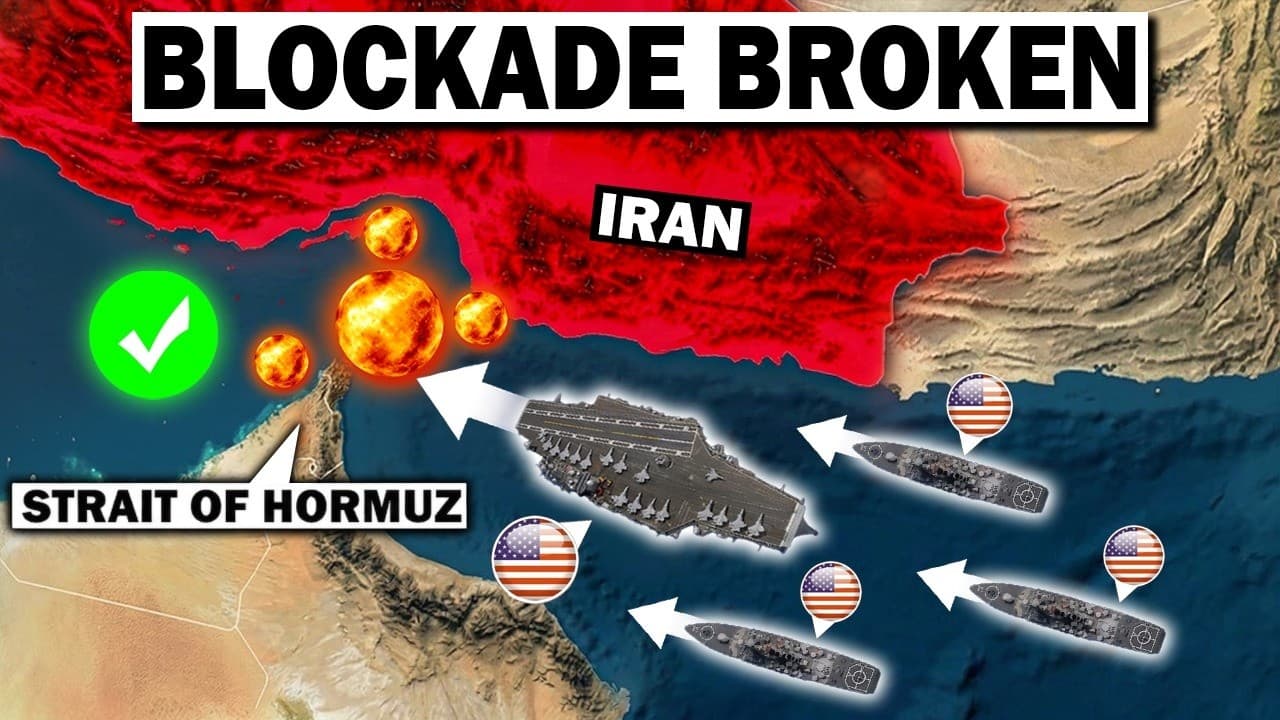
The U.S. deployed guided missile destroyers and underwater drones to clear the Strait of Hormuz, countering Iran's rogue sea mines. This strategic move aims to establish a safe transit route amidst escalating tensions. Meanwhile, Russia benefits from the crisis by bypassing sanctions and promoting its Northern Sea Route, highlighting the geopolitical complexity of the situation.
Transcript
In the world's most dangerous waterway, Hormuz, that breaking point everyone thought was impossible has finally happened. The US has sent something massive to open this strategic straight. Two guided missile destroyers, the USS Frankie Peterson Jr. and the USS Michael Murphy passed through Hormuz on April 11th. But these ships are just the tip of t... Read More
Key Insights
- The Strait of Hormuz is a critical chokepoint for global oil supply, with 20% of the world's oil passing through it daily.
- The U.S. deployed two guided missile destroyers and underwater drones to clear mines and establish a safe route in Hormuz.
- Iran's rogue sea mines have drifted from their original positions, creating a dangerous and unpredictable threat.
- The U.S. is considering an 'Out-Blockade' doctrine to control Hormuz's entry and exit points, countering Iranian influence.
- Russia benefits from the crisis by increasing oil revenues and promoting its Northern Sea Route as an alternative.
- Global oil prices have surged past $108 a barrel, impacting supply chains and creating economic instability.
- The crisis highlights the strategic importance of Hormuz and the risks of dependency on a single transit route.
- International cooperation, particularly involving NATO and the EU, is crucial to stabilizing the region and ensuring safe passage.
Install to Summarize YouTube Videos and Get Transcripts
Explore YouTube Video Summarizer or Get YouTube Transcript Extractor
Questions & Answers
Q: How is the U.S. responding to the threat in the Strait of Hormuz?
The U.S. has responded to the threat in the Strait of Hormuz by deploying guided missile destroyers and underwater drones. These assets are tasked with clearing rogue sea mines laid by Iran and establishing a safe transit route for oil tankers. The U.S. aims to counter Iranian influence and ensure the security of this critical chokepoint for global oil supply.
Q: What is the 'Out-Blockade' doctrine mentioned in the video?
The 'Out-Blockade' doctrine is a potential U.S. strategy to take absolute control of the Strait of Hormuz's entry and exit points. This approach would involve the U.S. Navy establishing checkpoints and controlling maritime traffic to counter Iranian influence. The doctrine aims to secure the strait for international trade and prevent Iran from using it as a geopolitical leverage point.
Q: Why has Iran's strategy in Hormuz backfired?
Iran's strategy in Hormuz has backfired because it lost control over its rogue sea mines, which now pose a threat to its own economy by disrupting oil exports. The mines have drifted unpredictably, creating a hazardous environment. This miscalculation has forced the U.S. to consider stronger measures, including a potential blockade, further isolating Iran economically and geopolitically.
Q: How is Russia benefiting from the Hormuz crisis?
Russia is benefiting from the Hormuz crisis by exploiting the chaos to bypass Western sanctions and increase its oil revenues. The disruption in Hormuz has driven up global oil prices, allowing Russia to profit. Additionally, Russia is promoting its Northern Sea Route as a reliable alternative for global trade, gaining geopolitical leverage amidst the Middle Eastern tensions.
Q: What are the global economic implications of the crisis in Hormuz?
The crisis in Hormuz has led to a surge in global oil prices, exceeding $108 a barrel, and fractured supply chains. This situation threatens to trigger an energy crisis, impacting industrial production and economic stability worldwide. The dependency on Hormuz for oil transit highlights the vulnerability of global supply chains and the need for alternative routes and energy sources.
Q: Why is international cooperation important in resolving the Hormuz crisis?
International cooperation is crucial in resolving the Hormuz crisis to ensure the security of global oil supply and stabilize the region. A collaborative effort, particularly involving NATO and the EU, can help counter Iranian influence and establish safe transit routes. This cooperation is essential to prevent further economic fallout and maintain geopolitical stability in the Middle East.
Q: What role does the strategic importance of Hormuz play in global energy security?
The strategic importance of Hormuz plays a critical role in global energy security as it is a major transit point for 20% of the world's oil supply. Any disruption in this chokepoint can lead to significant economic consequences, affecting oil prices and supply chains. The crisis underscores the need for diversified energy routes and sources to reduce dependency on a single strait.
Q: How might the Hormuz crisis influence future geopolitical dynamics?
The Hormuz crisis may influence future geopolitical dynamics by prompting countries to seek alternative energy routes and sources, reducing the strategic importance of Hormuz. It could also lead to increased international cooperation to secure critical chokepoints. Additionally, the crisis could shift geopolitical power balances, with countries like Russia gaining leverage by exploiting the situation to their advantage.
Summary & Key Takeaways
-
The U.S. has deployed advanced naval assets to the Strait of Hormuz to counter Iran's rogue sea mines and establish a safe passage for oil tankers. This action comes amidst rising tensions and failed diplomatic talks, with the U.S. considering an 'Out-Blockade' to control the strait's access points.
-
Iran's loss of control over its sea mines has backfired, threatening its own economy and leading to a potential U.S. blockade. Meanwhile, Russia is exploiting the situation to bypass sanctions and promote its Northern Sea Route, gaining economic and geopolitical leverage.
-
The crisis has caused global oil prices to soar, impacting supply chains and highlighting the strategic vulnerability of relying on Hormuz. The situation underscores the need for international cooperation to stabilize the region and prevent further economic fallout.
Read in Other Languages (beta)
Share This Summary 📚
Summarize YouTube Videos and Get Video Transcripts with 1-Click
Try YouTube Summary with ChatGPT & Claude or YouTube Transcript Generator
Explore More Summaries from The Geo Network 📚
Summarize YouTube Videos and Get Video Transcripts with 1-Click
Try YouTube Summary with ChatGPT & Claude or YouTube Transcript Generator