How Did Indian Boarding Schools Affect Native Americans?
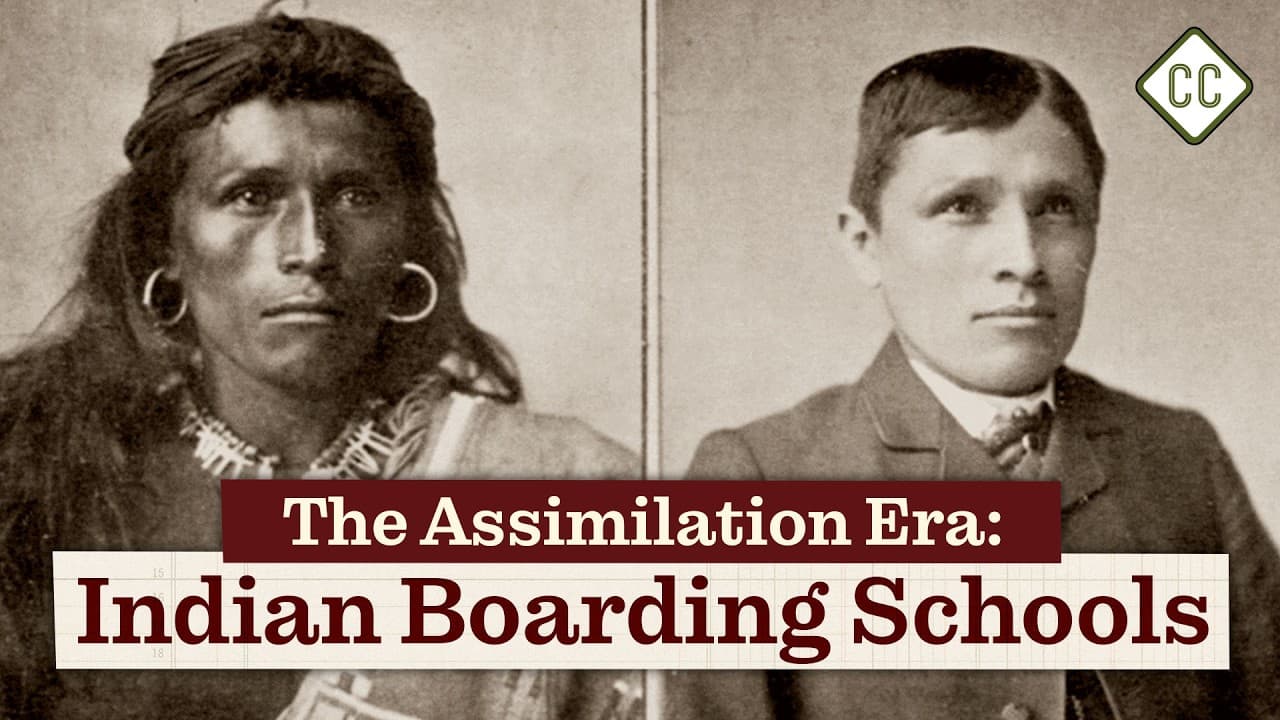
TL;DR
President Biden issued a formal apology for the U.S. government's policy of forcibly assimilating Native American children through boarding schools. These schools aimed to erase Native cultural identity, resulting in significant cultural loss and trauma. The Dawes Act further fragmented Native land ownership, compounding the cultural and economic impact. Native communities are now working to revive their languages and cultural practices.
Transcript
In 2024, then-President Joe Biden delivered an apology unlike any given by a U.S. president before. [PRESIDENT BIDEN] “But the federal government has never, never formally apologized. Until today. I formally apologize, as President of the United States of America.” [CHE] He apologized for a federal policy that had forcibly separated Native America... Read More
Key Insights
- President Biden issued an unprecedented apology for the U.S. policy of separating Native children from their families.
- The Carlisle Indian Industrial School was the first federally run, off-reservation boarding school for Native Americans.
- Richard Henry Pratt's philosophy 'Kill the Indian, save the man' encapsulated the assimilation policy.
- Native children were forced to abandon their cultural identities, facing abuse for non-compliance.
- The Dawes Act aimed to assimilate Native adults by dividing tribal lands into individual allotments.
- Allotment led to significant loss of Native land, with two-thirds of their land lost by 1934.
- Assimilation policies resulted in fragmented land ownership, complicating traditional practices.
- Native communities are reviving languages and cultural practices as a form of healing.
Install to Summarize YouTube Videos and Get Transcripts
Explore YouTube Video Summarizer or Get YouTube Transcript Extractor
Questions & Answers
Q: What was the purpose of Indian boarding schools?
Indian boarding schools were designed to assimilate Native American children into Euro-American culture by erasing their cultural identities. These schools forced children to abandon their languages, clothing, and religious practices, often subjecting them to harsh discipline and abuse for non-compliance. The aim was to 'civilize' Native children, making them adopt settler ways of life and thinking.
Q: How did the Dawes Act affect Native American land ownership?
The Dawes Act divided communal tribal lands into individual allotments, which were given to Native American families. This policy aimed to assimilate Native Americans by encouraging individual land ownership and farming. However, it resulted in a significant loss of Native land, as surplus land was sold to non-Native settlers. By 1934, Native Americans had lost two-thirds of their original land holdings.
Q: Why did President Biden apologize to Native Americans?
President Biden apologized for the U.S. government's historical policy of forcibly assimilating Native American children through boarding schools. These schools aimed to eradicate Native cultural identity, causing lasting trauma and cultural loss. The apology acknowledged the harm caused by these policies and the need for healing and reconciliation with Native communities.
Q: What was Richard Henry Pratt's role in Native American assimilation?
Richard Henry Pratt was a U.S. Army officer who founded the Carlisle Indian Industrial School, the first federally run, off-reservation boarding school for Native Americans. He promoted the assimilation policy encapsulated in the phrase 'Kill the Indian, save the man,' aiming to erase Native cultural identity and replace it with Euro-American values and practices.
Q: How did Native American communities resist assimilation policies?
Native American communities resisted assimilation policies through various means, such as refusing to send their children to boarding schools and speaking out against the harms of these institutions. Some tribes, like the Hopi, faced incarceration for their resistance. Writers like Zitkala-Ša exposed the negative impacts of assimilation in publications, despite facing backlash and dismissal.
Q: What were the long-term effects of assimilation policies on Native communities?
Assimilation policies, including boarding schools and the Dawes Act, caused long-term cultural and economic damage to Native communities. These policies resulted in the loss of cultural identity, language, and land, leading to fragmented land ownership and economic challenges. The trauma from these policies persists, but Native communities are actively working to revive their languages and cultural practices as a form of healing.
Q: How are Native American communities working to heal from past assimilation policies?
Native American communities are healing from past assimilation policies by reviving their traditional languages and cultural practices. Tribal-run school systems now teach these languages, helping to restore cultural identity and pride. These efforts are seen as a form of medicine and treatment, counteracting the cultural genocide experienced during the assimilation era.
Q: What impact did the Dawes Act have on tribal land ownership today?
The Dawes Act's legacy is evident in the fragmented land ownership seen on many reservations today. The policy divided communal lands into individual allotments, leading to a checkerboard pattern of ownership. This fragmentation complicates traditional practices and economic activities, as large, connected land areas are difficult to manage. Many allotments now have hundreds of owners, further complicating land use and management.
Summary & Key Takeaways
-
President Biden's apology addressed the U.S. government's history of forcibly assimilating Native American children through boarding schools. These schools aimed to erase Native cultural identity, resulting in significant cultural loss and trauma. The Dawes Act further fragmented Native land ownership, exacerbating the cultural and economic impact on Native communities.
-
The Carlisle Indian Industrial School, founded by Richard Henry Pratt, became the model for boarding schools that forced Native children to abandon their cultural identities. The Dawes Act divided tribal lands into individual allotments, leading to a significant loss of Native land and furthering assimilation efforts.
-
Assimilation policies, including boarding schools and the Dawes Act, resulted in catastrophic cultural and land losses for Native Americans. Despite these challenges, Native communities are actively working to revive their languages and cultural practices, fostering healing and reclaiming their identities.
Read in Other Languages (beta)
Share This Summary 📚
Summarize YouTube Videos and Get Video Transcripts with 1-Click
Try YouTube Summary with ChatGPT & Claude or YouTube Transcript Generator
Explore More Summaries from CrashCourse 📚


Summarize YouTube Videos and Get Video Transcripts with 1-Click
Try YouTube Summary with ChatGPT & Claude or YouTube Transcript Generator