How Was a Former KGB Spy Recruited and Operated in America?

TL;DR
A former KGB sleeper agent, Jack Barsky, was recruited during his university years due to his academic prowess and ideological alignment. He underwent extensive training for espionage in West Germany and performed covert tasks in the U.S. for years before ultimately defecting to work with the FBI, influenced by personal ties and changes in his perceptions of the United States.
Transcript
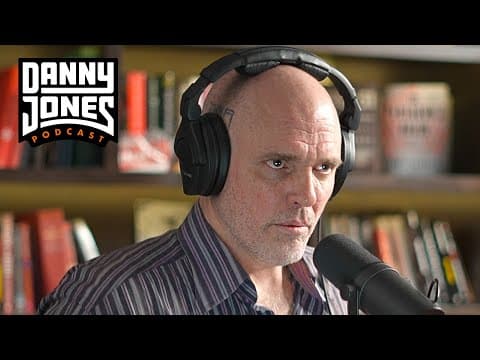
okay jack thank you for coming for people who don't know who you are uh you are a former kgb sleeper agent who worked for the kgb for 10 years spying on america and eventually worked with the fbi correct so how does a guy go about being recruited to the kgb uh unlike the cia where you can actually apply the kgb you could not uh they would recruit y... Read More
Key Insights
- 💪 KGB recruitment focused on promising candidates with strong academic backgrounds and ideological alignment.
- 🎯 The complexity of espionage includes psychological preparation and language acquisition to integrate into the target society.
- 🤨 Espionage often involves performing tasks that blend into everyday activities to glean information without raising suspicions.
- 👔 Personal connections and emotional ties can complicate the loyalty of spies, impacting their decisions to remain with their agency or defect.
- 💦 The perception of the U.S. as an adversary can shift significantly once one experiences life and work in America firsthand.
- 🔒 Trust within espionage relationships is paramount; it influences operational decisions and one's security.
- 👪 Compartmentalization of a spy’s identity can create internal conflicts, particularly when personal stakes, like family, are involved.
Install to Summarize YouTube Videos and Get Transcripts
Explore YouTube Video Summarizer or Get YouTube Transcript Extractor
Questions & Answers
Q: What initially drew your attention to the KGB, and how were you recruited?
I had never considered a life as a spy; my ambitions were academic. However, during my third year of studying chemistry, the KGB approached me while I was alone in my dorm room. They had clearly done their research, leading to my unexpected recruitment.
Q: What was the training process like for a KGB agent?
The basic training typically lasted two years. I was tasked with learning various skills, including language proficiency and espionage techniques. I learned English to a conversational level, as it was crucial for my assignments in the U.S. and was given access to restricted literature.
Q: How did your perception of America change after living there for several years?
I initially viewed the U.S. as a hostile adversary, shaped by years of Soviet propaganda. Over time, my experiences in America, notably in the workplace, revealed a more complex and less oppressive reality than I had been led to believe.
Q: Explain the significance of your daughter in your decision to defect from the KGB.
I had a steady girlfriend who became the mother of my daughter. As I witnessed my daughter's growth, I developed a profound bond with her which made leaving the life of a spy increasingly difficult. Ultimately, her well-being became a key factor in my decision to defect.
Summary & Key Takeaways
-
The subject recounts his unexpected recruitment by the KGB during his university years, triggered by his impressive academic achievements and connections to Soviet ideals.
-
He describes the unique training he underwent to prepare for espionage in West Germany and the various tasks he performed while working undercover in the United States.
-
Ultimately, personal connections influenced his decision to defect, leading to cooperation with the FBI after years of living as a KGB agent in America.
Read in Other Languages (beta)
Share This Summary 📚
Summarize YouTube Videos and Get Video Transcripts with 1-Click
Try YouTube Summary with ChatGPT & Claude or YouTube Transcript Generator
Explore More Summaries from Danny Jones Podcast 📚

Summarize YouTube Videos and Get Video Transcripts with 1-Click
Try YouTube Summary with ChatGPT & Claude or YouTube Transcript Generator