Decoding the WHITE PAPER of the Indian economy? : Economic case study
TL;DR
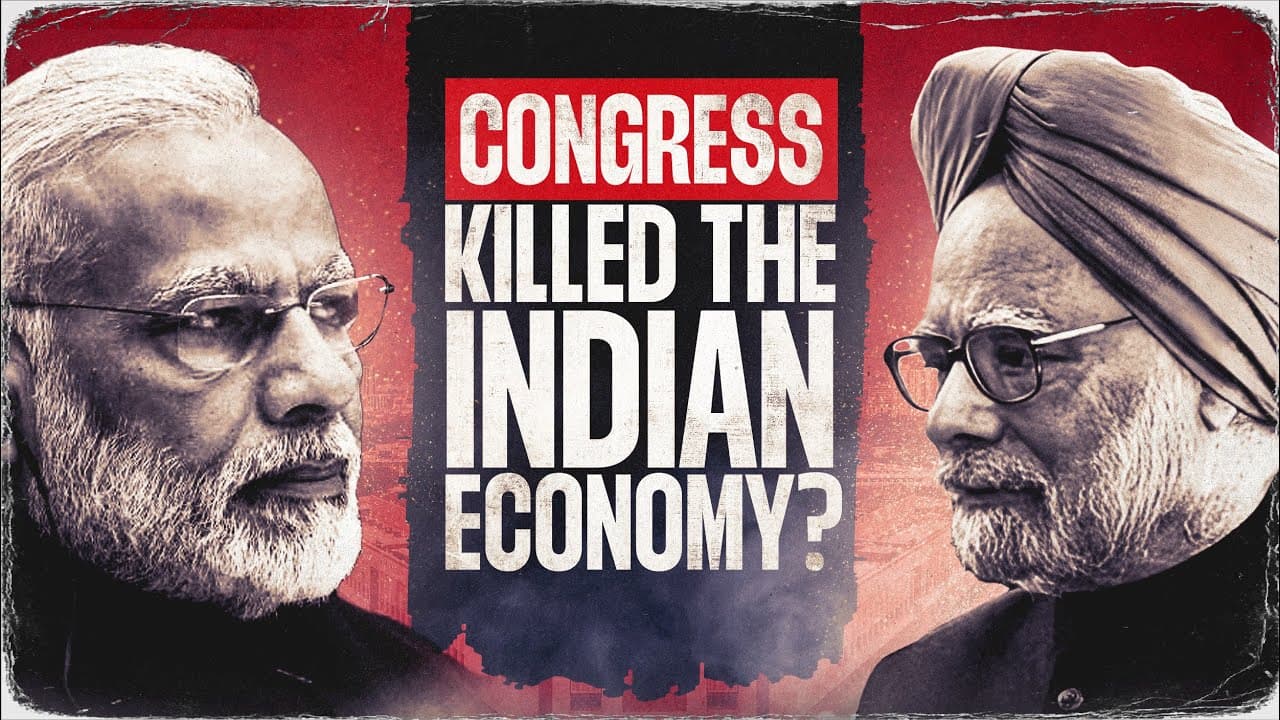
The Indian government released a white paper criticizing the previous UPA government's handling of the economy and highlighting the BJP's achievements in improving it.
Transcript
hi everybody on 8th of February 2024 the government of India launched something called the white paper of the Indian economy on Thursday Finance Minister Nala sitaraman tabled a white paper a white paper on the economy during the previous Congress L uh UPA government this is a white paper on the Indian economy and its impact on the lives of the peo... Read More
Key Insights
- 🥺 The UPA government failed to control inflation, leading to reduced purchasing power for the middle class.
- 🦡 Mismanagement of banks resulted in a significant increase in bad loans and a negative impact on the economy.
- 😘 Low forex reserves and reliance on FCNRB accounts put pressure on the subsequent government to repay loans.
- ❓ Inadequate infrastructure spending during the UPA regime hindered economic growth and development.
- ❓ Unimplemented or poorly implemented social schemes contributed to inefficient resource allocation.
- 👯 The UPA government was involved in various scams, which further damaged the trust of the people.
- 🤩 The white paper highlights the BJP government's successful efforts in controlling inflation and improving key economic indicators.
Install to Summarize YouTube Videos and Get Transcripts
Explore YouTube Video Summarizer or Get YouTube Transcript Extractor
Questions & Answers
Q: How did the UPA government contribute to high inflation?
According to the white paper, the UPA government failed to curb inflation, resulting in an average inflation rate of 8.2% from 2004 to 2014. This eroded the savings of the middle class and reduced the purchasing power of the people.
Q: How did the UPA mismanage banks?
The white paper highlights the mismanagement of banks through high gross non-performing asset (GNPA) ratios. Due to reckless lending, bad loans increased exponentially during the UPA regime, bleeding the banks and the economy. The GNPA ratio rose from 7.8% in 2003 to 19% in 2013.
Q: How did the UPA handle forex reserves?
The white paper states that the UPA government mismanaged forex reserves, leading to a decline from 17 months of reserves in 2004 to only 6 months by 2013. It points out the reliance on foreign currency non-resident bank accounts (FCNRB) to boost forex reserves, which burdened the subsequent BJP government in repaying the interest and principal.
Q: What were the key shortcomings of the UPA's economic policies?
The white paper identifies several key shortcomings, including high inflation, mismanaged banks, low forex reserves, inadequate infrastructure spending, unimplemented social schemes, and involvement in numerous scams.
Summary & Key Takeaways
-
The white paper blames the UPA government for high inflation, mismanaged banks, low forex reserves, inadequate infrastructure spending, and ineffective social schemes.
-
It states that the BJP government has successfully controlled inflation, increased forex reserves, ramped up infrastructure development, and implemented systemic changes like the Indian bankruptcy code.
-
The paper focuses on data and graphs to support its claims and offers a comparison between the UPA and BJP's performance.
Read in Other Languages (beta)
Share This Summary 📚
Summarize YouTube Videos and Get Video Transcripts with 1-Click
Try YouTube Summary with ChatGPT & Claude or YouTube Transcript Generator
Explore More Summaries from Think School 📚





Summarize YouTube Videos and Get Video Transcripts with 1-Click
Try YouTube Summary with ChatGPT & Claude or YouTube Transcript Generator