Does the Planck Length Break E=MC^2?
TL;DR
Exploring potential modifications to Einstein's famous equation at quantum scales.
Transcript
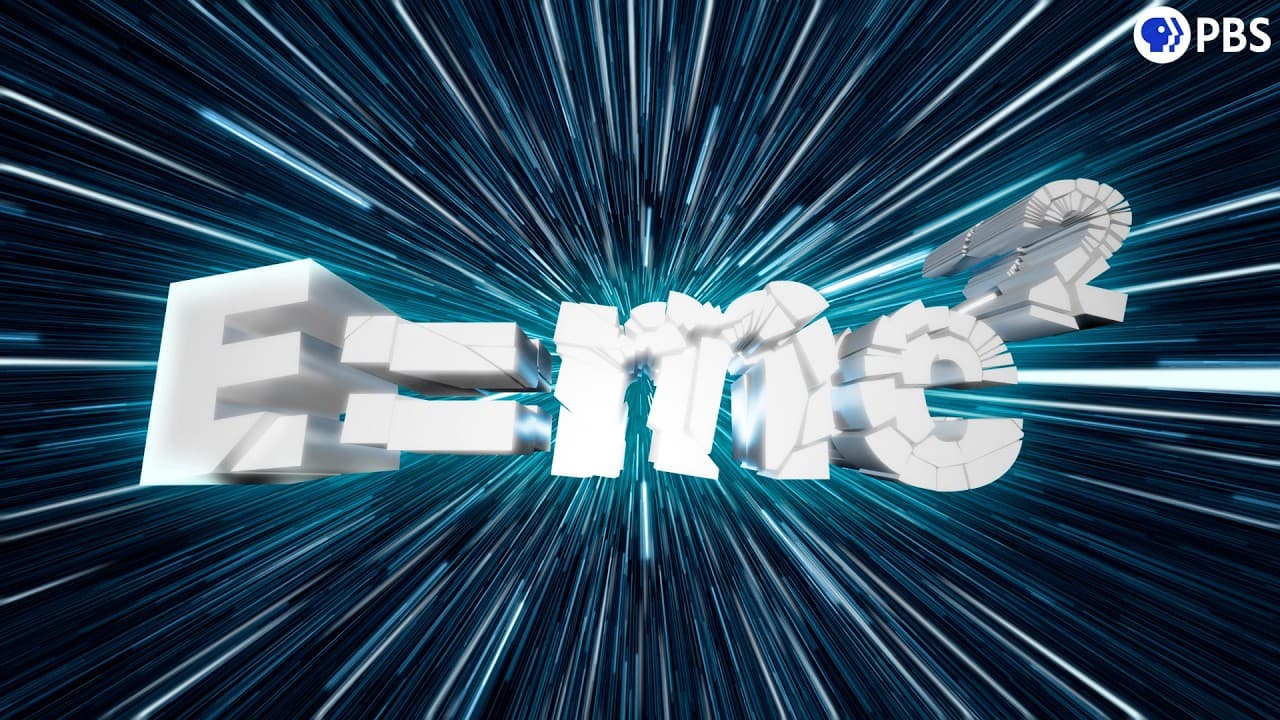
Every good nerd knows that E=mc^2. Every great nerd knows that, really, E^2=m2c4+p2c2. But what does that even mean? Oh, I’ll tell you, but today I’d like to invite you to an even higher level of nerdom. There may be even more add ons to Einstein’s famous equation that will make even the greatest nerds quiver in their … space time merch if they... Read More
Key Insights
- Einstein's E=mc^2 is a simplified version of a more complex equation that includes momentum, indicating energy's dependency on both mass and motion.
- Galilean relativity, which states laws of physics are invariant for all inertial observers, was foundational but inconsistent with electromagnetism, leading to Einstein's special relativity.
- Special relativity introduces Lorentz transformations to ensure the speed of light is constant for all observers, unlike Galilean transformations.
- General relativity, expanding on special relativity, conflicts with quantum mechanics, sparking the search for a theory of quantum gravity.
- Planck units, derived from fundamental constants, suggest the scale where quantum mechanics and general relativity converge, with the Planck length being crucial.
- Doubly special relativity (DSR) proposes making the Planck energy invariant, potentially altering fundamental physics concepts like energy conservation.
- Modified dispersion relations (MDR) suggest energy and momentum conservation might not hold at Planck scales, impacting particle interactions.
- Experiments like gamma-ray burst observations test DSR predictions, but current evidence supports Einstein's original theories, though the quest for quantum gravity continues.
Install to Summarize YouTube Videos and Get Transcripts
Explore YouTube Video Summarizer or Get YouTube Transcript Extractor
Questions & Answers
Q: What is the significance of the Planck length in physics?
The Planck length is significant because it represents the scale at which quantum mechanics and general relativity are expected to merge, indicating where spacetime takes on quantum properties. It is derived from fundamental constants, and its behavior under different conditions could provide insights into the quantum structure of spacetime and potentially lead to a unified theory of quantum gravity.
Q: How does doubly special relativity (DSR) modify Einstein's theories?
Doubly special relativity (DSR) modifies Einstein's theories by proposing that the Planck energy, rather than the Planck length, be invariant across all observers. This introduces the concept of a modified dispersion relation (MDR), which suggests that energy and momentum conservation might not hold at Planck scales, potentially leading to new physics and altering our understanding of particle interactions and fundamental symmetries.
Q: What role does the Lorentz transformation play in relativity?
The Lorentz transformation is crucial in relativity as it ensures that the speed of light remains constant for all observers, regardless of their relative motion. It corrects the Galilean transformation, which could result in speeds exceeding light, and underpins the concept of Lorentz symmetry, which is fundamental to the laws of physics as described by Einstein's theory of special relativity.
Q: Why is the speed of light considered a fundamental constant?
The speed of light is considered a fundamental constant because it is invariant for all observers, forming the basis of Einstein's special relativity. This invariance leads to profound implications for the nature of time and space, such as time dilation and length contraction, and is essential for maintaining the consistency of physical laws across different inertial frames of reference.
Q: What are Planck units, and why are they important?
Planck units are a set of natural units derived from fundamental constants, including the speed of light, gravitational constant, and Planck constant. They are important because they define the scales at which quantum mechanics and general relativity are expected to converge, offering insights into the quantum nature of spacetime and providing a framework for exploring the fundamental limits of physical laws.
Q: How do modified dispersion relations (MDR) impact energy conservation?
Modified dispersion relations (MDR) impact energy conservation by suggesting that at energies approaching the Planck scale, traditional conservation laws may no longer hold. This could lead to new phenomena, such as the possibility of photons undergoing pair production without external interaction, challenging our current understanding of particle interactions and potentially revealing new fundamental symmetries.
Q: What experimental evidence is used to test doubly special relativity?
Experiments like observing gamma-ray bursts are used to test doubly special relativity. By comparing the arrival times of high and low-energy photons from the same astrophysical event, scientists can detect any energy-dependent variations in the speed of light. These observations help constrain the strength of any modifications predicted by doubly special relativity, providing insights into the potential breakdown of Lorentz symmetry.
Q: What challenges remain in unifying general relativity and quantum mechanics?
Unifying general relativity and quantum mechanics remains challenging due to their conflicting descriptions of gravity and quantum phenomena. While general relativity describes gravity as the curvature of spacetime, quantum mechanics operates with probabilistic principles. The search for a theory of quantum gravity, such as string theory or loop quantum gravity, aims to reconcile these differences, but experimental validation and a complete theoretical framework are still elusive.
Summary & Key Takeaways
-
The video delves into the complexities of Einstein's famous equation, E=mc^2, exploring its full version that includes momentum. It discusses the foundational principles of Galilean and Einsteinian relativity, emphasizing the constant speed of light and the need for Lorentz transformations.
-
The conflict between general relativity and quantum mechanics has led to theories like doubly special relativity (DSR), which attempts to make the Planck energy invariant. This could alter fundamental physics concepts, such as energy conservation, and has implications for particle interactions.
-
Experiments, such as gamma-ray burst observations, aim to test the predictions of DSR. While current evidence supports Einstein's theories, the potential breakdown of Lorentz symmetry at the Planck scale remains an open question, highlighting the ongoing quest for a unified theory of quantum gravity.
Read in Other Languages (beta)
Share This Summary 📚
Summarize YouTube Videos and Get Video Transcripts with 1-Click
Try YouTube Summary with ChatGPT & Claude or YouTube Transcript Generator
Explore More Summaries from PBS Space Time 📚





Summarize YouTube Videos and Get Video Transcripts with 1-Click
Try YouTube Summary with ChatGPT & Claude or YouTube Transcript Generator