How Did John D. Rockefeller Build Standard Oil?
TL;DR
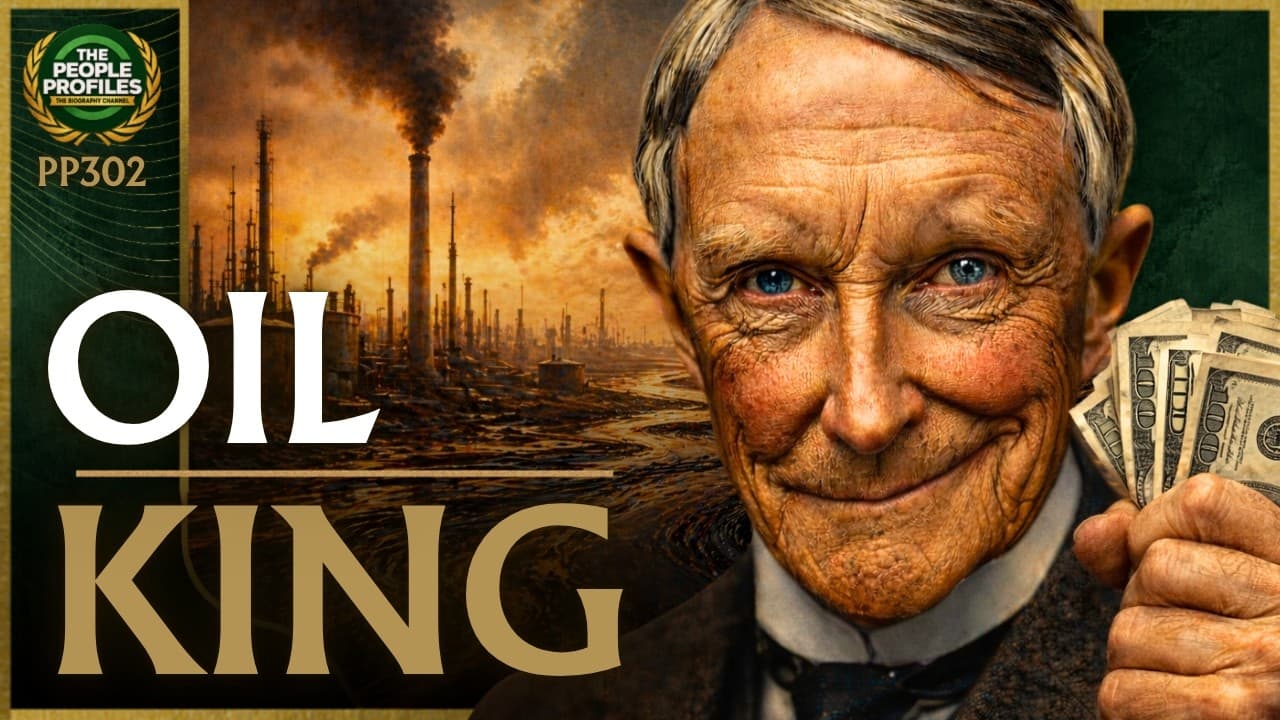
John D. Rockefeller built Standard Oil by acquiring smaller oil companies and refineries, helping it control more than 90 percent of United States oil production by 1890. His disciplined accounting, patience, aggressive negotiation, and pursuit of efficiency shaped his rise, while his Baptist faith encouraged sustained charitable giving that later included major institutions such as the University of Chicago and the Rockefeller Foundation.
Transcript
It is the 10th of January 1870. In Cleveland Ohio, a 30 year old business man and his partners, incorporate the Standard Oil Company. Over the coming years they build on their initial one million dollar investment, by buying up smaller oil companies and refineries, across Ohio and beyond, so that by 1890, Standard Oil is worth 100 million dol... Read More
Key Insights
- Rockefeller’s early business instincts appeared in childhood, when he bought candy by the pound, divided it into smaller portions, and sold it to his siblings for a profit. At seven, he also raised turkey chicks found in the woods and sold them.
- Rockefeller’s temperament was patient, quiet, and calculating rather than impulsive. During chess or checkers, he considered each move for so long that opponents became frustrated and lost, demonstrating the cool reflection that later characterized his approach to business decisions.
- Rockefeller’s first bookkeeping position began at Hewitt and Tuttle on September 26, 1855. He treated the date as “Job Day” for the rest of his life and distinguished himself by examining bills and invoices closely enough to account for every cent.
- Ledger A was Rockefeller’s personal record of income and spending from the beginning of his working life. It documented both his financial discipline and his charitable giving, which had reached 10 percent of his income by 1859.
- Rockefeller’s religious commitment coexisted with his ambition to accumulate wealth. He taught Baptist Sunday school, led hymn singing, supported churches, helped two African-American slaves purchase freedom, and believed that becoming wealthy was consistent with his faith.
- Standard Oil was incorporated in Cleveland on January 10, 1870, when Rockefeller was 30 years old. Rockefeller and his partners built upon an initial investment of one million dollars by purchasing smaller oil companies and refineries across Ohio and beyond.
- Standard Oil controlled more than 90 percent of United States oil production by 1890 and was worth 100 million dollars. Its growth relied on acquisitions, horizontal and vertical integration, efficiency, and aggressive ambition, according to the documentary’s description.
- Rockefeller’s legacy combined concentrated corporate power with large-scale philanthropy. His monopoly attracted antitrust challenges and was eventually broken up, while his charitable work supported institutions including the University of Chicago and the Rockefeller Foundation.
Install to Summarize YouTube Videos and Get Transcripts
Explore YouTube Video Summarizer or Get YouTube Transcript Extractor
Questions & Answers
Q: How did John D. Rockefeller build Standard Oil?
John D. Rockefeller and his partners incorporated Standard Oil in Cleveland on January 10, 1870, beginning with an investment of one million dollars. They expanded by purchasing smaller oil companies and refineries across Ohio and beyond. Their strategy also emphasized horizontal integration, vertical integration, and efficiency. By 1890, Standard Oil was worth 100 million dollars and controlled more than 90 percent of United States oil production.
Q: What childhood experiences shaped Rockefeller’s business habits?
Rockefeller received adult responsibilities early because his father was frequently absent and considered farm labor beneath him. His mother maintained a frugal household and encouraged patience, faith, and reflection. Rockefeller developed an aptitude for mental arithmetic and experimented with commerce by reselling divided portions of candy to his siblings. At seven, he raised turkey chicks and sold them, further strengthening his interest in earning money.
Q: How did Rockefeller obtain his first professional job?
After his father required him to leave school, Rockefeller completed a three-month commercial college course and began searching for employment in August 1855. He listed businesses where he wanted to work and visited them personally to request a bookkeeping position. After several unsuccessful weeks, Hewitt and Tuttle hired him as an assistant bookkeeper on September 26, a date he later celebrated annually as “Job Day.”
Q: What did Rockefeller learn from working at Hewitt and Tuttle?
Rockefeller learned to scrutinize financial records and protect a business from losses or dishonest clients. He examined every bill and invoice in detail, accounting for every cent. His commitment was reflected in a demanding routine that began at 6:30 in the morning and often continued until after 10 at night. The position applied his natural skill in arithmetic to practical business management.
Q: What was Ledger A and why was it important?
Ledger A was the red notebook Rockefeller used to record his personal income and expenditures after beginning work at Hewitt and Tuttle. It demonstrates that close accounting was not limited to his employer’s finances. The notebook also records his early charitable habits. By 1859, he was donating 10 percent of his income, especially to Baptist causes, while also supporting black churches and other recipients.
Q: How did Rockefeller connect religion with wealth and charity?
Rockefeller believed that religious faith and the pursuit of wealth were compatible, and he later credited God for making him wealthy. His actions included teaching Sunday school at Cleveland’s Erie Street Baptist Church and leading hymn singing. He raised $2,000 from the congregation to satisfy a demanding church creditor, supported black churches, and helped two African-American slaves obtain the money needed to purchase their freedom.
Q: Why did Standard Oil become controversial?
Standard Oil became controversial because its acquisitions, integration strategies, and relentless pursuit of efficiency produced extraordinary market concentration. By 1890, the company controlled more than 90 percent of United States oil production and was worth 100 million dollars. Rockefeller’s aggressive ambition and immense wealth made the business a symbol of corporate power, prompting antitrust movements that challenged the monopoly and ultimately led to its breakup.
Q: What is John D. Rockefeller’s historical legacy?
Rockefeller’s legacy joins industrial expansion, concentrated corporate power, personal discipline, and philanthropy. Standard Oil revolutionized the oil industry through acquisitions, horizontal integration, vertical integration, and efficiency, but its monopoly also provoked controversy and antitrust action. Rockefeller later became a major benefactor, establishing institutions identified in the description as the University of Chicago and the Rockefeller Foundation, extending his influence beyond business and wealth creation.
Summary & Key Takeaways
-
John D. Rockefeller was born in Richford, New York, on July 8, 1839, and grew up amid financial uncertainty caused by his frequently absent father. His mother taught frugality, patience, and Baptist faith, while early responsibilities, mental arithmetic, and small commercial ventures helped develop his disciplined approach to money and business.
-
After leaving school at his father’s request, Rockefeller completed a commercial college course and systematically searched for bookkeeping work. Hewitt and Tuttle hired him on September 26, 1855. He carefully inspected every invoice, worked exceptionally long hours, and recorded his personal finances in Ledger A while regularly supporting charitable and religious causes.
-
Rockefeller and his partners incorporated Standard Oil in Cleveland on January 10, 1870. Starting with an investment of one million dollars, they expanded by purchasing smaller oil businesses and refineries. By 1890, Standard Oil was worth 100 million dollars and controlled over 90 percent of United States oil production, attracting controversy and antitrust opposition.
Read in Other Languages (beta)
Share This Summary 📚
Summarize YouTube Videos and Get Video Transcripts with 1-Click
Try YouTube Summary with ChatGPT & Claude or YouTube Transcript Generator
Explore More Summaries from The People Profiles 📚

Summarize YouTube Videos and Get Video Transcripts with 1-Click
Try YouTube Summary with ChatGPT & Claude or YouTube Transcript Generator