How to Optimize Social Media SEO for Discovery
TL;DR
Optimize social content around the complete questions people type, then repeat that language in hooks, captions, on-screen text, subtitles, and spoken words. Prioritize platforms according to audience and business type, deliver the outcome immediately in the feed, and encourage native actions such as saves, direct messages, lead forms, product tags, and checkout to strengthen distribution signals.
Transcript
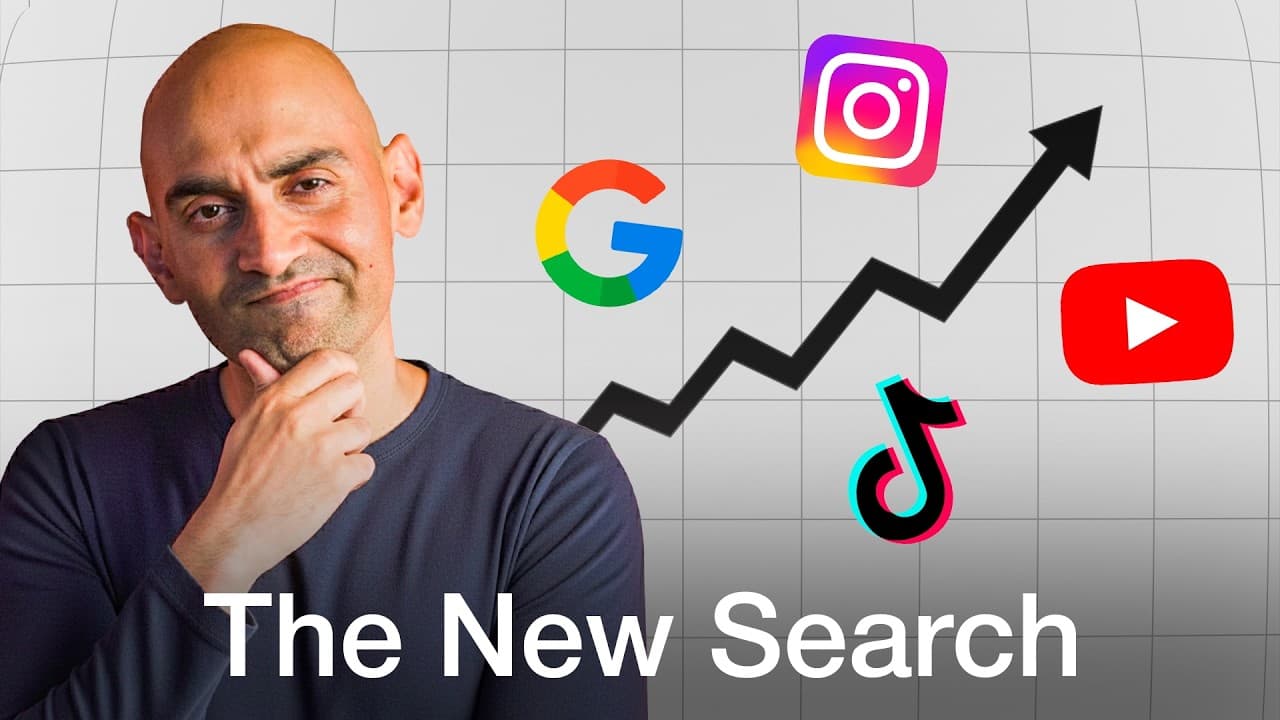
Right now, someone is searching for exactly what you offer, but they're not just typing it into Google. They're typing it into Instagram, Tik Tok, or even YouTube. Instagram processes 6.5 billion searches daily. YouTube, they handle 3.5 billion searches daily. For Gen Z, Tik Tok has also already overtaken Google for product questions and how-tos. I... Read More
Key Insights
- Social platforms are primary discovery engines for many users who want demonstrations, walkthroughs, reviews, and explanations. The transcript says Instagram processes 6.5 billion searches daily, YouTube handles 3.5 billion daily searches, and TikTok has overtaken Google among Gen Z for product questions and how-tos.
- Platform selection is determined by business model, audience age, and search frequency. B2C brands should prioritize Instagram and YouTube, while B2B brands should focus on LinkedIn and YouTube. Younger audiences favor TikTok and Instagram, while older audiences use YouTube and Facebook.
- Feed-based discovery is capable of shaping demand before explicit search intent develops. Algorithms surface tutorials, quick fixes, demonstrations, unboxings, and comparisons while people scroll, allowing users to recognize a need, encounter a solution, and begin forming a decision before opening a conventional search engine.
- The opening seconds are critical because algorithms reward content that delivers clarity and solves a problem immediately. Creators should show the outcome first, use question-based hooks, and place natural-language questions on screen so the post behaves like an answer before users have fully verbalized their need.
- Social searches are expressed as complete questions containing context, emotion, and intent rather than isolated keywords. Content should mirror phrases such as how to solve a specific problem or which tool suits a particular situation, making its relevance easier for both users and algorithms to recognize.
- Long-tail phrasing is a form of social metadata because platforms analyze captions, on-screen text, and spoken language. Instagram surfaces posts based on phrasing, TikTok exposes trending search questions in creator dashboards, and YouTube indexes spoken words to match content with user questions.
- Structured content is easier for social algorithms to classify and distribute. Clear headlines, caption sections, bullet-style information, descriptive language, on-screen text, and subtitles provide extractable signals that identify the subject, context, and purpose of a post without requiring the platform to guess.
- On-platform actions are ranking signals because social networks benefit when users remain inside their ecosystems. Native checkout, product tagging, direct-message conversations, saves, built-in lead forms, and in-app purchases demonstrate value and retention, which the platforms can reward with greater content distribution.
Install to Summarize YouTube Videos and Get Transcripts
Explore YouTube Video Summarizer or Get YouTube Transcript Extractor
Questions & Answers
Q: How do you optimize content for social media search?
Build each post around an exact question the intended audience already asks. Repeat that natural phrasing in the opening hook, caption, headline, on-screen text, subtitles, and spoken explanation. Structure the material into clear sections, show the outcome first, and answer the problem conversationally. This gives platforms enough context to index, categorize, and surface the content for relevant searches and feed recommendations.
Q: Which social platforms should B2C and B2B brands prioritize?
B2C brands should prioritize Instagram and YouTube because their audiences actively search those platforms every day. B2B brands should focus on LinkedIn and YouTube, while recognizing that LinkedIn searches happen less frequently and therefore require consistent publishing over time. Demographics also matter: younger audiences use TikTok and Instagram, while older audiences use YouTube and Facebook.
Q: Why does social media discovery begin in the feed?
Social algorithms can present solutions before users consciously formulate a question or open a search bar. Tutorials, demonstrations, unboxings, quick fixes, and comparisons expose people to tools and products while they scroll. That encounter can clarify a need and shape the eventual decision, meaning creators must provide an immediate answer or useful outcome before traditional search intent has fully developed.
Q: How should captions be written for social media SEO?
Captions should use the complete questions and descriptive phrases people naturally type rather than vague promotional claims. A caption such as how to fix dry skin in winter, followed by three dermatologist-approved tips, gives the platform clearer search context than a generic promise to transform someone’s skin. Headlines, section breaks, and straightforward language also make the caption easier to extract and classify.
Q: Why are subtitles and on-screen text important for social SEO?
Subtitles and on-screen text give platforms readable signals about a video’s topic, main points, and context. Algorithms examine those elements alongside captions and spoken words to classify content and connect it with relevant users. When the same natural-language question appears across these signals, the platform can understand the content more confidently and match it to related searches or feed interests.
Q: How can creators find questions for social media content?
Creators can use AnswerThePublic or Ubersuggest to identify the questions people are searching for and uncover content opportunities. The transcript says an AnswerThePublic report can show queries across YouTube, Google, social networks, other search engines, ChatGPT, and Perplexity in one view. Selected questions can then become hooks, captions, on-screen text, and conversational video topics.
Q: Why do native checkout and lead forms affect social reach?
Native checkout and built-in lead forms keep users and conversions inside the platform rather than sending attention to an external website. The platforms interpret purchases, form submissions, saves, and similar in-app behavior as strong evidence that the content delivered value. Because their ecosystems benefit from retention and on-platform activity, they can reward such posts with increased distribution and visibility.
Q: How can direct messages support social media SEO and sales?
Direct messages can function as an on-platform landing page and begin a conversation without forcing users to leave the social network. The transcript suggests using ManyHat so that a comment such as guide automatically triggers delivery of a PDF or product link in messages. This approach meets users where they already are and treats conversation as the step before conversion.
Summary & Key Takeaways
-
Social platforms now function as major discovery engines because users search Instagram, TikTok, and YouTube for skills, reviews, products, and explanations. Platform priorities should reflect the audience: B2C brands should emphasize Instagram and YouTube, while B2B brands should focus on LinkedIn and YouTube with consistent publishing over time.
-
Discovery increasingly begins when algorithms recommend useful content in the feed before users formulate an explicit search. Effective posts interrupt scrolling by presenting the outcome first, answering a recognizable problem immediately, and using question-based hooks. These signals help platforms connect content with people whose interests or situations make the answer relevant.
-
Social SEO depends on clear, indexable language and structured presentation. Creators should use complete audience questions in captions, headlines, on-screen text, subtitles, and speech. Native actions, including direct messages, lead forms, product tags, saves, and checkout, also signal value because they keep users and transactions inside the platform ecosystem.
Read in Other Languages (beta)
Share This Summary 📚
Summarize YouTube Videos and Get Video Transcripts with 1-Click
Try YouTube Summary with ChatGPT & Claude or YouTube Transcript Generator
Explore More Summaries from Neil Patel 📚

Summarize YouTube Videos and Get Video Transcripts with 1-Click
Try YouTube Summary with ChatGPT & Claude or YouTube Transcript Generator