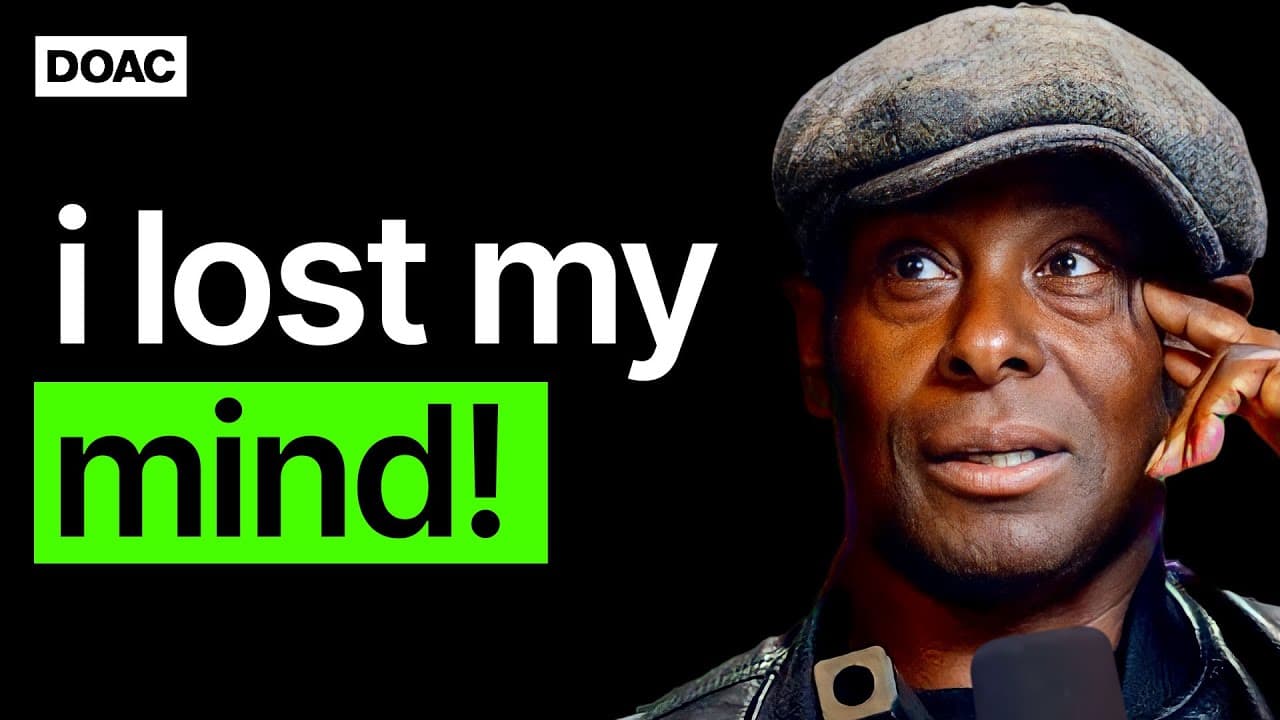
David Harewood's Struggle with Mental Health and Identity
TL;DR
David Harewood shares his challenging journey with mental health, detailing how systemic racism and the pressure of racial identity led to his psychosis. He emphasizes the importance of acceptance and self-discovery in his recovery, highlighting the need for empathy and understanding surrounding mental health issues, particularly within the black community.
Transcript
I did everything that voice told me to do that night had that voice have told me to jump off Thames Bridge I would have done it please welcome David it's U.S drama home the most influential voices on race and mental health I remember reading about a moment when you come home you find your father's typewriter with one word written on the typewriter ... Read More
Key Insights
- 🗣 Voices and Mental Health: The speaker recalls hearing a voice in their head, identified as Martin Luther King, during a period of psychosis, illustrating the impact of mental health issues on perception and identity.
- 🔒 Stigma and Resilience: The speaker discusses the hostility faced as a black actor in the industry, highlighting the challenges of racial prejudice and the need for resilience in the face of dismissal and negative reviews.
- 🌍 Cultural Identity: Growing up in a society with limited black representation on television and in media, the speaker discusses the struggle to develop a solid identity and the pressure to assimilate into a predominantly white culture.
- 😔 Trauma and Mental Health: The speaker acknowledges the impact of past traumas, such as their parents' divorce, and the role it played in their mental health struggles later in life, highlighting the importance of addressing and processing past experiences.
- 🚑 Psychosis and Sectioning: The speaker recalls the experience of being sectioned and the subsequent process of recovery, emphasizing the need for support and understanding during this challenging time.
- 💔 Effects of Rejection: The speaker reveals the pain of experiencing rejection from both the white and black communities, highlighting the emotional toll of feeling like an outsider and the complexities of racial identity.
- 🎭 Acting as Escape: Acting is described as a freeing and empowering space for the speaker, where they can fully embody and express themselves, highlighting the therapeutic nature of creative outlets for individuals struggling with mental health issues.
- 💡 The Power of Sharing: The speaker discusses the impact of sharing their mental health journey with the public, both through a tweet and a documentary, noting the outpouring of support and the relief of allowing others to open up about their own experiences.
- ⚖️ Intersection of Race and Mental Health: The speaker highlights the overrepresentation of black individuals in the mental health system, addressing the systemic biases that contribute to these disparities and the need for greater awareness and support.
- 🔁 Healing and Recovery: The speaker acknowledges that recovery is an ongoing journey, marked by moments of progress and setbacks, emphasizing the importance of self-acceptance and finding joy in life despite ongoing challenges.
Install to Summarize YouTube Videos and Get Transcripts
Explore YouTube Video Summarizer or Get YouTube Transcript Extractor
Questions & Answers
Q: How did David Harewood's experiences with racism and rejection impact his mental health?
David Harewood's experiences with racism and rejection as a black actor in the industry had a significant impact on his mental health. The constant dismissal and hostility he faced led to feelings of being an outsider and questioning his self-worth. The stress and overthinking eventually led to a spiral and a breakdown, resulting in psychosis.
Q: What role did racial identity play in David Harewood's mental health journey?
Racial identity played a significant role in David Harewood's mental health journey. Growing up in a time when there were few positive black images on television and facing constant racial prejudice and rejection, Harewood struggled to form a solid sense of self and identity. The pressure to assimilate and a lack of representation contributed to his difficulties in understanding and accepting his black identity.
Q: How did David Harewood's experiences in the acting industry affect his mental health?
David Harewood's experiences in the acting industry, particularly the hostility and dismissive treatment he received as a black actor, had a profound impact on his mental health. Reviews criticizing his appearance and questioning his suitability for certain roles only heightened feelings of being an anomaly and not measuring up. The constant emphasis on his race rather than his talent or abilities led to increased stress, self-doubt, and eventually a breakdown.
Q: How did David Harewood's journey towards self-acceptance and understanding impact his mental health?
David Harewood's journey towards self-acceptance and understanding has had a positive impact on his mental health. Through therapy and self-reflection, he has learned to embrace his identity as a black man and let go of the pressures to conform to societal expectations. Accepting oneself, including vulnerabilities and sensitivities, is a crucial step towards experiencing mental well-being and happiness.
Summary & Key Takeaways
-
David Harewood's early years were marked by naivety and a lack of understanding about his racial identity, which led to feelings of being an outsider.
-
The hostility and dismissive treatment he faced as a black actor in the industry contributed to his mental health struggles and eventual psychosis.
-
Through therapy and self-reflection, Harewood has come to accept and embrace his identity, leading to a greater sense of self-confidence and happiness.
Read in Other Languages (beta)
Share This Summary 📚
Summarize YouTube Videos and Get Video Transcripts with 1-Click
Try YouTube Summary with ChatGPT & Claude or YouTube Transcript Generator
Explore More Summaries from The Diary Of A CEO 📚


Summarize YouTube Videos and Get Video Transcripts with 1-Click
Try YouTube Summary with ChatGPT & Claude or YouTube Transcript Generator