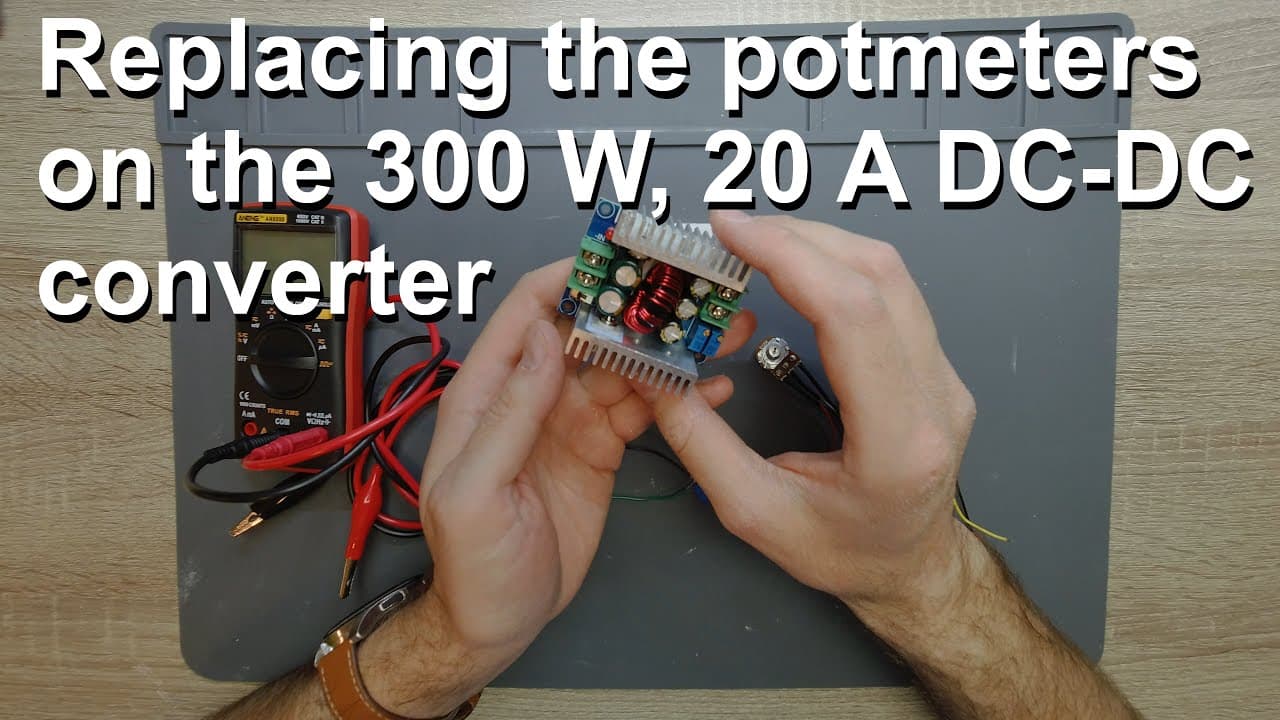
Replacing the potmeters on the 300 W, 20 A DC-DC converter
TL;DR
Learn effective tips for optimizing DC-DC buck converter performance and safety.
Transcript
welcome everyone in this video I'm going to share some tips and tricks with you regarding this DC DC back converter so you can see this product everywhere if you are searching for DC DC converter and it is because it is very popular due to its price so this is relatively cheap and more or less reliable product but sometimes you can have some proble... Read More
Key Insights
- ⚡ The DC-DC buck converter is a widely used device for efficiency in voltage regulation, known for its affordability.
- ⚡ Input voltage must always exceed desired output to ensure reliable converter operation, with 10 volts being an optimal threshold.
- 🫒 Trimmer potentiometers are vital for adjusting output but can pose safety risks if mishandled during live adjustments.
- 👤 Upgrading to different potentiometer types can enhance user experience by simplifying adjustments to output voltage and current.
- 🥵 Variations in design among converters can lead to significant differences in performance, including heat management and circuit stability.
- 👨💻 Proper soldering techniques and organization, such as color-coding wires, can improve the functionality and safety of modifications made to converters.
- 👤 Users are encouraged to familiarize themselves with the components of their specific buck converter model to understand its functionality fully.
Install to Summarize YouTube Videos and Get Transcripts
Explore YouTube Video Summarizer or Get YouTube Transcript Extractor
Questions & Answers
Q: What is a DC-DC buck converter and how does it work?
A DC-DC buck converter is an electronic device used to step down voltage while maintaining a consistent output current. It converts an input DC voltage, typically ranging from 4 to 40 volts, to a lower regulated output by using components like MOSFETs and inductors. Users can adjust the voltage and current outputs through trimmer potentiometers.
Q: Why is the trimmer potentiometer important in a buck converter?
The trimmer potentiometer is crucial as it allows users to finely adjust the output voltage and current. By changing the resistance value, one can regulate how much power is delivered to the load. However, since they require careful handling, it's essential to use them safely to prevent short circuits when adjusting on live circuits.
Q: What should be considered regarding the input voltage for the converter?
It is essential to ensure that the input voltage is consistently higher than the desired output voltage to maintain efficient operation. Ideally, the recommended minimum input voltage is around 10 volts, as operating under this level can lead to inefficiency and unreliable performance of the converter.
Q: What modifications were suggested for better functionality of the buck converter?
The video suggests replacing clumsy trimmer potentiometers with more user-friendly types, like Viper potentiometers, to allow easier and safer adjustments. This modification makes the buck converter more accessible and less risky when making live adjustments, improving overall convenience for the user.
Q: How can one evaluate different models of buck converters?
When evaluating various buck converter models, users should look at factors like the quality of components used, the presence of capacitors, and the effectiveness of heat sinks. Better build quality can indicate more reliable performance and greater durability over time.
Q: What are the safety concerns when working with DC-DC converters?
Safety concerns include the risk of short circuits when adjusting potentiometers on live circuits, as well as exposure to high voltage on the input side. It is advisable to use insulated tools and ensure proper handling to minimize hazards during modifications and adjustments.
Q: How long did the presenter take to perform the modifications shown in the video?
The presenter mentioned that the entire process of replacing the trimmer potentiometers took approximately 10 minutes. This quick turnaround highlights the ease of making these modifications once one is familiar with the circuit layout.
Summary & Key Takeaways
-
This video discusses the popular DC DC buck converter, highlighting its affordability and reliability as well as the importance of using it correctly to avoid issues.
-
It provides a step-by-step demonstration on how to replace trimmer potentiometers in the converter, enhancing the user’s ability to adjust voltage and current settings safely.
-
The presenter emphasizes differences between various models of converters, identifying specific components and build qualities that can affect performance and reliability.
Read in Other Languages (beta)
Share This Summary 📚
Summarize YouTube Videos and Get Video Transcripts with 1-Click
Try YouTube Summary with ChatGPT & Claude or YouTube Transcript Generator
Explore More Summaries from Curious Scientist 📚
![Building a Peltier cooler-based cooling box - First iteration, improvements [Part 2/6] thumbnail](/_next/image?url=https%3A%2F%2Fi.ytimg.com%2Fvi%2F0YlNw0EGnzI%2Fhqdefault.jpg&w=750&q=75)
Summarize YouTube Videos and Get Video Transcripts with 1-Click
Try YouTube Summary with ChatGPT & Claude or YouTube Transcript Generator