Why Billionaire Philanthropy Is a Problem for Society
TL;DR
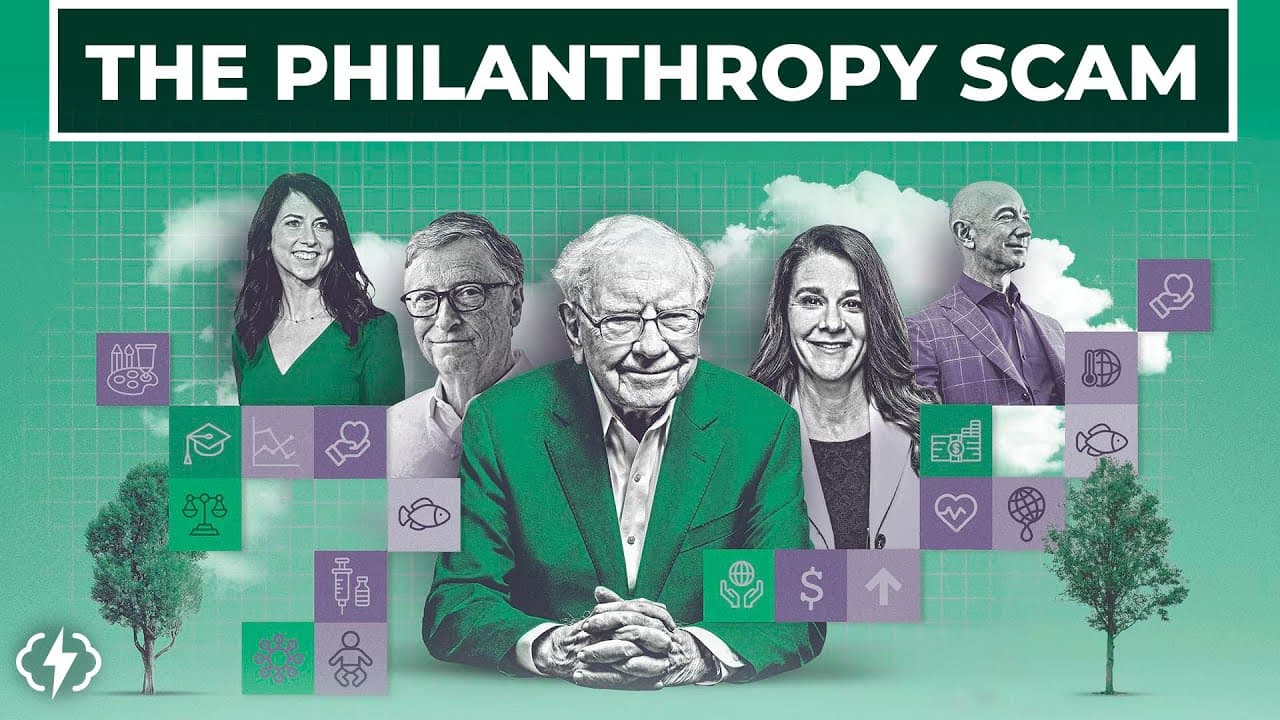
Billionaire philanthropy often perpetuates inequality and allows the ultra-wealthy to sanitize their reputations while maintaining their wealth through tax deductions. Most funds donated by billionaires' foundations do not go directly to charitable causes but are instead invested in profitable companies, undermining democratic processes and failing to address systemic poverty.
Transcript
this episode and others like it are made possible by the generous support of my patrons on patreon we just did a major overhaul of our patrons only discord server so if you'd like to join our growing community and get early access to every video consider becoming a patron at patreon.com second thought say the line bart billionaires bad hello dear v... Read More
Key Insights
- 💁 Philanthropy serves as a form of reputation management for billionaires, enabling them to appear as generous benefactors while avoiding scrutiny of their wealth accumulation methods.
- 🚕 The charitable tax deduction disproportionately benefits the ultra-wealthy, allowing them to reduce their tax burden while society bears the cost.
- 🎟️ Billionaire foundations primarily invest their funds in profitable companies, contradicting their stated missions and perpetuating unethical practices.
- 🎮 By controlling where funds are allocated, billionaires undermine democratic decision-making processes and exert undue influence over society.
- ❓ Philanthropy alone cannot address the systemic issues of poverty and inequality caused by capitalism.
- 🥸 The perception of billionaire philanthropy as a solution to societal problems disguises the need for systemic change.
- 🤗 The concentration of wealth in the hands of a few individuals perpetuates inequality and prevents equitable distribution of resources.
Install to Summarize YouTube Videos and Get Transcripts
Explore YouTube Video Summarizer or Get YouTube Transcript Extractor
Questions & Answers
Q: How does philanthropy help to launder the reputations of billionaires like Bill Gates?
Billionaires use philanthropy to rebrand themselves as generous and caring individuals, distracting the public from their unethical business practices and accumulating vast wealth.
Q: What is the impact of the charitable tax deduction on society?
The charitable tax deduction allows the ultra-wealthy to reduce their taxes by significant amounts, resulting in a loss of government revenue that could have been used for public goods and services.
Q: Are billionaire-funded charities actually using the majority of their funds for charitable causes?
No, only a small percentage of the funds received by billionaire foundations are used for charitable causes, with the majority being invested in profitable companies, including those involved in unethical practices.
Q: How does billionaire philanthropy undermine democracy?
By allowing billionaires to allocate funds according to their own interests and agenda, philanthropy bypasses democratic decision-making processes and gives undue influence to a small group of individuals.
Key Insights:
- Philanthropy serves as a form of reputation management for billionaires, enabling them to appear as generous benefactors while avoiding scrutiny of their wealth accumulation methods.
- The charitable tax deduction disproportionately benefits the ultra-wealthy, allowing them to reduce their tax burden while society bears the cost.
- Billionaire foundations primarily invest their funds in profitable companies, contradicting their stated missions and perpetuating unethical practices.
- By controlling where funds are allocated, billionaires undermine democratic decision-making processes and exert undue influence over society.
- Philanthropy alone cannot address the systemic issues of poverty and inequality caused by capitalism.
- The perception of billionaire philanthropy as a solution to societal problems disguises the need for systemic change.
- The concentration of wealth in the hands of a few individuals perpetuates inequality and prevents equitable distribution of resources.
- Instead of relying on billionaire philanthropy, a more just and equitable system is needed to ensure the well-being of all individuals.
Summary & Key Takeaways
-
Philanthropy turns unredeemable billionaires into saints, despite their unethical practices in accumulating wealth.
-
The charitable tax deduction allows the ultra-wealthy to reduce their taxes by giving to approved charities, costing the rest of society billions of dollars.
-
Most of the money donated to billionaire foundations goes into investment portfolios, benefiting the already profitable companies they claim to fight against.
Read in Other Languages (beta)
Share This Summary 📚
Summarize YouTube Videos and Get Video Transcripts with 1-Click
Try YouTube Summary with ChatGPT & Claude or YouTube Transcript Generator
Explore More Summaries from Second Thought 📚





Summarize YouTube Videos and Get Video Transcripts with 1-Click
Try YouTube Summary with ChatGPT & Claude or YouTube Transcript Generator