Is the Pixel 10/Pro a Meaningful Upgrade? Good News and Bad News
TL;DR
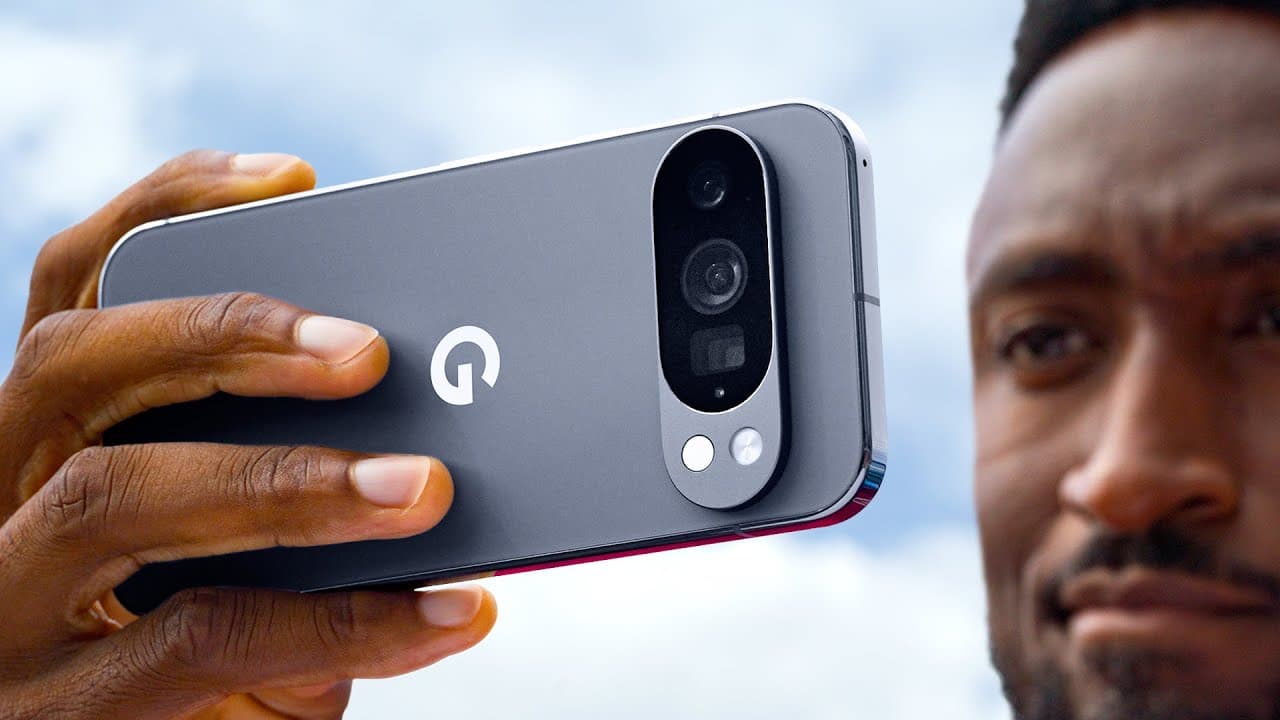
The Pixel 10/Pro is a modest refinement rather than a major reboot, preserving both the strengths and weaknesses of earlier Pixels. The base model gains triple cameras, while the lineup adds an ultrasonic fingerprint reader, batteries about 200 milliamp hours larger, Pixel Snap magnets, and the TSMC-made Tensor G5. Read on to see where these upgrades help, and why performance, charging, and eSIM limitations still matter.
Transcript
(relaxing dance music) - All right, I have good news and bad news. What do you want first? The good news, great. Good call. It's still a Pixel. The bad news? It is still a Pixel. (lively dance music) See, the Pixel 10 has had some high hopes and some hype behind it for the past couple months. You know, it's the 10th generation. It could be special.... Read More
Key Insights
- The Pixel 10 is best described as still a Pixel, which is simultaneously the good news and the bad news. It keeps the design, software and character people liked, and it also keeps the hardware gaps people complained about in earlier generations.
- Tensor G5 is the first totally Google-designed Tensor chip, built on a three-nanometer process and manufactured directly by TSMC. Earlier Tensor chips were co-designed with Samsung, heavily based on an Exynos chip, and fabricated by Samsung.
- The Tensor G5 CPU is about 30 percent better than last generation but benchmarks closer to a mid-range part, near the 8S Gen 4 found in the Nothing Phone 3, and remains a solid amount behind the Snapdragon chips used in Samsung phones.
- The GPU is the weakest area of the Tensor G5. Geekbench 6 OpenCL scores come in at literally half of the Pixel 9 result and roughly 600 percent behind the Snapdragon 8 Elite, and the chip also lacks hardware-accelerated ray tracing.
- The TPU is where Tensor G5 is strongest, at 60 percent more powerful than last generation. That is intentional: Google is prioritizing on-device machine learning tasks such as running models and editing photos over raw CPU and GPU leadership.
- Pixel Snap brings Qi2 wireless charging at 15 watts, or 25 watts on the XL, letting the phone attach directly to existing MagSafe accessories. The speed did not improve, but the magnets add car mounts, self-aligning desk chargers and power banks.
- The base Pixel 10 gains a full triple camera setup, the single most substantial addition to the lineup. Other changes are subtle: an ultrasonic fingerprint reader, a brighter display, color-matched speaker grills, and batteries about 200 milliamp hours larger.
- US Pixel 10 models are eSIM only, with the physical SIM card tray completely removed. For someone who swaps a SIM between test phones in about 10 seconds this is a real loss, and the framing given is that only the carriers win from the change.
Install to Summarize YouTube Videos and Get Transcripts
Explore YouTube Video Summarizer or Get YouTube Transcript Extractor
Questions & Answers
Q: Is the Pixel 10/Pro a big upgrade over the Pixel 9?
No, the Pixel 10/Pro is very similar to the previous generation in design, materials, and character. Its upgrades are mostly subtle, including triple cameras on the base phone, an ultrasonic fingerprint reader, a brighter display, slightly better speakers, and batteries about 200 milliamp hours larger.
Q: What are the biggest new features of the Pixel 10 lineup?
The base Pixel 10 gains a full triple-camera system, while the lineup adds an ultrasonic fingerprint reader, brighter displays, color-matched speaker grilles, and batteries about 200 milliamp hours larger. The most consequential internal additions are the Tensor G5 chip and Pixel Snap magnetic charging.
Q: How fast is the Tensor G5 chip in the Pixel 10?
The Tensor G5 CPU is about 30 percent better than the previous generation, but it still trails the Snapdragon chips used in Samsung phones and performs closer to the 8S Gen 4. Its TPU is the standout component, delivering 60 percent more power than the previous generation for on-device machine learning tasks.
Q: Who designed and manufactures the Tensor G5 chip?
Tensor G5 is the first Tensor chip designed entirely by Google. It uses a three-nanometer process and is manufactured by TSMC, whereas earlier Tensor chips were co-designed with Samsung, based heavily on Exynos, and fabricated by Samsung.
Q: What is Pixel Snap on the Pixel 10?
Pixel Snap is the Pixel 10 lineup's Qi2 magnetic wireless charging system. It supports 15-watt charging, or 25 watts on the XL, and connects to existing MagSafe accessories such as car mounts, self-aligning desk chargers, and power banks.
Q: Does the US Pixel 10 have a physical SIM card slot?
No, US Pixel 10 models are eSIM only, and the physical SIM tray has been removed. The review considers forced eSIM use a downside, particularly for people who frequently move a physical SIM between phones.
Q: How does the Pixel 10 design compare with the Pixel 9?
The Pixel 10 retains the familiar camera visor, with a glossy glass back and satin aluminum sides on the base model and the reverse arrangement on Pro models. It looks so similar to the Pixel 9 that the two could be mistaken for each other, although the clicky buttons, strong haptics, and useful camera bar remain positives.
Q: What hardware weaknesses does the Pixel 10 still have?
The Pixel 10 still lacks super-fast charging, a large new silicon-carbon battery, major new camera sensors, and a record-breaking display. Its Tensor G5 also remains behind flagship Snapdragon chips in CPU performance, while the GPU is identified as its weakest area and lacks hardware-accelerated ray tracing.
Summary & Key Takeaways
-
The Pixel 10 arrived with hype around being the 10th generation, the first with a TSMC chip, and a launch alongside Android 16, plus a mainstream marketing push including a Jimmy Fallon presentation and a Jonas Brothers music video. The result is not a reboot: it is the same set of Pixel likes and dislikes.
-
Design and materials are close to last year: the camera visor, glossy glass back with satin aluminum sides, and the reverse arrangement on the Pro phones. A Pixel 9 could be mistaken for the new one unless you know the new gray color. Buttons are clicky and haptics are good.
-
Whats new is mostly subtle: triple cameras on the base phone, an ultrasonic fingerprint reader, a brighter display, color-matched speaker grills, batteries about 200 milliamp hours larger, and eSIM only in the US with the physical SIM tray gone. Bezels did not get thinner.
-
Tensor G5 is the first fully Google-designed Tensor, on a three-nanometer process and manufactured by TSMC. CPU is about 30 percent better than last generation but still behind Snapdragon chips in Samsung phones, closer to the 8S Gen 4. The TPU is 60 percent more powerful, which is the intentional focus.
-
Pixel Snap adds Qi2 wireless charging at 15 watts, or 25 on the XL, so the phone attaches to existing MagSafe accessories such as car dash mounts, desk chargers that self-align, and power banks. The magnets feel slightly stronger than MagSafe on the iPhone with first-party Google accessories.
-
Software remains a Pixel strength. The phones ship with Android 16 and Material 3 Expressive updates: smart wallpaper cutout effects, animations, haptics and notification jiggle physics. The complaint is oversized buttons and dead white space in the Weather, Phone, Gmail and stopwatch interfaces.
Read in Other Languages (beta)
Share This Summary 📚
Summarize YouTube Videos and Get Video Transcripts with 1-Click
Try YouTube Summary with ChatGPT & Claude or YouTube Transcript Generator
Explore More Summaries from Marques Brownlee 📚




Summarize YouTube Videos and Get Video Transcripts with 1-Click
Try YouTube Summary with ChatGPT & Claude or YouTube Transcript Generator