How to Become Bolder in Social Situations
TL;DR
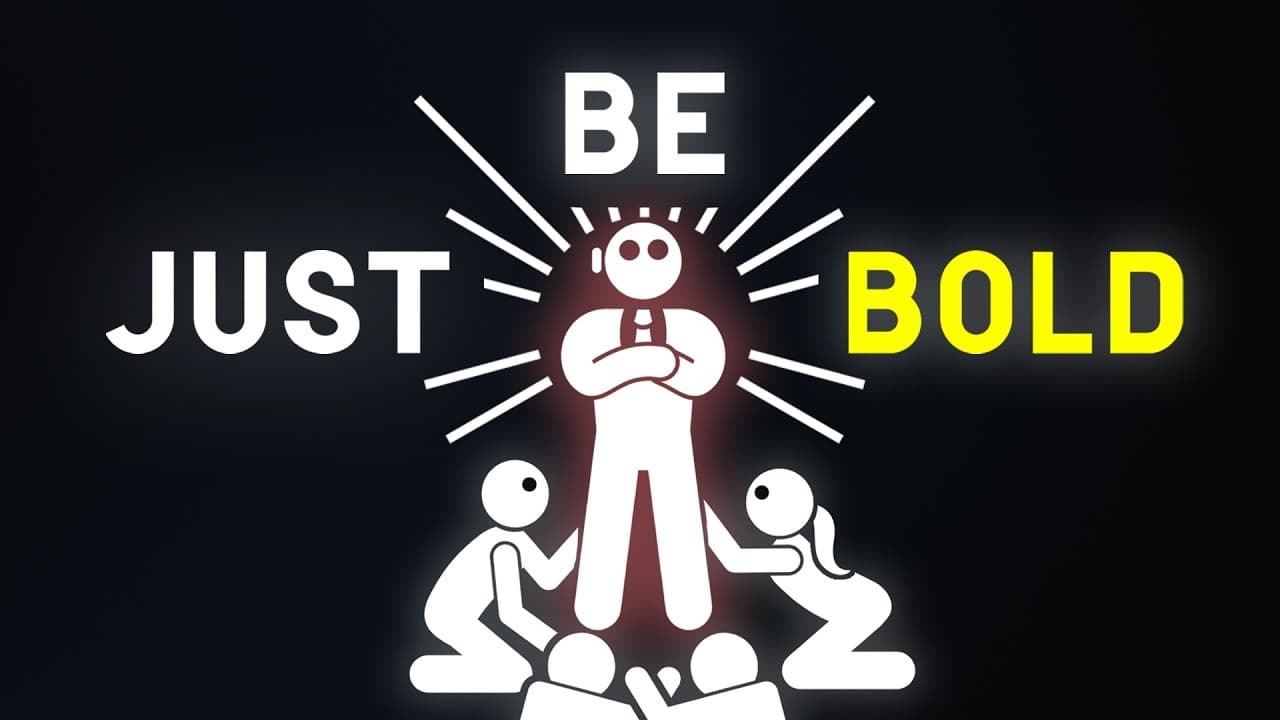
Boldness becomes easier when you stop treating embarrassment as proof that other people have judged you and instead manage your immediate reaction. Adopt open posture, raise your head, smile, and focus on creating a positive internal state before acting. The central principle is that people often respond to how you handle an awkward event, so calm, playful behavior can change the social outcome.
Transcript
if there's one thing I've learned in this life it's that boldness is the solution to all the social problems you have whether it's with girls friends or work the moment you acquire the skill of boldness your entire life will change and in this video I'm going to teach you how to reach the highest level of boldness that any human can reach on this p... Read More
Key Insights
- Boldness is presented as a source of social power because decisive behavior can make someone appear strong, confident, and leader-like. The video's guiding rule is that people tend to see and treat you according to the way you consistently act around them.
- A bold action is defined as an action that can produce either a reward or a punishment. Approaching someone may lead to receiving her number, while rejection may produce embarrassment, so the practical challenge is reducing the anticipated punishment's control over behavior.
- Embarrassment arises when someone considers acting outside the frame of behavior expected by other people. The mind tries to prevent that departure because the person has learned to avoid embarrassment and care about how others might interpret unexpected behavior.
- The video's explanation links embarrassment to an internal chemical response involving adrenaline and cortisol. Its broader point is that the distress is experienced within the body, so the person must address their internal reaction rather than treating observers as its only cause.
- People's reactions are described as reflections of how a person reacts to an event. After a fall, laughing may encourage others to laugh with the person, visible shame may encourage laughter at them, and signs of pain may produce sympathy.
- Positive body language is the proposed tool for changing the emotion behind a bold action. Raising the head, opening the chest, and smiling can shift the internal feeling, which then affects facial expressions, tone of voice, posture, and other visible reactions.
- Self-focused attention can interrupt embarrassment during an awkward moment. Instead of monitoring everyone nearby, the person is advised to concentrate on smiling and maintaining open posture until the negative emotional state begins to weaken and behavior becomes more relaxed.
- The video's social paradox is that trying hard to impress someone increases concern about their judgment, while appearing less dependent on their approval may create attraction. Boldness therefore requires trusting your own action before expecting other people to trust or admire it.
Install to Summarize YouTube Videos and Get Transcripts
Explore YouTube Video Summarizer or Get YouTube Transcript Extractor
Questions & Answers
Q: How can I become bolder in social situations?
Begin by recognizing that a bold action carries the possibility of both reward and embarrassment. When fear appears, shift attention away from imagined judgment and toward your body language. Raise your head, open your chest, smile, and maintain a positive, relaxed presentation. The video's method is to change the internal emotion through posture first, then take the action instead of remaining inside the expected social frame.
Q: What does boldness mean in the video's framework?
Boldness means doing or saying something despite the possibility of an unwanted social outcome. A bold action can bring a reward, such as a successful interaction, or a punishment, such as rejection and embarrassment. The goal is not merely to introduce yourself or handle one conversation. It is to reduce embarrassment's influence enough that you can act freely without being controlled by what surrounding people might think.
Q: Why does embarrassment prevent bold behavior?
Embarrassment discourages bold behavior because people place themselves inside the same social frame that others appear to expect. On a date or in a group, ordinary actions seem safe, while unexpected actions feel risky. The mind then tries to stop behavior outside that frame. According to the transcript, this response reflects childhood conditioning to escape embarrassment and care about other people's opinions.
Q: How does body language reduce embarrassment?
Body language is presented as directly connected to emotion. When embarrassment begins, deliberately raising the head, opening the chest, and smiling can create a more positive internal state. That emotional shift then changes visible behavior, including facial expression, posture, and tone of voice. By focusing on these physical signals instead of the surrounding audience, a person can weaken shame and approach the bold action with more relaxed energy.
Q: Why do people react differently to the same awkward event?
People are described as responding to the person's reaction, not only to the event itself. Two people may both slip and fall, yet produce different social outcomes. Visible shame can lead others to laugh at someone, while immediate self-directed laughter can invite them to laugh together. Showing pain may instead produce sympathy. The person's emotional presentation therefore helps define how observers interpret the awkward moment.
Q: How should I respond after doing something awkward?
Respond with positive, composed body language rather than signaling panic or shame. Smile, keep an open posture, and treat the moment as something you can enjoy or laugh about. The transcript argues that this presentation encourages others to interpret the action as playful and confident. If you visibly react with fear, people may instead perceive the behavior as strange, making the embarrassment feel stronger and more memorable.
Q: Why can trying to impress someone reduce confidence?
Trying to impress someone can make you conform to the frame you believe that person has created. You may focus on dressing correctly, speaking respectfully, flirting appropriately, and avoiding anything unexpected. This increases attention to their opinion and makes approval feel necessary. The video's paradox is that someone may be more impressed when you appear independent of their judgment, which requires trusting your own choices first.
Q: What mindset supports bold decision-making?
The supporting mindset is that your own trust in a decision comes before other people's trust in it. Act as though you are comfortable with your choice, manage the energy expressed through your posture and face, and avoid treating every observer as an evaluator. The transcript also emphasizes that no person is constantly watching and analyzing every movement, so imagined scrutiny should not determine whether you act.
Summary & Key Takeaways
-
Bold action involves risking either a desirable reward or an uncomfortable social punishment. In the situations discussed, that punishment is embarrassment. Becoming bolder therefore begins with reducing embarrassment's influence, rather than waiting for fear to vanish. The suggested method is to deliberately change posture, facial expression, and internal emotional energy before acting.
-
Social expectations create a frame around what behavior seems normal in a date, class, group, or public setting. People may hesitate when an impulse falls outside that frame because they anticipate embarrassment. The lesson argues that escaping this restriction requires recognizing the frame, managing the body's stress response, and proceeding with positive energy.
-
Other people often take cues from the way someone reacts after an awkward event. A person who falls and laughs can turn the incident into shared amusement, while visible shame can invite laughter at that person. Boldness is presented as self-trust expressed through relaxed body language, playfulness, and reduced dependence on approval.
Read in Other Languages (beta)
Share This Summary 📚
Summarize YouTube Videos and Get Video Transcripts with 1-Click
Try YouTube Summary with ChatGPT & Claude or YouTube Transcript Generator
Explore More Summaries from The Dark Needle 📚

Summarize YouTube Videos and Get Video Transcripts with 1-Click
Try YouTube Summary with ChatGPT & Claude or YouTube Transcript Generator