How to Start Swing Trading for Beginners
TL;DR
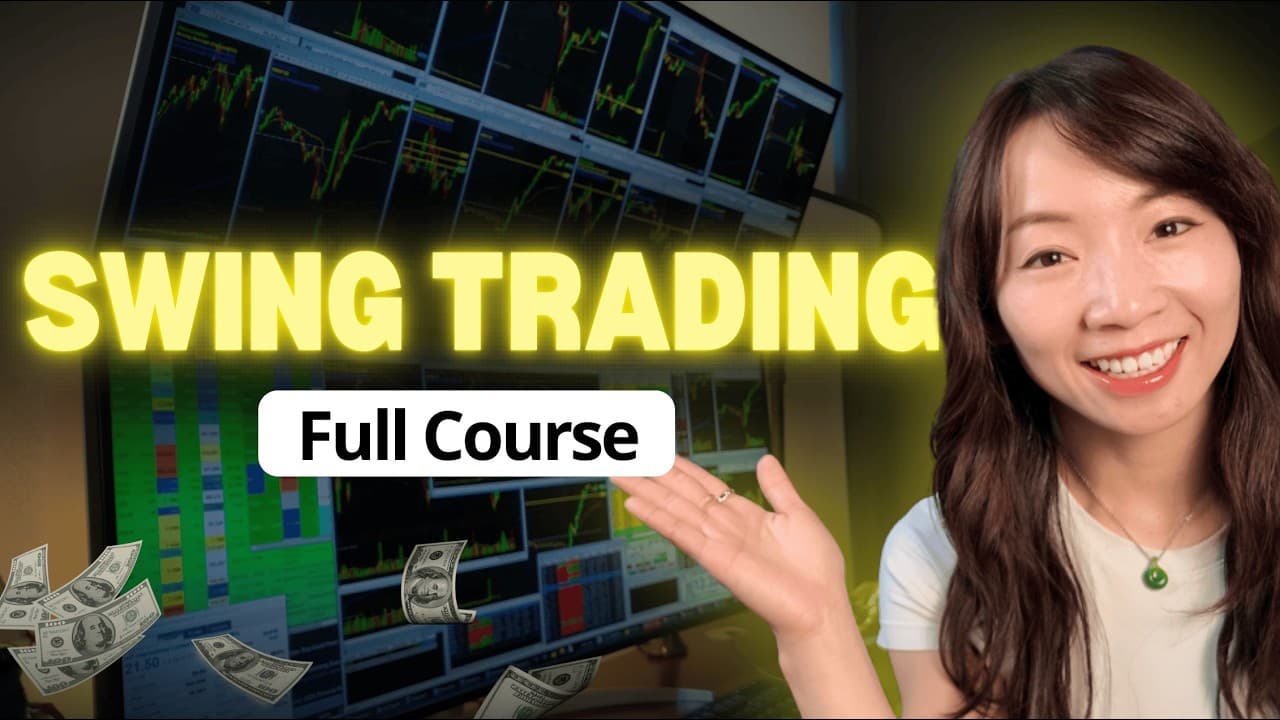
Swing trading offers a less stressful alternative to day trading, ideal for busy individuals. It involves holding positions for days or weeks, allowing traders to avoid the fast-paced nature of day trading. Key components include understanding chart patterns, technical indicators, and choosing the right trading platforms. This video provides a step-by-step guide to starting swing trading, including strategies for identifying profitable trade setups.
Transcript
In the past couple of weeks, I placed zero day trades, but my swing trading is passively making me $30,000. Swing trading is a type of trading style that's perfect for busy individuals and part-time traders who do not have the time nor want to deal with the stress and volatility of day trading. I get it. Not everyone can or should stare at the char... Read More
Key Insights
- Swing trading is ideal for those who can't monitor charts all day, offering a slower pace than day trading.
- The key to successful swing trading is understanding chart patterns, such as daily gap ups and downtrend breaks.
- Technical indicators like the 8 EMA and 200 SMA are crucial for identifying potential trades and managing risk.
- Swing traders should use scanners to identify stocks that fit specific criteria, such as gap ups over multi-month resistance.
- Trading platforms like Interactive Brokers and Centerpoint Securities are recommended for their features and reliability.
- A good swing trading strategy involves finding stocks holding gains midday for potential follow-through.
- Execution involves entering trades on pullbacks to the 8 EMA and using support areas for stop-loss placement.
- Swing trading focuses on quality over quantity, with fewer but more selective trades compared to day trading.
Install to Summarize YouTube Videos and Get Transcripts
Explore YouTube Video Summarizer or Get YouTube Transcript Extractor
Questions & Answers
Q: How to start swing trading?
To start swing trading, first understand the basics of chart patterns and technical indicators. Choose a reliable trading platform and use scanners to identify stocks meeting specific criteria. Focus on entering trades on pullbacks to the 8 EMA and manage risk with strategic stop-loss placements.
Q: What is the best time frame for swing trading?
The best time frames for swing trading are typically the daily and weekly charts. These time frames allow traders to capture larger price movements over several days or weeks, reducing the need for constant monitoring and enabling a more relaxed trading approach.
Q: Why is swing trading less stressful than day trading?
Swing trading is less stressful than day trading because it involves holding positions for longer periods, such as days or weeks, rather than minutes or hours. This reduces the need for constant chart monitoring and allows traders to avoid the fast-paced, emotional nature of day trading.
Q: What indicators are essential for swing trading?
Essential indicators for swing trading include the 8 EMA, which helps identify momentum and potential breakouts, and the 200 SMA, which indicates long-term trends. Volume indicators are also crucial for confirming price movements and identifying potential entry and exit points.
Q: How do you find stocks for swing trading?
To find stocks for swing trading, use stock scanners that filter for specific criteria, such as daily gap ups over multi-month resistance or high relative volume. Platforms like Trade Ideas and Finviz offer customizable scanning tools to help identify potential swing trade setups.
Q: What are the common chart patterns in swing trading?
Common chart patterns in swing trading include the daily gap up, long-term downtrend break, and oversold patterns. These patterns help identify potential entry points for trades based on historical price movements and technical analysis.
Q: What platforms are recommended for swing trading?
Recommended platforms for swing trading include Interactive Brokers, known for its robust mobile app and trading tools, and Centerpoint Securities, which offers excellent execution capabilities. Both platforms provide the necessary features for effective swing trading.
Q: How do you manage risk in swing trading?
Risk in swing trading is managed by using strategic stop-loss placements based on support areas and technical indicators like the 8 EMA. Traders should also focus on quality trades, entering positions with favorable risk-reward ratios and avoiding overtrading.
Summary & Key Takeaways
-
Swing trading is a style that suits those who can't dedicate full days to staring at charts, offering a slower-paced alternative to day trading. It involves holding trades for longer periods, requiring an understanding of chart patterns and technical indicators.
-
The video outlines the importance of using technical indicators such as the 8 EMA and 200 SMA, and highlights the necessity of using stock scanners to find potential trades that meet specific criteria.
-
Recommended trading platforms include Interactive Brokers and Centerpoint Securities, which provide necessary tools for executing swing trades. The strategy emphasizes entering trades on pullbacks and managing risk through strategic stop-loss placements.
-
(Content reviewed on 2026-08-27.)
Read in Other Languages (beta)
Share This Summary 📚
Summarize YouTube Videos and Get Video Transcripts with 1-Click
Try YouTube Summary with ChatGPT & Claude or YouTube Transcript Generator
Explore More Summaries from Humbled Trader 📚



Summarize YouTube Videos and Get Video Transcripts with 1-Click
Try YouTube Summary with ChatGPT & Claude or YouTube Transcript Generator