How to Grow a Small YouTube Channel Strategically
TL;DR
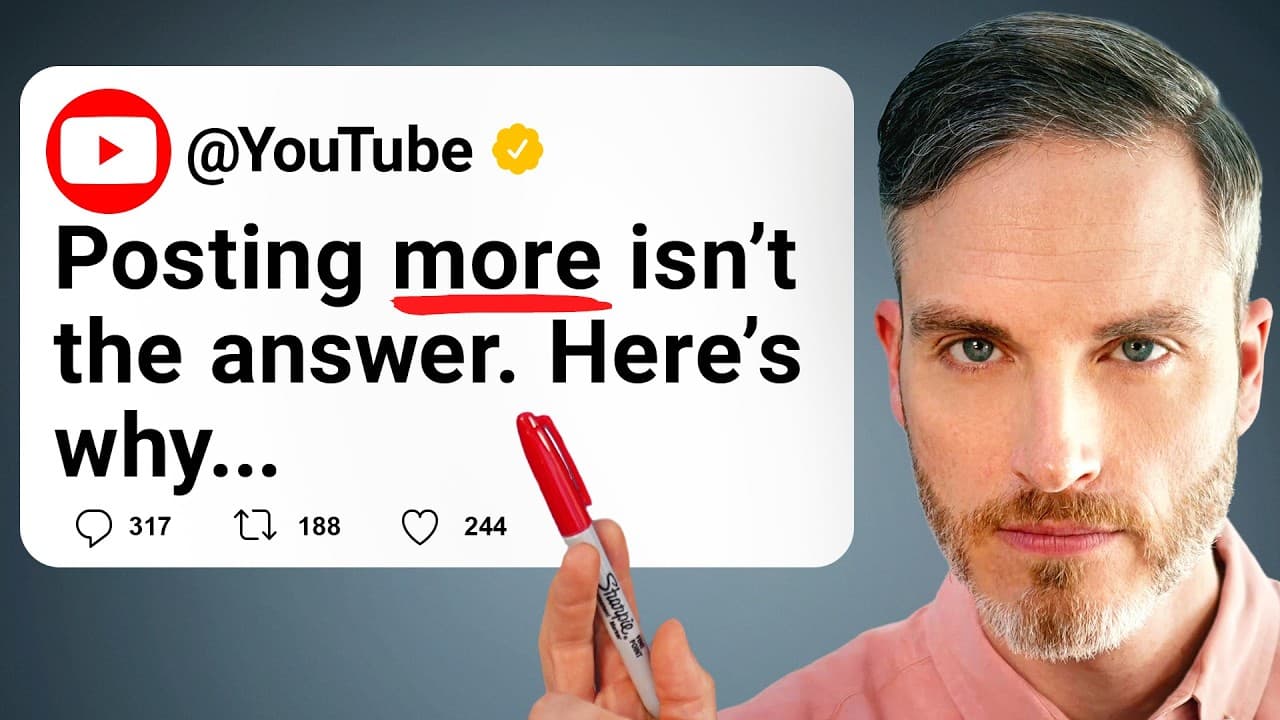
Small YouTube channels often fail to grow because they publish without a clear strategy. Define a focused niche, select validated topics, improve titles and thumbnails, deliver consistent value, choose an appropriate format, and make the opening 30 seconds strong enough to retain viewers. YouTube recommends content according to viewer interests and watch history, so even new channels can break through.
Transcript
Cutting right to the chase, what is the number one diagnosis in your opinion of why small channels don't grow? That's a good question. And uh to challenge me with the like the one thing like the one thing they're lacking. Um I don't know if there is just one thing. However, I think I can come up with one thing and it comes down to one word of why s... Read More
Key Insights
- • A lack of strategy is the central diagnosis for many small channels because posting frequently does not resolve unclear positioning, weak packaging, inconsistent value, or an unsuitable presentation format.
- • A clear niche identifies who the channel serves and what problem it solves. Small creators struggle when they make content for the wrong audience or cover topics without a focused value proposition.
- • Effective packaging connects a strong video idea with a title and thumbnail that earn attention. Getting the click is only the first step because the content must then persuade viewers to stay.
- • Consistent value means every video offers a tangible benefit through problem solving, education, entertainment, or a combination described as edutainment. Viewers should be able to recognize a meaningful takeaway from the content.
- • The right format depends on the information and the moment. Vertical videos, talking-head presentations, video podcasts, essays, faceless content, and overhead drawings organize and communicate ideas differently.
- • YouTube recommendations are shaped by viewer watch history and demonstrated interests. After someone searches for a topic and watches related content, the platform can begin recommending more videos connected to that subject.
- • Small channels can achieve breakout results because distribution is not limited to existing subscribers. A new video can reach an interested audience when its topic, storytelling, structure, packaging, and retention align effectively.
- • Strong video development starts by brainstorming 10–20 ideas and narrowing them to one promising concept. Regular idea generation trains creators to evaluate more options instead of recording the first topic that comes to mind.
Install to Summarize YouTube Videos and Get Transcripts
Explore YouTube Video Summarizer or Get YouTube Transcript Extractor
Questions & Answers
Q: Why do small YouTube channels fail to grow?
Small YouTube channels often fail to grow because they publish without an integrated strategy. Common problems include an unclear niche, content aimed at the wrong audience, weak titles or thumbnails, inconsistent viewer value, and a format that does not organize the information well. Growth requires these elements to work together with the video's audio, visuals, structure, and storytelling.
Q: How can a small YouTube channel choose a clear niche?
A small channel can clarify its niche by identifying exactly who the content is for, what problem it solves, and which specific topics that audience already wants. The transcript illustrates this with increasingly precise subjects, moving from vertical gardening to wheat-grass vertical gardening for biohacking and health. Greater specificity helps the creator produce recognizable content around researched, validated interests.
Q: How does YouTube recommend videos from new channels?
YouTube examines viewers' watch history to determine which videos to recommend next. When a person searches for a subject and watches related videos, the platform begins sending more content associated with that interest. A new channel can enter this recommendation flow by creating clearly focused videos around validated topics, even when it has few subscribers or only a small catalog.
Q: Do subscribers determine whether a YouTube video gets views?
Subscribers do not determine distribution in the same way they once did because YouTube increasingly serves content according to viewer interests. The transcript describes this shift as moving from social media toward interest media. Consequently, a new channel can produce a breakout video when its topic, packaging, structure, storytelling, and retention connect with a verifiable audience interest.
Q: How should creators find a strong YouTube video idea?
Creators should brainstorm 10–20 possible topics before selecting the next video. Many initial ideas may be weak, so generating a larger pool makes it easier to identify one with stronger audience potential. The recommended practice is to capture ideas regularly, research topics before recording, and devote much more thought to the central concept than creators commonly expect.
Q: What makes a strong hook for a YouTube video?
A strong hook makes the video's first 30 seconds compelling enough for viewers to continue watching. It follows a clear big idea and must fulfill the interest created by the video's packaging. A click alone is insufficient because viewers can immediately leave. The opening should therefore establish why the content matters and give the audience a reason to stay.
Q: What value should a YouTube video provide?
A YouTube video should offer a clear, tangible takeaway that improves the viewer's experience or life. It may solve a problem, teach something useful, entertain, or combine education and entertainment. Creators should define the value proposition before publishing so the audience can understand what it receives in exchange for its attention among the many available videos.
Q: When should a creator change a video's format?
A creator should consider changing formats when useful information feels disorganized or fails to connect with viewers. Vertical content, talking-head videos, podcasts, video essays, faceless presentations, and overhead drawings each communicate differently. Reorganizing the same subject within a more suitable format can make the message clearer, improve its presentation, and potentially resolve a channel's performance problem.
Summary & Key Takeaways
-
Small channels commonly rely on posting frequently and hoping for results, but action alone does not provide direction. A useful strategy defines the intended audience, the problem each video solves, the value viewers receive, the way the topic is packaged, and the format best suited to presenting the information clearly.
-
YouTube increasingly distributes videos according to viewer interests instead of relying only on subscriptions. Watch history helps the algorithm determine what someone may want next. A focused channel can enter an existing conversation by researching validated topics, targeting a specific niche, and making each video's subject unmistakably clear to viewers and the recommendation system.
-
The proposed creation process begins with generating 10–20 possible video ideas and selecting the strongest one. Creators are encouraged to spend substantially more time evaluating topics before recording. After choosing the idea, the next priority is a compelling hook because the opening 30 seconds determine whether viewers remain after clicking or quickly leave.
Read in Other Languages (beta)
Share This Summary 📚
Summarize YouTube Videos and Get Video Transcripts with 1-Click
Try YouTube Summary with ChatGPT & Claude or YouTube Transcript Generator
Explore More Summaries from Think Media 📚



Summarize YouTube Videos and Get Video Transcripts with 1-Click
Try YouTube Summary with ChatGPT & Claude or YouTube Transcript Generator