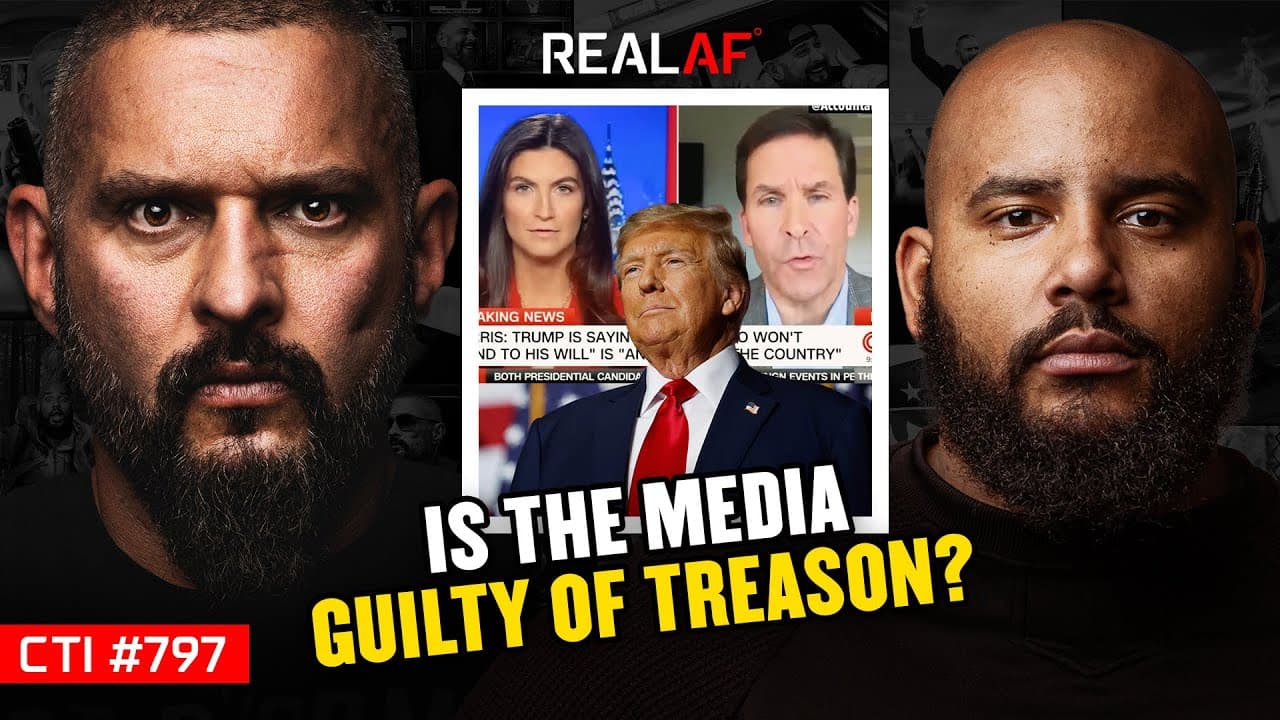
How Is Mainstream Media Using Trump as a Scapegoat?
TL;DR
Mainstream media portrays Trump as a threat to deflect from their actions, using him as a scapegoat to maintain power. Concerns are raised about potential military force against citizens, and the manipulation of narratives to create a false sense of safety. Election integrity remains contentious, emphasizing the need to critically question official narratives.
Transcript
I'd like you to introduce you guys to Mark esper he was the the Pentagon Chief under Trump and so when he's saying that the enemy from within should potentially be handled by the National Guard and if necessary the US military do you fear that he would try to to utilize the National Guard the military a against US citizens uh yes I do of course bec... Read More
Key Insights
- The media often uses figures like Trump as scapegoats to deflect from their own questionable actions, portraying him as a threat to democracy.
- There is a growing concern among some that the military might be used against U.S. citizens under the guise of maintaining order.
- The podcast emphasizes the importance of questioning historical narratives and remaining open to new interpretations of past events.
- Election integrity remains a contentious issue, with debates over the accuracy and methods of vote counting continuing to spark controversy.
- The podcast hosts express skepticism about the current administration's handling of crime statistics, suggesting deliberate manipulation of data.
- The discussion highlights the potential for civil unrest if election outcomes are perceived as illegitimate by a significant portion of the populace.
- The hosts criticize the media and political figures for their perceived hypocrisy, particularly in relation to school closures and public safety concerns.
- There is a strong emphasis on personal responsibility and self-improvement as a means to navigate and succeed in a challenging socio-political landscape.
Install to Summarize YouTube Videos and Get Transcripts
Explore YouTube Video Summarizer or Get YouTube Transcript Extractor
Questions & Answers
Q: What is the podcast's view on media manipulation?
The podcast argues that the media often manipulates narratives to deflect from their own questionable actions, using figures like Trump as scapegoats. This manipulation is seen as a tactic to maintain power and control over public perception.
Q: What concerns are raised about the military's role in civil matters?
The podcast raises concerns about the potential use of military force against U.S. citizens, highlighting recent changes in military directives that could allow for such actions. This is seen as a dangerous precedent that could lead to significant civil unrest.
Q: How does the podcast view the handling of crime statistics?
The hosts critique the current administration's handling of crime statistics, suggesting that data is being manipulated to present a false narrative of safety and progress. They argue that this manipulation is deliberate and serves to mislead the public.
Q: What is the podcast's stance on election integrity?
The podcast emphasizes the importance of election integrity, expressing skepticism about the accuracy and methods of vote counting. They argue that ensuring fair elections is crucial to maintaining public trust and avoiding civil unrest.
Q: What does the podcast say about historical narratives?
The podcast encourages questioning historical narratives and remaining open to new interpretations of past events. They argue that history is often written by the victors and may not always reflect the true events or intentions.
Q: How does the podcast view the current political climate?
The podcast views the current political climate as fraught with deception and manipulation, with both media and political figures engaging in tactics to maintain control. They emphasize the need for vigilance and critical thinking among the public.
Q: What role does personal responsibility play according to the podcast?
The podcast places a strong emphasis on personal responsibility and self-improvement as essential tools for navigating and succeeding in a challenging socio-political landscape. They argue that individuals must take charge of their own lives to effect change.
Q: What is the podcast's perspective on school closures?
The podcast criticizes the perceived hypocrisy of media and political figures regarding school closures, particularly in relation to public safety concerns. They argue that the impact on children's education and well-being was not given due consideration during the pandemic.
Summary & Key Takeaways
-
The podcast discusses how mainstream media uses figures like Trump as scapegoats to deflect from their own actions, portraying him as a threat. The hosts argue that this narrative manipulation is a tactic to maintain power and control.
-
Concerns are raised about the potential use of military force against U.S. citizens, with a focus on recent changes in military directives that could allow for such actions. The podcast suggests this could lead to significant civil unrest if mishandled.
-
The hosts critique the current administration's handling of crime statistics, suggesting that data is being manipulated to present a false narrative of safety and progress. They emphasize the importance of questioning official narratives and remaining vigilant.
Read in Other Languages (beta)
Share This Summary 📚
Summarize YouTube Videos and Get Video Transcripts with 1-Click
Try YouTube Summary with ChatGPT & Claude or YouTube Transcript Generator
Explore More Summaries from Andy Frisella 📚
Summarize YouTube Videos and Get Video Transcripts with 1-Click
Try YouTube Summary with ChatGPT & Claude or YouTube Transcript Generator