What Are SN1, SN2, E1, and E2 Reaction Mechanisms?
TL;DR
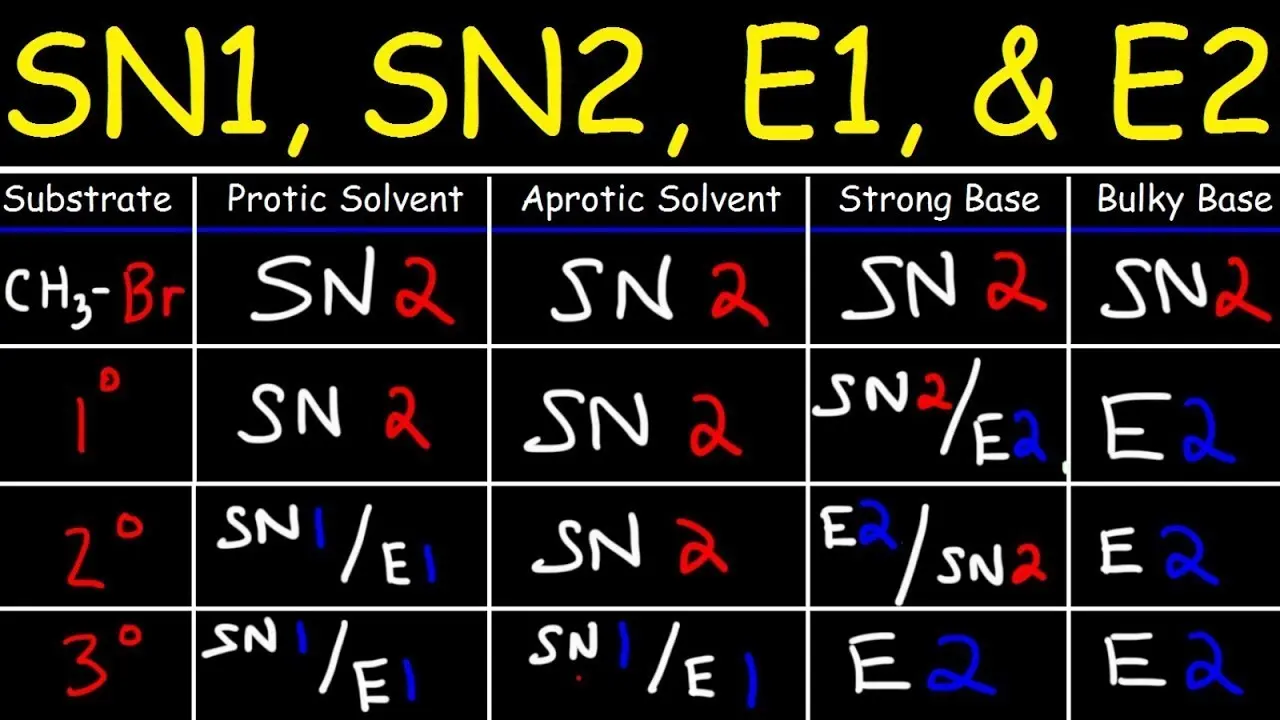
SN1, SN2, E1, and E2 reactions depend on substrate structure and conditions. Methyl substrates always follow SN2, primary substrates follow SN2 unless a bulky base promotes E2. Secondary substrates can undergo SN2 in aprotic solvents or SN1/E1 in protic solvents, while tertiary substrates exclusively follow SN1/E1. Strong bases generally favor E2 reactions, especially with secondary and bulking substrates.
Transcript
in this video we're going to go over sn1 sn2 e1 and e2 reactions so the first thing you need to know is if you have a methyl substrate for example like methyl bromide the reaction will proceed using an sn2 mechanism it really doesn't matter what type of solvent we're using or if we're using a base it's going to be an sn2 reaction now if we have let... Read More
Key Insights
- ❓ Methyl substrates always undergo SN2 reactions.
- ⚾ Primary substrates can undergo SN2 reactions unless a bulky base is used, in which case it becomes an E2 reaction.
- ❓ Secondary alkyl halides can favor SN2 reactions with aprotic solvents or SN1 and E1 reactions with protic solvents. Steric hindrance can favor E2 reactions.
- ❓ Tertiary alkyl halides only undergo SN1 and E1 reactions. The solvent choice determines the favored mechanism, and heating favors E1 reactions.
- 💪 Strong bases with secondary alkyl halides favor E2 reactions, while sterically hindered bases favor E1 reactions.
- ❓ Bulky bases favor E2 reactions over SN2 reactions for both primary and secondary substrates.
Install to Summarize YouTube Videos and Get Transcripts
Explore YouTube Video Summarizer or Get YouTube Transcript Extractor
Questions & Answers
Q: What determines whether a reaction follows an SN1 or SN2 mechanism?
The nature of the substrate plays a key role. Methyl substrates always undergo SN2 reactions, while primary substrates undergo SN2 reactions unless a bulky base is used. Steric hindrance and the type of base/solvent also influence the mechanism.
Q: How does the choice of solvent and base influence the reaction mechanism?
Aprotic solvents like acetone or DMF favor SN2 reactions with good nucleophiles, while protic solvents like water or methanol favor SN1 and E1 mechanisms. Bulky bases favor E2 reactions, while hydroxide or methoxide favor SN2 reactions.
Q: What reactions occur with secondary alkyl halides?
Secondary alkyl halides can undergo SN2 reactions with aprotic solvents and good nucleophiles, or SN1 and E1 reactions with protic solvents. Steric hindrance can favor E2 reactions over SN2 reactions.
Q: What mechanisms occur with tertiary alkyl halides?
Tertiary alkyl halides only undergo SN1 and E1 reactions. The choice of solvent determines whether SN1 or E1 is favored. Heating favors E1 reactions. Strong bases with tertiary alkyl halides favor E2 reactions.
Summary & Key Takeaways
-
Methyl substrates undergo SN2 reactions, regardless of solvent or base used. Primary substrates undergo SN2 reactions unless a bulky base is used, in which case it becomes an E2 reaction.
-
Steric hindrance and type of base/solvent determine whether an SN2 or E2 reaction occurs for primary substrates. Bulky bases favor E2 reactions, while hydroxide or methoxide favor SN2 reactions.
-
Secondary substrates can undergo SN2 reactions with aprotic solvents and good nucleophiles, or SN1 and E1 reactions with protic solvents. Bulky or sterically hindered secondary substrates favor E2 reactions.
-
Tertiary substrates only undergo SN1 and E1 reactions, and the solvent choice determines if either mechanism is favored. Heating favors E1 reactions.
-
Tertiary alkyl halides with a strong base favor E2 reactions, while secondary alkyl halides with a strong base favor E2 reactions over SN2 reactions. A mixture of both reactions can occur, with E2 being the major product.
-
Secondary alkyl halides with a sterically hindered base favor E1 reactions over SN2 reactions.
-
Methyl halides with a bulky base undergo SN2 reactions.
Read in Other Languages (beta)
Share This Summary 📚
Summarize YouTube Videos and Get Video Transcripts with 1-Click
Try YouTube Summary with ChatGPT & Claude or YouTube Transcript Generator
Explore More Summaries from The Organic Chemistry Tutor 📚


Summarize YouTube Videos and Get Video Transcripts with 1-Click
Try YouTube Summary with ChatGPT & Claude or YouTube Transcript Generator