How to spot red flags when moving in with family
TL;DR
The narration shows a mother moving in with her son and uncovering a controlled, tense dynamic. Hidden impressions of wealth, care, and pressure emerge as the son frames relocation as duty while Clara offers polished support. The story builds toward a chilling reveal that explains the mother’s decision to leave for a nursing home.
Transcript
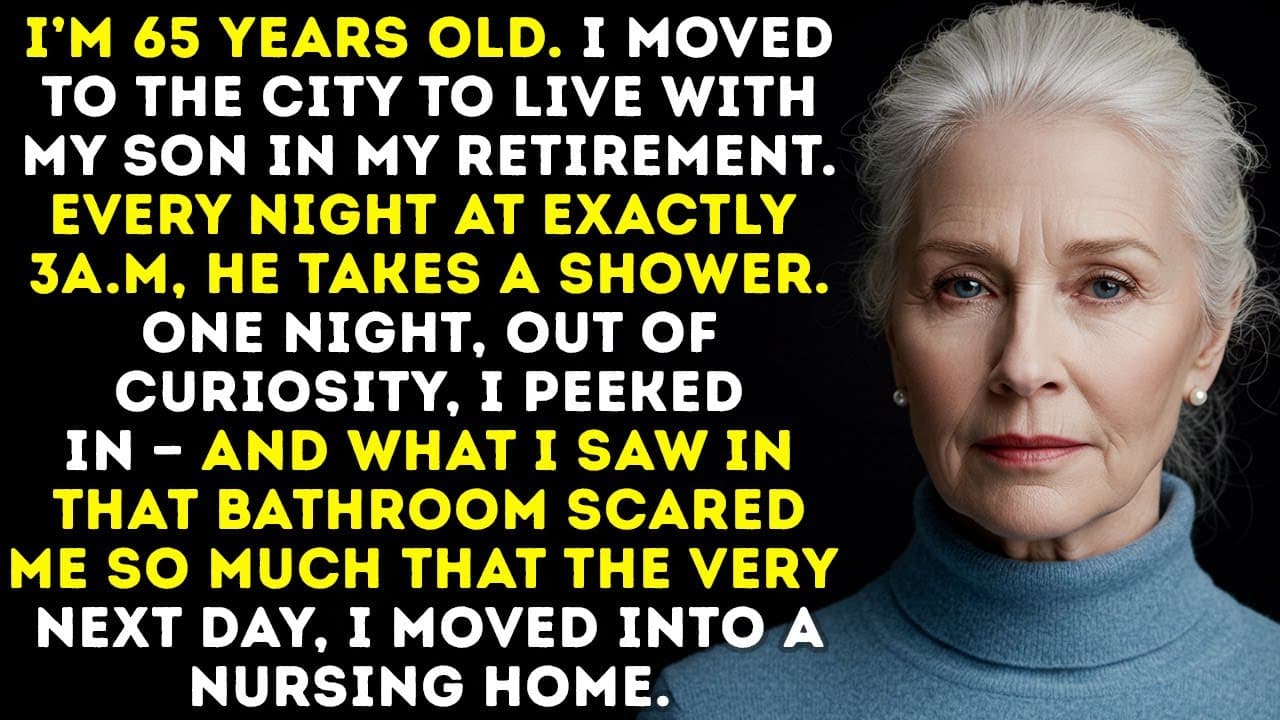
Hello everyone and welcome to the channel Solar Stories. I am 65 years old and I went to the city to live with my son for my retirement. Every night at 3:00 in the morning, he would take a shower. One time, my curiosity got the better of me and I peaked. The scene in the bathroom terrified me so much that I moved into a retirement community the ver... Read More
Key Insights
- The mother moves to the city under a sense of duty, not desire, highlighting how filial obligations can mask control.
- Clara appears kindly but quietly enforces compliance, signaling how soft power can influence family dynamics.
- The son presents as successful and protective, yet his actions suggest a veneer of care masking control over the mother.
- A sense of vulnerability is cultivated through routine acts like monitoring blood pressure and daily check-ins, signaling manipulation.
- The environment shifts from a familiar town to an impersonal urban setting, mirroring a loss of intimate family space.
- The narrator’s past trauma from her husband informs her sensitivity to potential abuse, influencing her reactions to the new arrangement.
- The story uses ordinary domestic details to build suspense, making the threat feel plausible and intimate.
- The eventual decision to seek a nursing home acts as a dramatic assertion of autonomy after a long period of submission.
Install to Summarize YouTube Videos and Get Transcripts
Explore YouTube Video Summarizer or Get YouTube Transcript Extractor
Questions & Answers
Q: What is the main conflict in the story Painted by the move to the city
The main conflict centers on a mother who agrees to move in with her son and his wife out of duty and concern for health, only to discover a controlling dynamic behind the apparent care. The tension unfolds through interactions that reveal power imbalances, surveillance, and emotional strain, driving the mother toward seeking independence in a nursing home. This shift exposes how love and obligation can mask coercion and fear, ultimately forcing a drastic decision to reclaim personal agency.
Q: Who is Clara and what role does she play in the dynamic
Clara is the son’s wife who participates in a warm, supportive persona that appears caring toward the mother. Her role, however, includes gentle pressure and compliance-driven behavior that helps sustain the control dynamic without overt confrontation. She acts as a bridge between the son and mother, smoothing interactions while masking underlying tensions and possible manipulation that contribute to the mother's sense of unease.
Q: What does the 3 AM bathroom incident symbolize in the narrative
The 3 AM bathroom incident symbolizes a threshold moment where the mother glimpses something unsettling about the household routine and its hidden underlying tensions. It marks the point of no return in her perception of safety and autonomy, prompting reflection on whether the care she receives is genuine or a method of control. This moment catalyzes the eventual decision to remove herself from the living arrangement.
Q: How does the setting influence the mood of the story
The setting transitions from a quiet, familiar town to a bustling city, which amplifies the mother's sense of isolation and vulnerability. The unfamiliar condo, upscale surroundings, and distant urban sounds contribute to a feeling of being watched and constrained. This shift in setting intensifies psychological tension and highlights the mother's longing for the security and simplicity of her previous life.
Q: What themes are explored through the mother’s past experiences with her husband
The mother’s past experiences with her abusive husband inform themes of fear, control, and resilience. These memories shape her sensitivity to signs of manipulation and her instinct to protect herself and her autonomy. The narrative uses this history to explain her cautious behavior, her reluctance to upset her son, and her ultimate decision to seek a safer, more independent living arrangement.
Q: What is the turning point that pushes the mother toward leaving for a nursing home
The turning point is the realization that the new living arrangement, while outwardly supportive, functions as a controlled environment where the mother’s choices are limited. Subtle cues from Clara, the son’s insistence on providing supplements, and the overall atmosphere create a sense of entrapment. This awareness leads the mother to value her freedom and seek a nursing home as a way to reclaim independence and safety.
Q: How does the title reflect the story’s message about trust and betrayal
The title underscores the tension between trust in family and fear of exploitation. It hints that what seems like care can conceal betrayal, prompting a drastic response to preserve dignity and safety. The mother’s decision to leave at the moment of perceived betrayal illustrates a broader warning about trusting intimate family arrangements without clear boundaries and protections.
Q: What emotional journey does the narrator undergo by the end of the video
The narrator moves from hope and gratitude for family support to a growing sense of suspicion and fear. Her emotional journey culminates in a decisive turn toward self-protection and autonomy, culminating in a nursing home placement. Throughout, she remains a resilient, reflective figure who weighs duty against personal safety and ultimately chooses to prioritize her well being over familial pressure.
Summary & Key Takeaways
-
A life story unfolds as a mother moves in with her son, initially welcomed by warmth but gradually revealing power dynamics and control. The narrative combines ordinary domestic scenes with a growing sense of unease that culminates in a life-changing decision. The setting shifts from a quiet town to a bustling city, intensifying tension.
-
The son projects concern and care, yet the text hints at underlying rigidity and dominance, with Clara playing a supportive but wary role. The piece uses dialogue and small details to hint at a larger betrayal or secret, keeping readers engaged as the plot thickens.
-
A turning point arrives when the mother notices subtle coercion and a loss of personal autonomy. The story leverages emotional memory and sensory detail to deepen the reader’s empathy for the mother and suspicion toward the son, setting the stage for a dramatic conclusion and reflection on family loyalty.
Read in Other Languages (beta)
Share This Summary 📚
Summarize YouTube Videos and Get Video Transcripts with 1-Click
Try YouTube Summary with ChatGPT & Claude or YouTube Transcript Generator
Explore More Summaries from SOLA Stories 📚




Summarize YouTube Videos and Get Video Transcripts with 1-Click
Try YouTube Summary with ChatGPT & Claude or YouTube Transcript Generator