How Do AI and Nostalgia Shape Modern Media?
TL;DR
Older cartoons can remain appealing to adults when nostalgia, layered plots, and character development give them value beyond basic childhood instruction. The hosts connect that debate to animation quality, abandoned pilots, audience aging, artificial intelligence, AI detection tools, realism in games, industry controversies, and whether AI systems should display attitude, although the provided transcript excerpt develops the cartoon discussion most fully.
Transcript
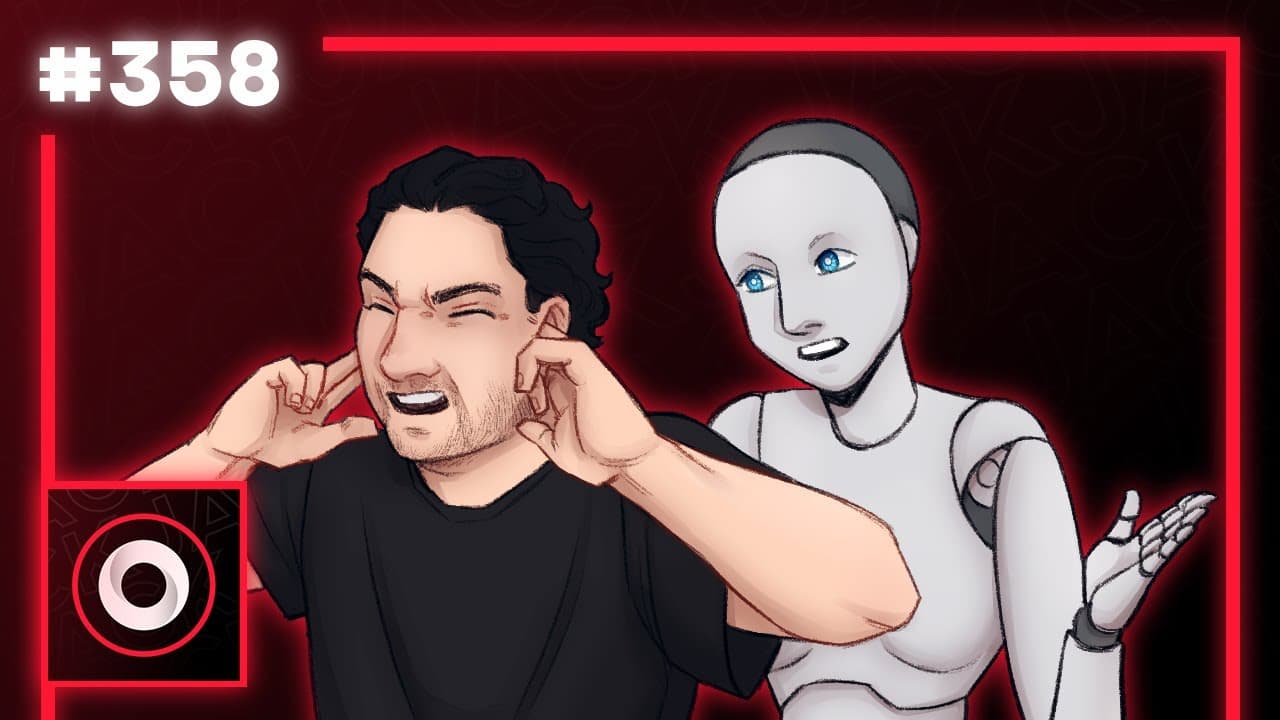
TI us Jackson go yeah Jackson tell us about what you were just talking about I had no interest in the conversation but hello welcome to episode 358 of the official podcast we're here on our new channel second episode um Andrew had a very controversial opinion before starting the show I think you had a more controversial no it was your way o... Read More
Key Insights
- Rugrats is characterized by the hosts as more than a basic learning program because it uses continuing characters, recognizable plots, and family-sitcom structures. That distinction supports their view that an adult can revisit it for nostalgia without treating it like preschool instruction.
- Nostalgia is presented as a legitimate reason for adults to revisit childhood cartoons. The hosts argue that age alone does not make cartoon viewing inappropriate, although they distinguish story-driven programs from shows deliberately simplified for very young children.
- All Grown Up attempted to age the Rugrats characters alongside their original audience, but the hosts disagree about whether its middle-school setting fulfilled that promise. One expected adult versions of the characters, while another remembered the premiere as exciting.
- Jimmy Neutron is described as inventive and interesting despite visuals that aged poorly. The hosts attribute some of its awkward appearance and numerous animation errors to primitive early computer-generated production, including moments in which characters or objects appear to clip through surfaces.
- Cartoon development is described as a process involving many pilots that never receive full series orders. Networks could present collections of trial episodes, observe ratings or audience responses, continue promising concepts, and quietly abandon ideas that failed to gain support.
- Rejected or unaired animation pilots can later surface online and reveal how familiar productions evolved. The hosts cite an early Amazing World of Gumball short whose premise resembles the eventual program while still containing noticeable differences from the finished series.
- The episode covers artificial intelligence as one part of a much broader informal conversation. The listed segments include recent AI developments, AI detection tools, Kaya's opposition to AI, and a debate about whether an AI system should communicate with attitude.
- Modern media is discussed through the tension between experimentation and commercial safety. The hosts contrast earlier pilot showcases and varied cartoon concepts with their impression that networks increasingly rely on established properties, short trial runs, reboots, or inexpensive production styles.
Install to Summarize YouTube Videos and Get Transcripts
Explore YouTube Video Summarizer or Get YouTube Transcript Extractor
Questions & Answers
Q: Why can adults still enjoy cartoons made for children?
Adults can continue enjoying childhood cartoons when those programs offer nostalgia, coherent plots, character relationships, and humor beyond elementary instruction. The hosts use Rugrats as an example of a cartoon that operates like a family sitcom even though its central characters are babies. They contrast that structure with highly simplified educational programs designed primarily to teach very young children.
Q: How is Rugrats different from a preschool learning show?
Rugrats is described as a story-driven cartoon with plots, character development, family relationships, and recognizable episode structures. Its babies talk and behave with an adult-like awareness, including Tommy carrying a screwdriver and repeating a personal motto. The hosts contrast those features with a surface-level educational show whose language and activities are deliberately simplified for very young viewers.
Q: Why did All Grown Up receive mixed reactions?
All Grown Up tried to advance the Rugrats characters beyond infancy and follow the audience as it aged. One host remembered the premiere as exciting because the characters had finally grown older. Another expected to see their adult futures and was disappointed that they were only middle-school students, making the concept feel less transformative than anticipated.
Q: Why has Jimmy Neutron's animation aged poorly?
The hosts describe Jimmy Neutron as an inventive and interesting program created with comparatively primitive computer-generated animation. Looking back, they find its visual design unattractive and note that compilations reveal many production errors. Examples mentioned in the discussion include characters clipping through walls and other elements appearing broken, even though the underlying show remained creatively appealing.
Q: How did cartoon networks test new show ideas?
Cartoon networks could assemble variety programs made from individual pilots and present several possible shows to viewers. The hosts recall formats that effectively asked audiences whether they wanted more of each concept. Decisions may have reflected ratings or audience responses, while unsuccessful pilots were abandoned, archived, reworked into different programs, or eventually circulated online without becoming complete series.
Q: How can unaired pilots reveal a cartoon's development?
Unaired pilots can show an early concept before producers revise its characters, presentation, or story structure. The hosts mention an introductory Amazing World of Gumball short that later appeared online. It was close to the series that audiences eventually received, but its differences demonstrated how a recognizable idea could change between an internal presentation and a finished television production.
Q: What artificial intelligence topics does the podcast cover?
The episode timestamps identify several artificial intelligence segments: recent happenings with AI, AI detection tools, a section framed as Kaya versus AI, and a discussion about whether AI should have attitude. These topics appear within a wider conversational episode that also covers cartoons, game engines, video game realism, industry controversies, Ozempic, and personal recommendations from the hosts.
Q: Should artificial intelligence have an attitude?
The source identifies whether AI should have attitude as a dedicated discussion topic, but the supplied transcript excerpt ends before that segment and does not preserve the hosts' arguments or conclusion. The grounded takeaway is therefore limited: the episode treats personality or attitude in AI as a debatable design question, alongside discussions of AI developments, detection tools, and Kaya's objections to AI.
Summary & Key Takeaways
-
The episode opens with a comic disagreement about Rugrats, particularly whether adults watching the series is strange and whether its child characters behave more like miniature adults. The hosts distinguish nostalgic family entertainment with plots and character development from highly simplified educational programming created primarily for very young children.
-
The conversation moves from Rugrats to early computer-generated animation, with Jimmy Neutron presented as an inventive show whose visuals have aged poorly. The hosts discuss animation errors, inexpensive digital styles, adult reboots, darker versions of familiar characters, and the possibility of television properties aging alongside their original audiences.
-
The hosts also examine how cartoon pilots were tested, rejected, archived, leaked, or reworked into later productions. According to the description and timestamps, the wider episode subsequently addresses game engines, Ubisoft executives, artificial intelligence, AI detection, portrayals of women, video game realism, AI personality, Ozempic, and personal recommendations.
Read in Other Languages (beta)
Share This Summary 📚
Summarize YouTube Videos and Get Video Transcripts with 1-Click
Try YouTube Summary with ChatGPT & Claude or YouTube Transcript Generator
Explore More Summaries from The Official Channel 📚




Summarize YouTube Videos and Get Video Transcripts with 1-Click
Try YouTube Summary with ChatGPT & Claude or YouTube Transcript Generator