What Is Mastery and How Can It Lead to Success?
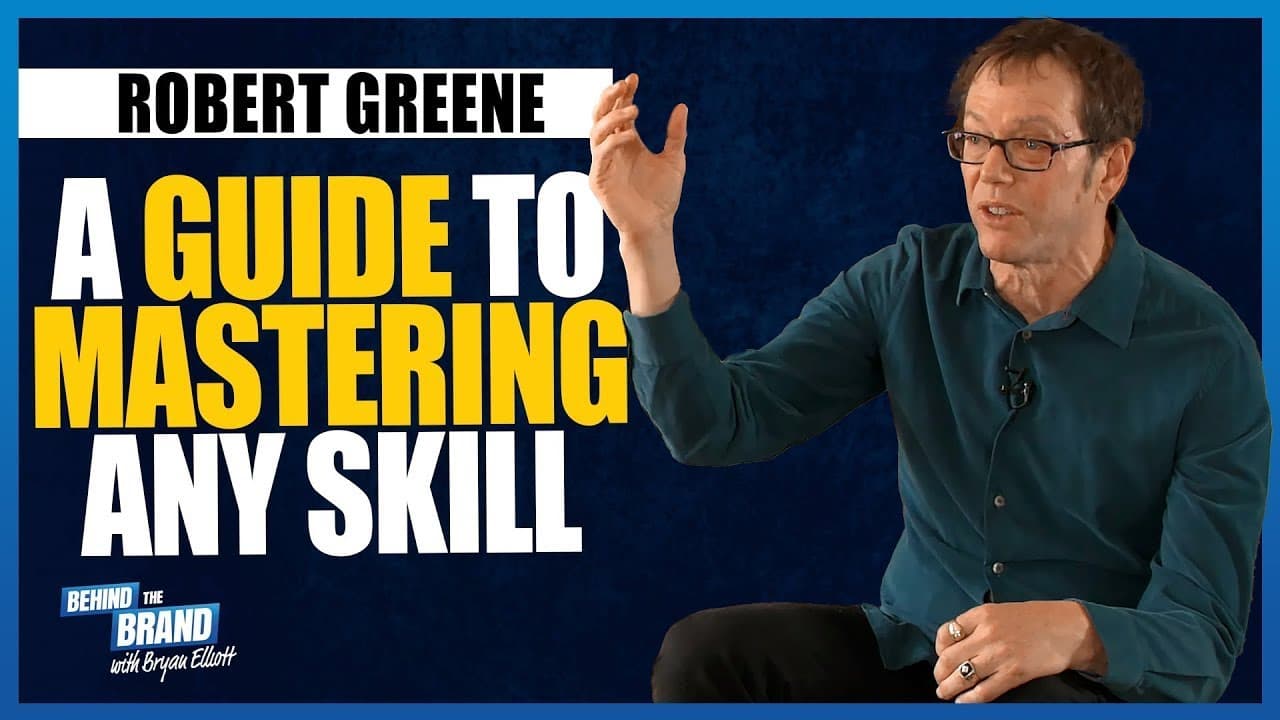
TL;DR
Mastery requires hard work, patience, and a long-term commitment to developing skills, rather than relying on shortcuts. Achieving mastery leads to true fulfillment and satisfaction, as it involves pursuing meaningful goals over time. The concept of delayed gratification, illustrated by the Marshmallow Test, shows that those who are patient often achieve greater success.
Transcript
talk about mastery well mastery came out in i think 2013 2012 something like that i was basically writing it because honestly i was getting a lot of feedback from my first three books a lot of my readers are young i have a uh this they skew a little bit male 18 to 30 it tends to be and i was getting emails about power and war and seduction that was... Read More
Key Insights
- 🎮 Mastery is not only about playing the political game or having power; it requires real skills and expertise.
- 🍉 A long-term perspective and patience are necessary for achieving true fulfillment and success.
- 🍉 Instant gratification may provide temporary pleasure, but lasting satisfaction comes from pursuing long-term goals and reaching a state of mastery.
- 🤪 The author emphasizes the importance of going through an apprenticeship phase and seeking mentorship in order to develop necessary skills.
- ❓ Shortcuts and quick fixes may undermine the development of real mastery and hinder overall progress.
- 🛟 The author references the Marshmallow Test study to highlight the correlation between patience and success in life.
- 💡 The author's belief is contrary to the idea of quick hacks and shortcuts advocated by other authors like Tim Ferriss in "The Four-Hour Workweek."
- 🎙️ More videos with Robert Greene:
Install to Summarize YouTube Videos and Get Transcripts
Explore YouTube Video Summarizer or Get YouTube Transcript Extractor
Questions & Answers
Q: Why did the author write the book "Mastery"?
The author wrote "Mastery" because they observed that many young people were focused on shortcuts and lacked an understanding of how to build real skills and expertise.
Q: What is the author's belief about shortcuts in life?
The author believes that there are no shortcuts in life and that one must be willing to put in the work, fail, learn, and go through an apprenticeship phase to achieve mastery.
Q: How does the author define real pleasure and fulfillment?
According to the author, real pleasure and fulfillment come from setting long-term goals, developing skills over time, and eventually reaching a state of mastery in a particular field.
Q: What is the significance of patience in the author's perspective?
The author emphasizes the importance of patience in life, as it allows individuals to wait for greater rewards and experiences, similar to the children who participated in the marshmallow test study.
Summary & Key Takeaways
-
The author wrote the book "Mastery" because they were concerned about young people relying on shortcuts rather than developing real skills and expertise.
-
Mastery requires putting in the work, facing failure, and going through an apprenticeship phase.
-
Real pleasure and fulfillment come from long-term goals and achieving mastery in a particular field.
Read in Other Languages (beta)
Share This Summary 📚
Summarize YouTube Videos and Get Video Transcripts with 1-Click
Try YouTube Summary with ChatGPT & Claude or YouTube Transcript Generator
Explore More Summaries from Behind the Brand 📚



Summarize YouTube Videos and Get Video Transcripts with 1-Click
Try YouTube Summary with ChatGPT & Claude or YouTube Transcript Generator