How Can You Change Your Life in 6 Months?
TL;DR
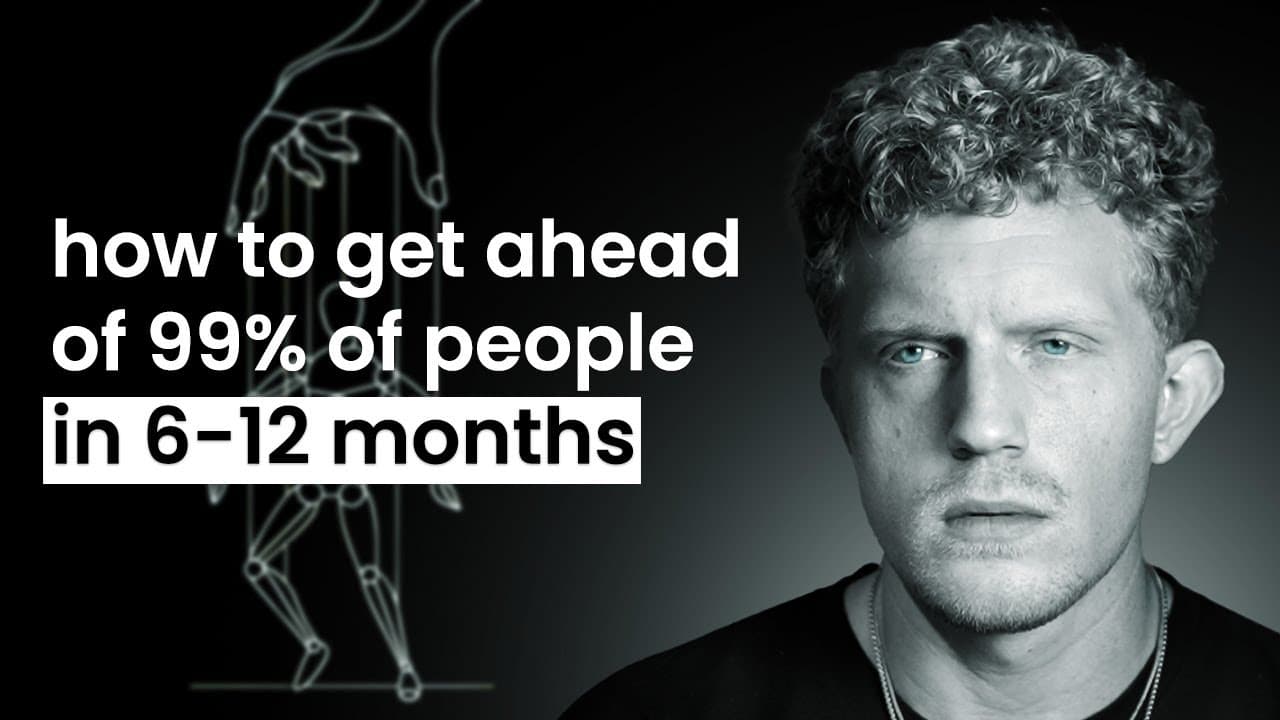
You can reshape your life in six months by creating your own goals instead of running on the goals society assigned you as a child. The video argues success is not planned but automatic: your mind is a structure of nested systems (identity, perspective, and perception) that goals reprogram over time. About 80% of living the life you want comes down to setting your own goals, then using trial, error, and negative feedback to refine the systems that reach them.
Transcript
most people even though they don't know it are asleep they're born asleep they live asleep they marry in their sleep they breed children in their sleep they die in their sleep without ever waking up they never understand the loveliness and the beauty of this thing that we call human existence people are living on autopilot they were assigned goals ... Read More
Key Insights
- 👯 Most people live life on autopilot, following societal goals without questioning their own desires and potential for personal growth.
- 😫 Success is achieved through setting clear and meaningful goals and continuously learning and improving.
- 🤯 Expanding the mind and adopting a growth mindset are essential for personal growth and success.
- ❎ Mistakes and negative feedback are valuable learning experiences that contribute to personal growth and improvement.
- 🍧 Having a clear vision and goals provide direction, purpose, and focus in life.
- 🥅 Society often imposes goals and expectations on individuals, but it is important to question and pursue one's own desires.
- 🤳 Continuous self-education and self-experimentation are crucial for personal growth and achieving success.
Install to Summarize YouTube Videos and Get Transcripts
Explore YouTube Video Summarizer or Get YouTube Transcript Extractor
Questions & Answers
Q: How can you change your life in 6 months, according to Dan Koe?
By becoming conscious of the goals running your life and replacing society's default goals with your own. The video states that about 80% of living the life you want boils down to creating your own goals. Once you set a clear goal, it changes how you interpret situations, which shapes your actions, which programs your identity, and this compounds over time into the life you want.
Q: Why do most people live life on autopilot?
Because they were assigned goals by society as children, right when they learned to comprehend language, and never questioned them. The video says 99% of people interpret everyday situations only through the lens of three injected goals: go to school, get a job, and retire. Without their own goals, they keep programming their minds to live a mediocre life without even knowing it.
Q: Is it true that systems are greater than goals?
The video pushes back on this popular idea, which spread through James Clear's book Atomic Habits. It argues systems can't exist without goals because a system exists to lead to a goal. Goals require a system to be achieved, and that system becomes more efficient through trial and error, so the two work together rather than one replacing the other.
Q: Why is success described as automatic rather than planned?
The video says a realization most people make too late is that success is not planned, it is automatic. Successful people, whether they were aware of it or not, had a mind that was programmed to achieve the goals that led to their success. The point is to consciously program the systems in your mind rather than leaving them on society's defaults.
Q: How does the mind work as a system in this framework?
Dan Koe describes the mind as a structure of nested systems: your identity, perspective, and perception of situations all feed into and reinforce each other, in that order. Goals change how you interpret situations, which influences your actions, which programs your identity. Because these systems become more efficient with age, they either compound into a good life or an unfulfilling one.
Q: What role do mistakes and negative feedback play in growth?
They are the corrective mechanism that makes systems more efficient. The video uses learning to walk as an example: negative feedback, like a parent's guidance, refined the mind's systems until walking became automatic. Without clear goals, you never start making the mistakes that reveal what you don't want, so you can't use that feedback to correct your actions over time.
Q: Why does not having clear goals hold you back?
If you aren't clear on what you want, you can't communicate it to others, which sets you up for a life of assumptions, expectations, and never getting what you want. Nobody can help you because you can't find and study people with similar goals, and you can't help yourself because you never start the trial and error that leads to what you want.
Q: Why can't you feel the pain of a goal you haven't committed to?
The video says if you don't invest energy into a goal, you won't feel the pain of not reaching it. For example, if getting into good shape isn't a serious goal, you won't notice how alcohol affects your energy or physique. A goal has to become part of your identity, not just something that sounds nice, before you can spot what's holding you back.
Summary & Key Takeaways
-
Many people go through life on autopilot, following societal goals without questioning their own desires and potential for personal growth.
-
Success is not planned, but rather a result of having a mind that is programmed to achieve goals. Goals shape our identity, perspective, and perception of situations.
-
Expanding the mind, setting clear goals, and continuously learning and improving are essential for achieving success in any endeavor.
Read in Other Languages (beta)
Share This Summary 📚
Summarize YouTube Videos and Get Video Transcripts with 1-Click
Try YouTube Summary with ChatGPT & Claude or YouTube Transcript Generator
Explore More Summaries from Dan Koe 📚


Summarize YouTube Videos and Get Video Transcripts with 1-Click
Try YouTube Summary with ChatGPT & Claude or YouTube Transcript Generator