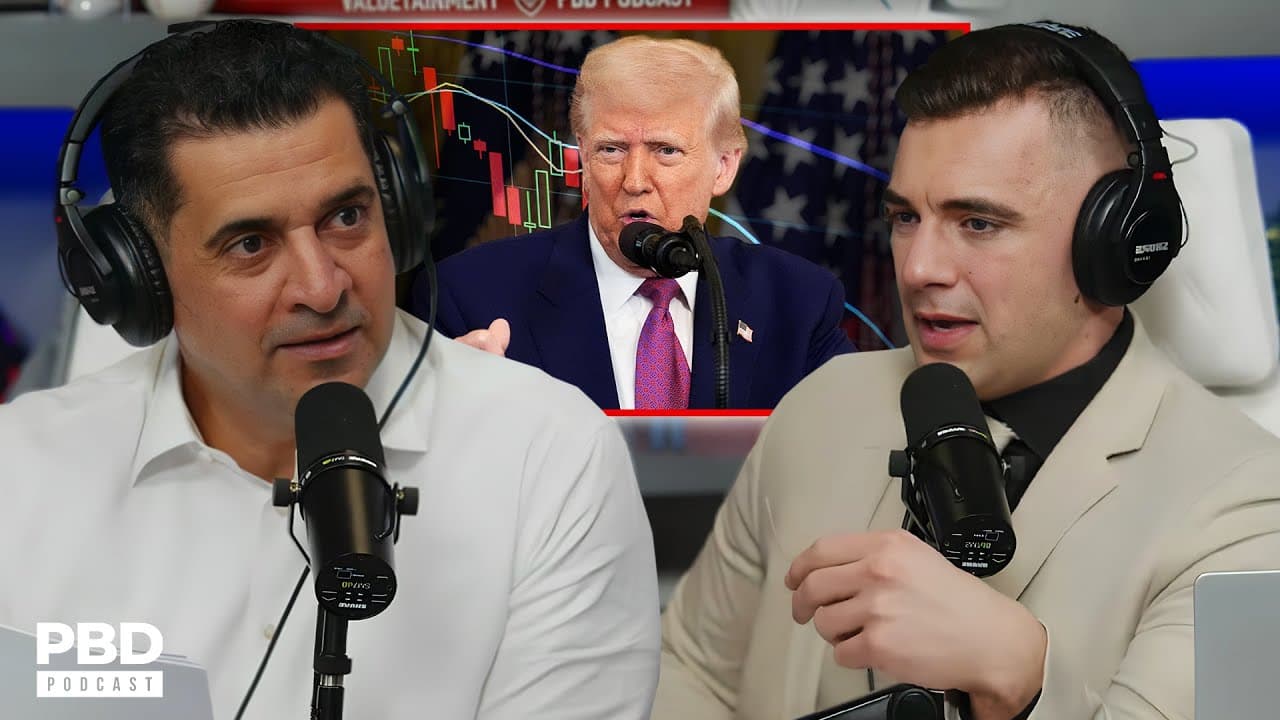
Why Won't Prices Go Down? Trump's Tariff Strategy Explained
TL;DR
Prices are not expected to return to 2019 levels because the increases of 2021 and 2022 created a new baseline. The discussion argues that affordability now depends on incomes catching up through a strong, resilient job market, while the Trump administration has postponed higher tariffs on furniture, kitchen cabinets, and vanities for a year. Read on to understand the tariff changes and the competing views behind them.
Transcript
White House laser focused on affordability as Trump softens tariff strategy. Okay, so there's two stories like, well, you know, affordability is just a Democrat hoax. It's not a real thing. No one's really dealing with that. It's just a bunch of BS. But behind closed doors, apparently, guys, we got to get this affordability thing scored away as we'... Read More
Key Insights
- Prices are unlikely to return to pre-2021 levels due to permanent economic shifts.
- The Trump administration is softening tariffs to address affordability concerns.
- Tariffs on furniture and kitchen cabinets have been postponed to prevent further price increases.
- The Biden administration's policies contributed to a significant rise in prices during 2021 and 2022.
- Job growth and wage increases are essential to cope with the current cost of living.
- The government needs to address inefficiencies and waste to stimulate economic growth.
- Stimulus plans failed to effectively raise incomes to match the increased prices.
- The consolidation of banks has limited small business lending, affecting economic recovery.
Install to Summarize YouTube Videos and Get Transcripts
Explore YouTube Video Summarizer or Get YouTube Transcript Extractor
Questions & Answers
Q: Why won't prices go back down to 2019 levels?
The discussion argues that the price increases of 2021 and 2022 were a permanent step upward rather than a temporary fluctuation. After a supply shock, prices are described as leveling off at a new equilibrium instead of returning to their earlier level.
Q: How is the Trump administration changing its tariff strategy?
The White House postponed for another year tariffs that were scheduled to take effect on furniture, kitchen cabinets, and vanities. The discussion presents this as part of a stronger focus on affordability.
Q: What tariffs were planned for furniture, kitchen cabinets, and vanities?
A 25% tariff had been imposed on furniture, kitchen cabinets, and vanities. Furniture tariffs were scheduled to rise to 30% in January, while tariffs on cabinets and vanities were set to increase to 50%.
Q: Why did the White House postpone these tariffs?
One interpretation in the discussion is that the White House recognizes tariffs can raise consumer prices and cause political damage. Another speaker describes the postponement as a tactical response that lets the administration address affordability concerns while disputing broader claims that its tariffs were inflationary.
Q: What happened to tariffs on certain Italian pastas?
The discussion says tariffs on certain Italian pastas were reduced to 1.2%. A speaker later characterizes the resulting rate more generally as about 1%.
Q: How does the discussion propose improving affordability if prices do not fall?
It argues that incomes must first catch up with the higher price level and then exceed it. That requires a job market strong and resilient enough to support rising incomes rather than relying on prices to return to their earlier baseline.
Q: Why haven't incomes caught up with higher prices?
The discussion says incomes would have risen over time if there had been a genuine recovery from the pandemic and lockdowns. Instead, prices increased first, and the expected income growth did not follow sufficiently to equal or surpass the higher costs.
Q: Do the speakers agree that affordability is only a messaging problem?
No. One speaker says Trump is responding to Democratic messaging and argues that tariffs were less inflationary than economists expected, while another says affordability is absolutely real and not merely a messaging issue. Both acknowledge that prices have not returned to their earlier levels.
Summary & Key Takeaways
-
Prices are unlikely to decrease due to permanent economic shifts that occurred during the Biden administration. The Trump administration is adjusting its tariff strategy to address affordability concerns by postponing tariffs on furniture and kitchen cabinets. The focus is now on job growth and wage increases to align with the current cost of living.
-
The Biden administration's policies led to a significant rise in prices during 2021 and 2022, creating a new baseline for the economy. The Trump administration's efforts to adjust tariffs aim to mitigate political damage from high prices, while emphasizing the need for job growth and wage increases.
-
Economic recovery is hindered by inefficiencies and waste in government spending. Stimulus plans failed to effectively raise incomes to match increased prices. The consolidation of banks has limited small business lending, affecting economic recovery. A stronger job market is essential to cope with the current cost of living.
Read in Other Languages (beta)
Share This Summary 📚
Summarize YouTube Videos and Get Video Transcripts with 1-Click
Try YouTube Summary with ChatGPT & Claude or YouTube Transcript Generator
Explore More Summaries from Valuetainment 📚






Summarize YouTube Videos and Get Video Transcripts with 1-Click
Try YouTube Summary with ChatGPT & Claude or YouTube Transcript Generator