How Does Social Inequality Affect Education?
TL;DR
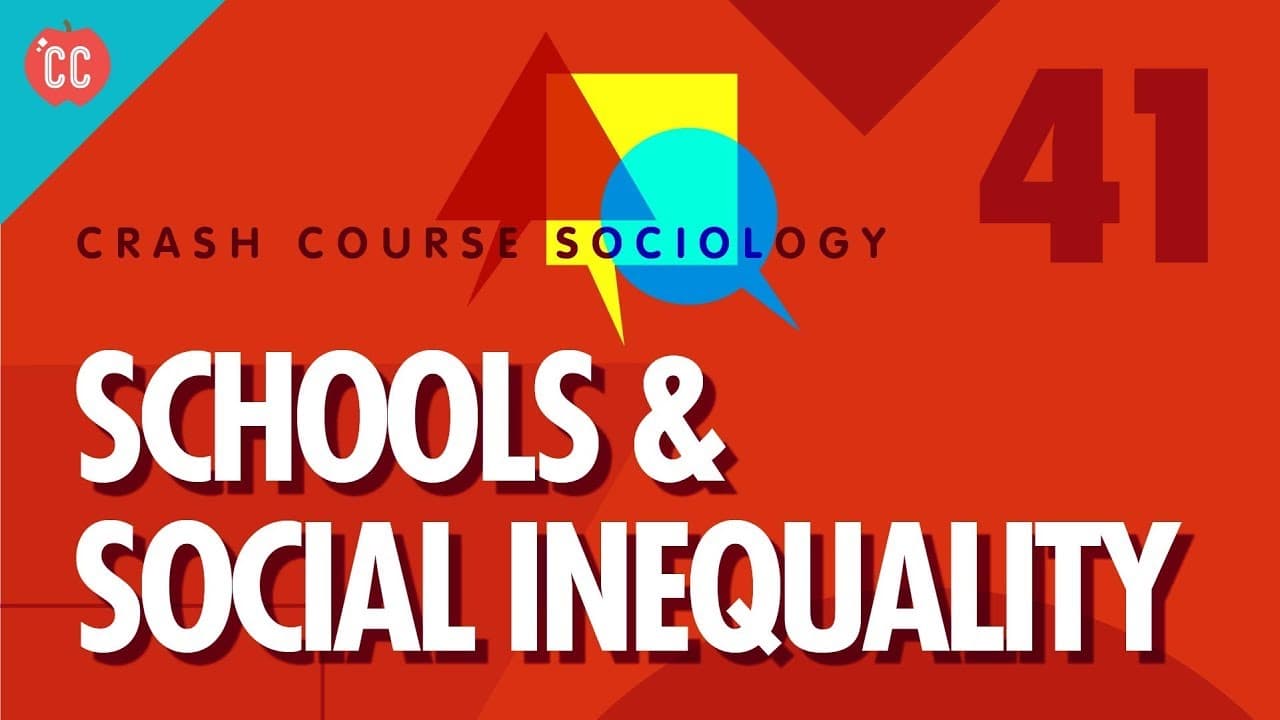
The US educational system often reinforces social inequalities, rather than eliminating them. Factors such as local school funding, cultural capital, and racial biases contribute to disparities in educational attainment. Wealthier students have access to better resources, while minority students face challenges like biased tracking and disciplinary actions, perpetuating class and racial gaps.
Transcript
We’ve all complained about having to go to school at some point, right? I mean, who decided that teenagers need to get to school at the ungodly hour of 7 am? That right there seems like a big drawback that we didn’t consider when we talked about the positive functions of schools. Last week, we discussed all the good things about schooling – how it ... Read More
Key Insights
- Social-conflict theory explains how education can perpetuate class differences.
- School funding in the US is largely determined by local property taxes, leading to disparities.
- Wealthier neighborhoods fund better schools, giving their children advantages.
- Cultural capital, such as parental support and expectations, impacts educational outcomes.
- Minority students often face biases in tracking and disciplinary actions.
- Standardized tests may have cultural biases, affecting minority students' scores.
- Tracking can influence long-term career opportunities and contribute to gender pay gaps.
- Educational systems reflect societal biases, affecting minority and low-income students.
Install to Summarize YouTube Videos and Get Transcripts
Explore YouTube Video Summarizer or Get YouTube Transcript Extractor
Questions & Answers
Q: How does local school funding affect educational inequality?
Local school funding, primarily derived from property taxes, significantly impacts educational inequality. Schools in wealthier neighborhoods receive more funding, allowing them to hire better teachers, provide more resources, and offer diverse programs. In contrast, schools in poorer areas struggle with fewer resources, affecting the quality of education and perpetuating class disparities.
Q: What role does cultural capital play in education?
Cultural capital, which includes the knowledge, skills, and experiences that parents pass on to their children, plays a crucial role in educational success. Students from families with more cultural capital are better prepared for school, have higher expectations, and are more likely to succeed academically. This advantage often correlates with higher socioeconomic status, contributing to educational inequality.
Q: How does tracking contribute to educational inequality?
Tracking, which involves placing students in different educational paths based on perceived ability, can exacerbate educational inequality. Often, minority and low-income students are placed in lower tracks, limiting their access to advanced courses and opportunities. This can affect their long-term educational and career prospects, reinforcing existing social and economic disparities.
Q: Why are standardized tests criticized in terms of educational equity?
Standardized tests are criticized for potential cultural biases that may disadvantage minority and low-income students. These tests often reflect the experiences and knowledge of the dominant cultural group, leading to disparities in scores. This can affect students' academic tracking, college admissions, and scholarship opportunities, perpetuating educational inequalities.
Q: What is the school-to-prison pipeline?
The school-to-prison pipeline refers to the practices that push students, particularly minorities, out of the educational system and into the criminal justice system. Disciplinary policies, such as zero-tolerance and harsh punishments for minor infractions, disproportionately affect minority students, increasing dropout rates and the likelihood of incarceration, thus perpetuating social inequalities.
Q: How do racial biases in education affect minority students?
Racial biases in education can negatively impact minority students through discriminatory practices in tracking, discipline, and teacher expectations. These biases can lead to minority students being underrepresented in advanced courses, facing harsher disciplinary actions, and receiving less support, which ultimately affects their academic performance and future opportunities.
Q: What impact does parental education have on children's educational outcomes?
Parental education significantly impacts children's educational outcomes. Parents with higher education levels often have more resources, knowledge, and expectations, which they pass on to their children. This support can lead to better academic preparation, higher performance, and greater educational attainment, contributing to the perpetuation of social inequalities across generations.
Q: How does the US education system deviate from a meritocracy?
The US education system deviates from a meritocracy due to structural inequalities such as unequal school funding, cultural capital disparities, and racial biases. These factors create unequal opportunities for students based on their socioeconomic background and race, undermining the idea that hard work and talent alone determine educational and career success.
Summary & Key Takeaways
-
The US education system often reinforces social inequalities through mechanisms like local funding disparities and cultural capital. Wealthier neighborhoods provide better resources, benefiting their children, while minority students face challenges such as biased tracking and disciplinary actions. These factors contribute to class and racial gaps in educational attainment.
-
School funding in the US is primarily based on local property taxes, leading to significant differences in resources between wealthy and poor communities. This affects the quality of education students receive, with wealthier areas able to provide better teachers, materials, and extracurricular activities, thereby perpetuating class differences.
-
Cultural capital, including parental support and expectations, plays a critical role in educational success. Students from families with more resources and knowledge about education are better prepared and more likely to succeed. Minority students often face additional challenges, such as biased tracking and disciplinary measures, which further widen the achievement gap.
Read in Other Languages (beta)
Share This Summary 📚
Summarize YouTube Videos and Get Video Transcripts with 1-Click
Try YouTube Summary with ChatGPT & Claude or YouTube Transcript Generator
Explore More Summaries from CrashCourse 📚





Summarize YouTube Videos and Get Video Transcripts with 1-Click
Try YouTube Summary with ChatGPT & Claude or YouTube Transcript Generator