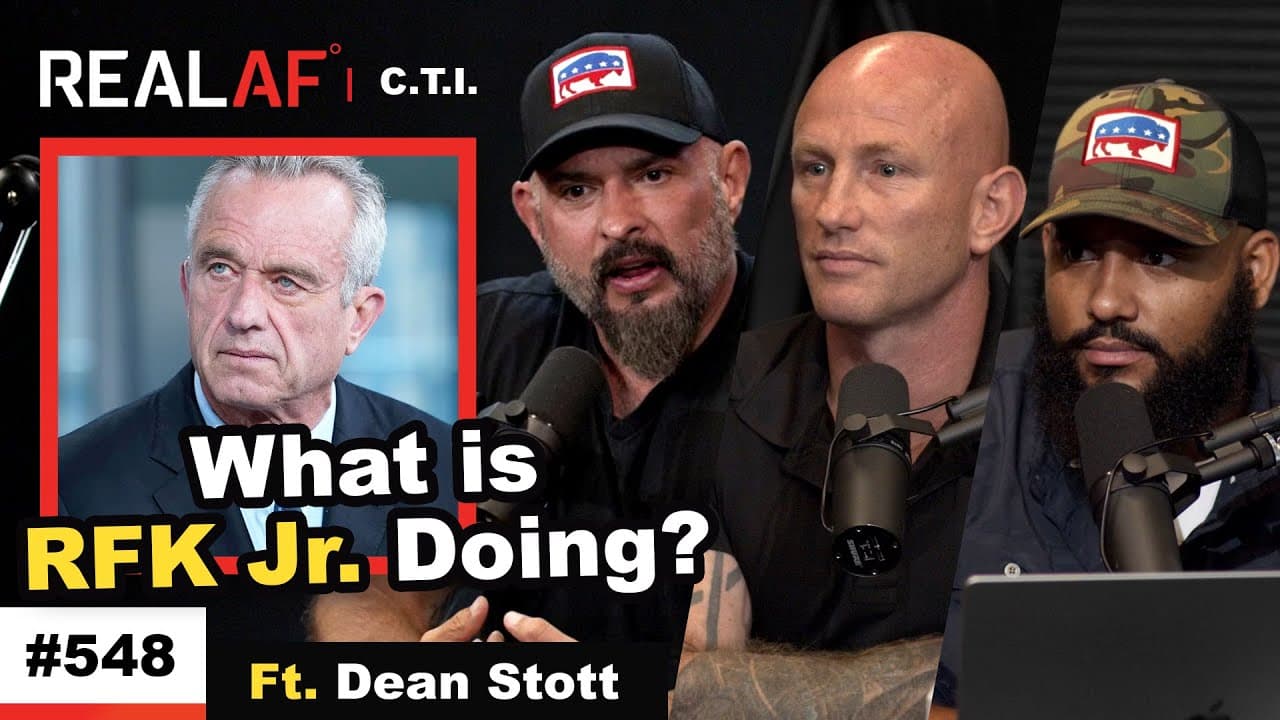
Did RFK Jr. Claim COVID-19 Was Engineered Against Ethnic Groups?
TL;DR
RFK Jr. suggests that COVID-19 may have been engineered to target specific ethnic groups while sparing others, particularly Ashkenazi Jews and Chinese people. This controversial claim has ignited significant debate about its implications and ethics. Additionally, the episode covers backlash against Georgia Rep. Mesha Mainor for switching parties, leading to an influx of racist hate mail, highlighting intense political divisions.
Transcript
RFK JR says covet may have been ethnically targeted to spare Jews people are tired of what's going on in the world and they're looking for who's doing it as we've discussed on the show many many times every single racial and ethnic background has evil people within it yeah he's repeating data based upon who was affected versus who wasn't affected a... Read More
Key Insights
- RFK Jr. claims COVID-19 was engineered to target specific ethnic groups, sparking controversy and discussions about the origins of the virus.
- The conversation highlights the ongoing tension between scientific data interpretation and accusations of racism or anti-Semitism when discussing sensitive topics.
- The podcast discusses the backlash against Georgia State Rep. Mesha Mainor after switching from the Democratic to the Republican Party, highlighting political intolerance.
- Muslim communities in Michigan and California are pushing back against LGBTQ+ symbols and curriculum, reflecting broader cultural and religious tensions in the U.S.
- The podcast critiques the role of media and societal narratives in shaping public perceptions, particularly around sensitive issues like race and gender.
- There is a discussion on the potential manipulation of public opinion and the role of social media in amplifying certain narratives over others.
- The hosts emphasize the importance of personal courage and standing up for one's beliefs in the face of societal pressure.
- The podcast touches on historical and current geopolitical issues, including the perception of Muslims and the potential for unity among diverse groups against common challenges.
Install to Summarize YouTube Videos and Get Transcripts
Explore YouTube Video Summarizer or Get YouTube Transcript Extractor
Questions & Answers
Q: What was RFK Jr.'s controversial claim about COVID-19?
RFK Jr. claimed that COVID-19 might have been engineered to be ethnically targeted, particularly sparing Ashkenazi Jews and Chinese people. His statement has led to significant debate and accusations of anti-Semitism, though he argues he is merely interpreting data on racial and ethnic impacts of the virus.
Q: How did Georgia State Rep. Mesha Mainor's party switch affect her?
After switching from the Democratic to the Republican Party, Georgia State Rep. Mesha Mainor received a flood of racist hate mail. This reaction highlights the intense political intolerance and division in the U.S., as well as the challenges faced by politicians who change party affiliations.
Q: What actions did the Muslim city council in Michigan take regarding the pride flag?
The Muslim city council in Michigan fired HR commissioners who flew the LGBTQ+ pride flag on public property, citing a law that only allows the American, state, city, and POW flags on public property. This decision reflects broader cultural and religious tensions regarding LGBTQ+ issues in the U.S.
Q: What are the podcast hosts' views on media narratives?
The hosts critique how media narratives shape public perception, particularly on sensitive issues like race and gender. They argue that media and societal narratives often amplify certain viewpoints while suppressing others, leading to a distorted understanding of reality.
Q: How do the podcast hosts view personal courage in societal issues?
The hosts emphasize the importance of personal courage and standing up for one's beliefs, despite societal pressure. They argue that many people are afraid to speak out against dominant narratives for fear of backlash, but stress that speaking the truth is crucial for societal progress.
Q: What historical and geopolitical issues are discussed in the podcast?
The podcast touches on historical and current geopolitical issues, such as the perception of Muslims in the West and the potential for unity among diverse groups. They discuss how divisive narratives have historically been used to prevent unity among different ethnic and religious groups.
Q: What impact does the podcast suggest social media has on public opinion?
The podcast suggests that social media plays a significant role in shaping public opinion by amplifying certain narratives and suppressing others. They argue that social media companies, in collaboration with government entities, have created an illusion of consensus on controversial issues.
Q: How does the podcast address accusations of racism in data interpretation?
The podcast argues that interpreting data, even if it reveals uncomfortable truths about racial or ethnic impacts, is not inherently racist. They stress the importance of discussing and understanding data to address societal problems, rather than dismissing it as racist without consideration.
Summary & Key Takeaways
-
RFK Jr. made headlines by suggesting that COVID-19 might have been designed to target specific ethnic groups, particularly sparing Ashkenazi Jews and Chinese people. His comments have sparked significant controversy and debate about the ethics and implications of such claims.
-
The podcast also discusses the backlash faced by Georgia State Rep. Mesha Mainor after she switched parties from Democrat to Republican. This move has resulted in a flood of racist hate mail, highlighting the intense political divisions and intolerance present in current U.S. politics.
-
Additionally, the episode covers the actions of a Muslim city council in Michigan, which fired HR commissioners for flying the LGBTQ+ pride flag on public property. This incident underscores the cultural and religious tensions surrounding LGBTQ+ issues in various communities.
Read in Other Languages (beta)
Share This Summary 📚
Summarize YouTube Videos and Get Video Transcripts with 1-Click
Try YouTube Summary with ChatGPT & Claude or YouTube Transcript Generator
Explore More Summaries from Andy Frisella 📚
Summarize YouTube Videos and Get Video Transcripts with 1-Click
Try YouTube Summary with ChatGPT & Claude or YouTube Transcript Generator