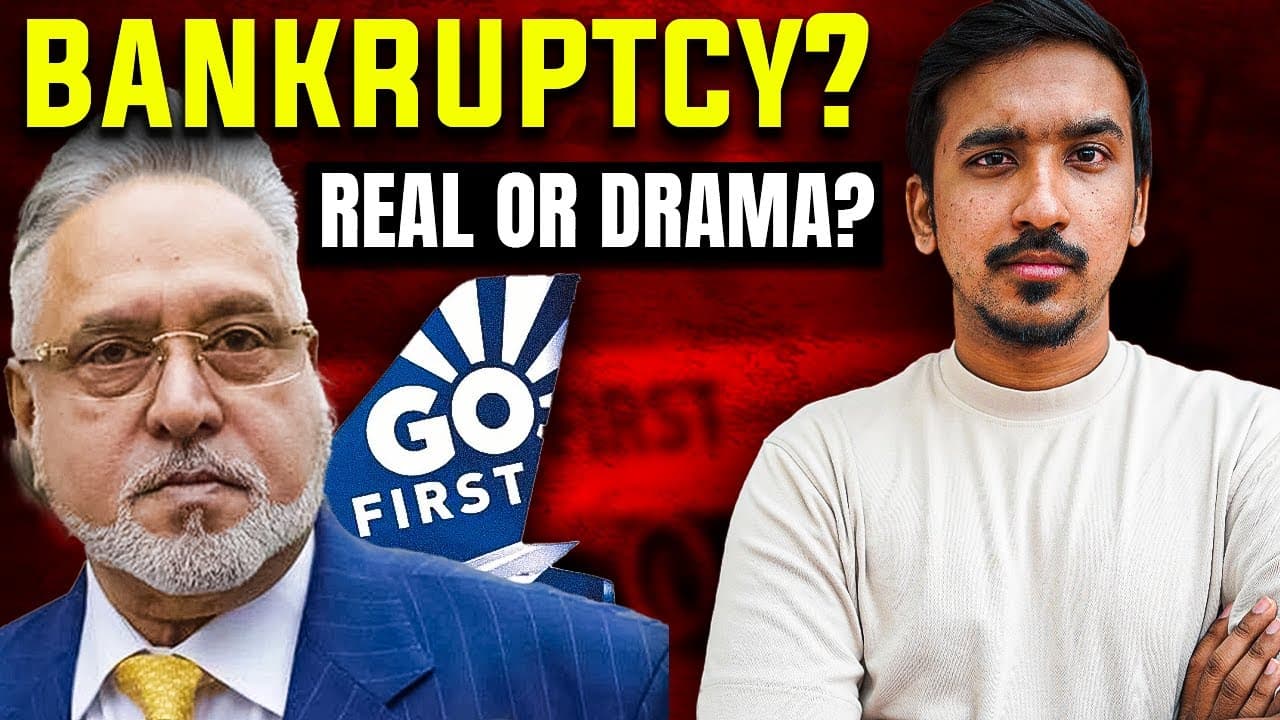
How Can Go First's Bankruptcy Be a Smart Move?
TL;DR
Go First's bankruptcy filing is a strategic move to pause debt payments and restructure finances, allowing the airline to protect its assets and potentially emerge stronger. This approach enables Go First to negotiate with creditors, continue operations, and seek compensation from engine supplier Pratt and Whitney, ultimately aiming for a profitable comeback.
Transcript
well the big story that we continue to track there is turbulence in Indian Skies again as another airline is trapped for cash go first has decided to file for bankruptcy the airline has stopped all flights Reports say there is a severe shortage of funds reports also say that go first owes more than 800 million dollars to its Credit Now go first has... Read More
Key Insights
- 🇮🇴 Turbulence in the Indian aviation industry: Go First's bankruptcy filing adds to the ongoing challenges faced by airlines in India.
- 🧑🏭 The impact of external factors on aviation costs: Fluctuating fuel prices, geopolitical events, and demand seasons contribute to the unpredictable nature of aviation expenses.
- 😘 The high risk and low-profit margin of the aviation industry: The slim profit margins and vulnerability to economic changes make airline companies highly susceptible to financial struggles.
- 🍉 The significance of debt restructuring in bankruptcy: Restructuring debts can provide airlines with a chance to renegotiate loan terms and reduce financial burdens.
- 👻 The benefits of emergency relief for operations: Bankruptcy allows airlines to continue essential business operations, such as paying wages, taxes, and contractual obligations, enabling them to sustain operations and recover financially.
- 😒 The strategic use of bankruptcy as a business strategy: Go First is leveraging bankruptcy to protect its assets, negotiate with creditors, and seek compensation from Pratt and Whitney.
- ✳️ Potential challenges and risks in implementing bankruptcy strategies: Liquidation, legal battles, and internal decision-making could pose obstacles to Go First's recovery efforts.
Install to Summarize YouTube Videos and Get Transcripts
Explore YouTube Video Summarizer or Get YouTube Transcript Extractor
Questions & Answers
Q: Why did Go First file for bankruptcy?
Go First filed for bankruptcy due to a severe shortage of funds and mounting debt. The airline also blamed Pratt and Whitney for faulty engines, which further added to its financial struggles.
Q: How does bankruptcy benefit Go First?
Bankruptcy provides Go First with several advantages. It allows them to defer payments for a certain period, restructure their debt, and continue operations while negotiating with creditors. This gives them a chance to recover financially and revive their business.
Q: What are the potential risks for Go First in using bankruptcy as a strategy?
While bankruptcy can offer opportunities for revival, there are risks involved. The banks may opt for liquidation instead of resolution, Pratt and Whitney may win the case, or the company's promoters could decide to quit. These factors could hinder Go First's plans to bounce back successfully.
Q: How can Go First use bankruptcy to sue Pratt and Whitney?
By filing for bankruptcy, Go First gains a protected period where legal actions and recovery proceedings are put on hold. This gives them time to build a case against Pratt and Whitney and seek compensation for the faulty engines. If successful, the funds obtained can help Go First recover its losses and repay its debts.
Key Insights:
- Turbulence in the Indian aviation industry: Go First's bankruptcy filing adds to the ongoing challenges faced by airlines in India.
- The impact of external factors on aviation costs: Fluctuating fuel prices, geopolitical events, and demand seasons contribute to the unpredictable nature of aviation expenses.
- The high risk and low-profit margin of the aviation industry: The slim profit margins and vulnerability to economic changes make airline companies highly susceptible to financial struggles.
- The significance of debt restructuring in bankruptcy: Restructuring debts can provide airlines with a chance to renegotiate loan terms and reduce financial burdens.
- The benefits of emergency relief for operations: Bankruptcy allows airlines to continue essential business operations, such as paying wages, taxes, and contractual obligations, enabling them to sustain operations and recover financially.
- The strategic use of bankruptcy as a business strategy: Go First is leveraging bankruptcy to protect its assets, negotiate with creditors, and seek compensation from Pratt and Whitney.
- Potential challenges and risks in implementing bankruptcy strategies: Liquidation, legal battles, and internal decision-making could pose obstacles to Go First's recovery efforts.
- The importance of studying bankruptcy as a strategic tool: Go First's case highlights the lesser-explored side of bankruptcy and demonstrates how it can be used strategically to revive struggling businesses.
Summary & Key Takeaways
-
Go First has filed for bankruptcy due to a severe shortage of funds and blames engine manufacturer Pratt and Whitney for faulty engines and insolvency.
-
Bankruptcy allows Go First to pause payments for six to nine months, restructure its debt, and continue operations while negotiating with creditors.
-
By leveraging the benefits of bankruptcy, Go First aims to save its planes, repay debts, and bounce back into profitability.
Read in Other Languages (beta)
Share This Summary 📚
Summarize YouTube Videos and Get Video Transcripts with 1-Click
Try YouTube Summary with ChatGPT & Claude or YouTube Transcript Generator
Explore More Summaries from Think School 📚




Summarize YouTube Videos and Get Video Transcripts with 1-Click
Try YouTube Summary with ChatGPT & Claude or YouTube Transcript Generator